Business
CBN’s rate cut sparks loan rush as private sector borrowing jumps by N380bn
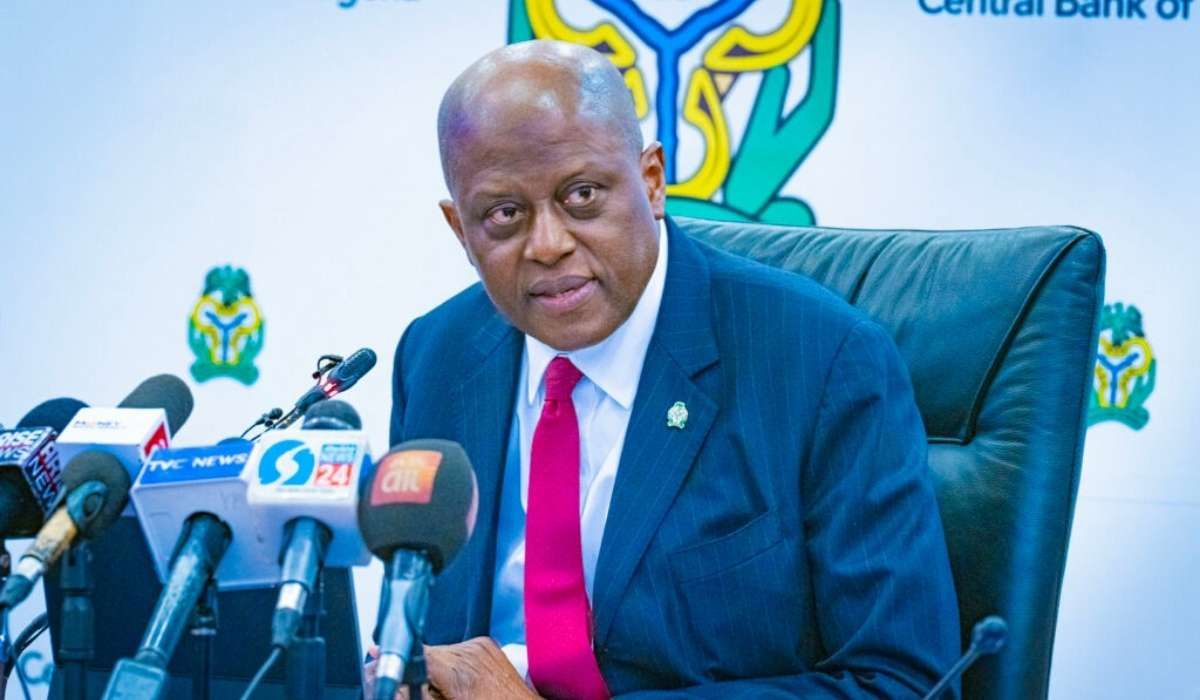
Nigeria’s private sector ramped up borrowings in February, 2026, capitalising on easing interest rates to secure cheaper credit, with total loans rising by N380.85 billion within the month.
The modest increase in credit to businesses and households followed the Central Bank of Nigeria’s decision to cut interest rates during the month.

Data obtained from the CBN on its money and credit statistics showed that credit to the private sector increased from N75.24 trillion in January 2026 to N75.62 trillion in February 2026.
The N380.85billion month-on-month rise represents a 0.51 per cent increase, indicating a slight improvement in lending to the real economy after months of tight monetary conditions.
The data also showed that net domestic credit rose from N109.43 trillion in January to N111.40 trillion in February 2026, marking an increase of N1.97 trillion or 1.80 per cent within the period.
Similarly, credit to the government expanded from N34.19 trillion to N35.77 trillion, reflecting a N1.59 trillion increase or 4.64 per cent month-on-month, suggesting stronger government borrowing relative to the private sector during the period.
The marginal growth in private sector credit came in the same month the apex bank eased monetary policy, delivering its first rate cut of 2026 after holding rates at 27 per cent in late 2025.
It would be recalled that the apex bank had cut the Monetary Policy Rate (MPR) by 50 basis points to 26.5 per cent at its 304th Monetary Policy Committee meeting in February.
The rate cut followed a sustained decline in inflation, with the CBN noting that price pressures had moderated significantly after months of aggressive tightening.
A year-on-year analysis, however, showed that credit to the private sector declined compared to the same period in 2025, highlighting lingering constraints in credit expansion.
According to the data, private sector credit fell from N76.26 trillion in February 2025 to N75.62 trillion in February 2026, representing a decline of N635.20 billion or 0.83 per cent.
In contrast, net domestic credit recorded strong annual growth, rising from N103.37 trillion in February 2025 to N111.40 trillion in February 2026, an increase of N8.03 trillion or 7.76 per cent.
Credit to the government also rose significantly year-on-year, increasing from N27.11 trillion in February 2025 to N35.77 trillion in February 2026, representing a N8.66 trillion increase or 31.95 per cent.
The data suggests that while overall credit in the economy expanded over the past year, much of the growth was driven by increased lending to the government rather than the private sector.
This trend shows continued crowding-out risks, with government borrowing limiting the availability of funds for businesses despite policy efforts to stimulate private-sector activity.
The February rate cut is widely seen as the beginning of a gradual easing cycle by the CBN, following a period of aggressive tightening aimed at curbing inflation and stabilizing the exchange rate.
The loan surge underscores a growing appetite for financing among businesses seeking to expand operations, shore up working capital, and navigate persistent cost pressures.
The spike in credit uptake reflects the early impact of monetary easing, as lower lending rates begin to unlock demand that had been suppressed by earlier tightening cycles.
According to financial analysts, firms are moving quickly to lock in funds at more favourable rates, amid expectations that borrowing conditions could shift again in response to inflation and currency dynamics.
However, with the Monetary Policy Rate still elevated at 26.5 per cent, liquidity conditions remain constrained.
While the increase in lending signals renewed confidence in credit markets, it also raises questions about the sustainability of debt levels, particularly for small and medium-sized enterprises already grappling with high operating costs.
Stakeholders who spoke on the matter argued that the trajectory of interest rates and broader macroeconomic stability will be critical in determining whether the borrowing momentum can translate into real sector growth.
This is as Nigerian manufacturers continued to face borrowing costs as high as 60 per cent despite the recent monetary policy easing by the CBN.
According to a new CBN report detailing lending and deposit rates across deposit money banks as of March 20, 2026, while some banks offer lower prime lending rates, maximum borrowing costs remain significantly elevated.
Speaking on the 50-basis-point reduction by the CBN’s MPC, the Organised Private Sector (OPS) described it as cautious but a welcome development.
According to the Director-General of the Nigeria Employers’ Consultative Association (NECA), Adewale Oyerinde, the marginal cut indicated that monetary authorities were responding to sustained pressures facing businesses.
“The marginal reduction in the benchmark interest rate represents a cautious but noteworthy signal that monetary authorities are beginning to respond to the sustained pressures facing businesses and the productive sector.
“While the 50 basis point reduction may not immediately translate into significantly lower lending rates, it reflects a gradual shift toward supporting economic growth without undermining price stability”, Oyerinde said.
He stressed that the overall policy stance remained tight due to the retention of the Cash Reserve Ratio at 45 per cent for commercial banks and other liquidity controls.
“With a substantial portion of bank deposits still sterilised, the capacity of financial institutions to expand credit to the real sector may remain constrained in the near term”, he remarked.