Sports
CAS assures swift handling of Senegal’s appeal over AFCON title decision
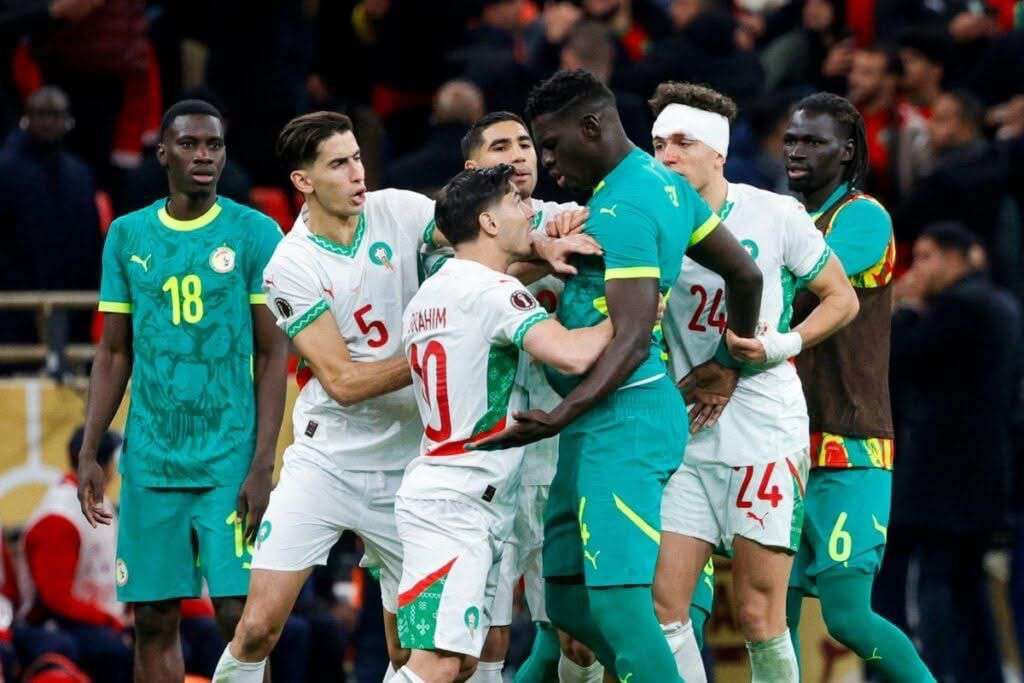
The Court of Arbitration for Sport (CAS) has assured that it will handle Senegal’s appeal against the controversial decision to strip the country of its Africa Cup of Nations (AFCON) title and award it to Morocco.
CAS confirmed that the Senegalese Football Federation has officially lodged an appeal seeking to overturn the Confederation of African Football’s (CAF) ruling, which declared Morocco champions nearly two months after the final was played.

CAF announced on March 17 that Senegal had forfeited the match after leaving the pitch in protest during the final, leading to the hosts, Morocco, being awarded a 3–0 victory. The decision ended Morocco’s 49-year wait for a second AFCON title.
The final, played on January 18, had originally ended with Senegal winning 1–0 after extra time.
The controversy began in stoppage time when the referee awarded Morocco a penalty following a VAR review for a challenge on Brahim Diaz. Senegal players, angered by the decision and a disallowed late goal, briefly walked off the pitch in protest, delaying the match by about 17 minutes.
After persuasion from captain Sadio Mane, the Senegal team returned to the field and the game resumed. Diaz’s attempted Panenka penalty was saved by goalkeeper Edouard Mendy, and Pape Gueye later scored the decisive goal in extra time to secure what appeared to be Senegal’s victory.
However, CAF later ruled that Senegal had breached Article 82 of the tournament regulations, which states that any team that refuses to play or leaves the field without the referee’s authorisation will be deemed to have lost the match.
Article 84 further stipulates that such a violation results in the team forfeiting the match by a 3–0 scoreline.
In response, Senegal filed an appeal with CAS seeking to have the CAF decision set aside and their victory reinstated.
CAS director general Matthieu Reeb said the court would appoint an independent arbitral panel to review the case.
“CAS is perfectly equipped to resolve this type of dispute with the assistance of expert and independent arbitrators,” Reeb said.
“We understand that teams and fans are eager to know the final decision, and we will ensure that the arbitration proceedings are conducted as swiftly as possible while respecting the right of all parties to a fair hearing.”
Under the arbitration process, Senegal has 20 days to submit its legal arguments, after which CAF will have another 20 days to present its defence.
Senegal’s government has already criticised CAF’s decision, describing it as contrary to the principles of sporting ethics.
The Senegalese football federation also condemned the ruling as “iniquitous, unprecedented and unacceptable,” saying it had brought disrepute to African football.
Meanwhile, Morocco’s football federation welcomed the decision, insisting its appeal was not intended to question Senegal’s performance on the pitch but to ensure that tournament regulations were applied.
The dispute has triggered intense debate across the football world, with many fans and players questioning the unprecedented move to alter the outcome of a continental final long after the match had been completed.