Entertainment
AMVCA 12: A night nollywood finally honoured its finest
By Temi Salako
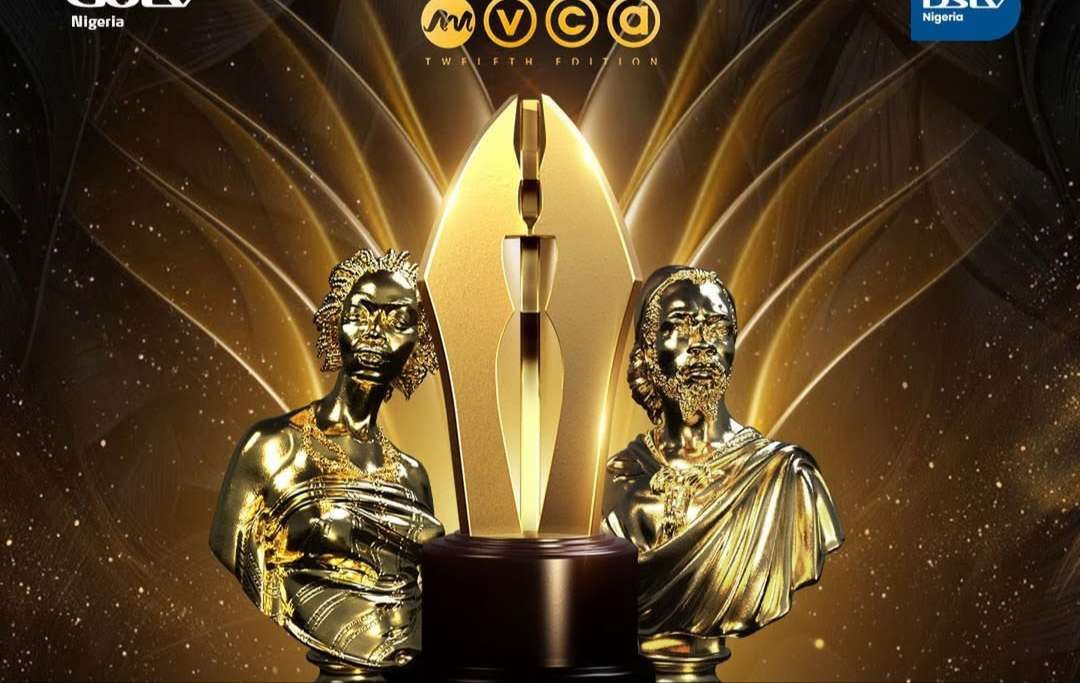
At the prestigious Eko Hotel and Suites, the 12th edition of the Africa Magic Viewers’ Choice Awards unfolded as more than just another glamorous awards ceremony. Hosted by Bovi Ugboma and Nomzamo Mbatha, the evening became a defining statement about the direction of African cinema — one where craft, consistency and artistic excellence ultimately took centre stage over hype and spectacle.

Among the biggest winners of the night was My Father’s Shadow, the critically acclaimed feature directed by Akinola Davies Jr., which secured Best Director alongside several technical awards. Equally significant was the moment Uzor Arukwe claimed the Best Lead Actor prize for his commanding performance in Colours of Fire.
For many within the industry, Arukwe’s victory felt less like an upset and more like a long-awaited acknowledgement. Having spent years delivering standout performances across Nollywood productions, he has earned a reputation as one of the industry’s most dependable talents — an actor widely respected by peers and audiences alike. His double nomination in both lead and supporting categories this year only reinforced the remarkable range and consistency that have defined his recent work.
When his name was announced, the applause inside the hall carried unusual emotion. It was more than celebration; it was recognition. In that moment, Nollywood appeared to pause and finally give public credit to a performer whose excellence had long been impossible to ignore.
Bucci Franklin presents a similar case. Nominated for Best Supporting Actor for his work in To Kill a Monkey, Franklin has spent years building a reputation in productions that did not always find the widest commercial reach. He is the kind of performer who disappears so completely into a role that audiences often forget they are watching an actor at all. His nomination this year is the industry formally writing down what the discerning viewer has known for some time. Both men illustrate a truth that the AMVCA, at its best, serves well: the market rewards noise, but the awards exist, in principle, to reward craft.
The Gingerrr conversation cannot be avoided. The film entered the night tied with The Herd at nine nominations apiece, and its commercial performance and critical reception have been polar opposites. Gingerrr broke box office records and kept cinema halls packed. It also attracted reviews that were, to put it diplomatically, far less enthusiastic. One critic described it publicly as among the worst Nollywood films of the decade. The AMVCA’s decision to nominate it in categories including Best Movie, Best Director and Best Writing struck significant sections of the industry as rewarding revenue over rigour. That The Herd’s Daniel Etim Effiong delivered some of the most technically accomplished direction of the year, and that My Father’s Shadow received international acclaim before its AMVCA recognition, made the contrast sharper. The Ginger crew arrived on the carpet as a coordinated unit, camera-aware and in full promotional mode. The results, however, showed that the AMVCA jury and the audience do not always share a vision. Technical awards migrated toward the stronger films. The machinery of quality eventually asserted itself, if not uniformly.
The red carpet, which opened at 4 p.m., quickly became its own editorial. The AMVCA has evolved into what many Nigerians now describe as their own Met Gala, and this year’s main ceremony followed a Cultural Night on May 8, held at the Balmoral Convention Centre in Victoria Island, that had already set extraordinary expectations. Under the theme ‘Honouring Craft, Celebrating Culture,’ celebrities arrived in agbadas, Edo-inspired silhouettes, coral beads, embroidered wrappers and regal headpieces that turned the venue into a runway of heritage. Pretty Mike, true to the character he has constructed over years of engineered spectacle, appeared in a corset-style ball gown with an exaggerated snatched waist that split public opinion precisely as intended. Videos of the back view circulated rapidly. Whether it was fashion, performance art or calculated provocation, it generated the currency Pretty Mike trades in: sustained attention.
For the main ceremony, the carpet delivered the full range. There were gowns referencing Vivienne Westwood, butterfly-detailed couture that earned genuine admiration, and gold mermaid silhouettes that photographers gravitated toward. There was also the bread outfit, which referenced the now-familiar Nollywood internet conversation around economic hardship and hunger in Nigeria. It was dark comedy as couture, and it worked precisely because it landed in a room full of entertainment professionals who understand, better than most, what the Nigerian economy has done to their ticket-buying audience. The designer made a comment that a press release never could. Two other looks earned comparable conversation: one so heavily armoured in structural attachments it appeared calibrated for a different, more intense occasion entirely, and another built around elaborate cage-like additions to the skirt that gave the wearer the silhouette of a medieval architectural feature. All three had clearly been planned with the specific goal of generating reaction. The AMVCA carpet functions as a business platform as much as a fashion one. Designers who dress celebrities for this event know that a viral moment translates directly into commissions and brand recognition. Fashion risk here is rarely accidental. It is strategic.
The question of what the AMVCA means to Nollywood twelve editions in is one the industry has been answering loudly in recent weeks. Head Judge Joke Silva, who succeeded filmmaker Femi Odugbemi this year, spent considerable time in the pre-ceremony period addressing the criticisms that followed the nominations announcement. Her position was consistent: the judging process involves panels of professionals who grade submissions independently, and the aggregated result reflects that process. ‘Awards are subjective a lot of the time, and that is why we have a panel of judges. The prayer is always: may the best man win.’ It was a defence that acknowledged uncertainty while defending structure.
The criticisms that follow the AMVCA are not trivial, and they come from serious quarters. The perceived bias toward urban, English-language productions at the expense of indigenous-language cinema has been a long-standing grievance. Ibrahim Chatta, one of Nollywood’s most respected Yoruba-language performers, has publicly stated his disinterest in the award, arguing that grassroots theatrical depth is consistently undervalued in favour of commercially promoted faces. Concerns about transparency in the voting categories, the question of whether popularity rather than merit drives public-voted results, and the structural argument that film directors and television directors should not compete in the same Best Director category, have all been raised by industry professionals with credible standing. Actress Lilian Afegbai expressed her own disappointment publicly after her role in To Kill a Monkey was overlooked for a Best Supporting Actress nomination. Critics pointed to The Fire and the Moth, one of the most acclaimed Nigerian films of the past cycle, receiving no nominations whatsoever, which struck many observers as a structural failure rather than a judging oversight. The suspicion that commercial performance and industry visibility shape nominations as much as creative merit does is, frankly, a conversation the AMVCA has not conclusively closed.
And yet, twelve years in, the AMVCA retains a legitimacy that even its sharpest critics acknowledge. This edition introduced two new continental categories, Best Indigenous Language Film for North Africa and Best Indigenous Language Film for Central Africa, expanding its geographic reach meaningfully. It draws the largest collection of African film and television professionals into a single room once a year. It has elevated careers, given technical practitioners their first public recognition, and created what Silva called, at the AMVCA Icons Night, a documented archive of African film’s progression. When she noted that watching Nollywood’s submitted work left her heartbroken that ‘there are still not enough platforms and spaces to showcase the incredible work we are producing properly,’ she was describing a distribution gap that the AMVCA cannot close alone but continues to make visible.
Whether this edition is the last, as some industry voices have speculated given MultiChoice’s shifting corporate priorities toward digital streaming, or whether it continues to evolve, the 12th AMVCA made its case clearly enough. Nollywood produces too much, too fast, at too little consistent quality control, and still manages, against that pressure, to produce work that stops rooms and starts arguments and wins rooms. The AMVCA, for all its imperfections, remains the room where that argument happens with the highest stakes. Twelve years is not longevity by accident. That, commercially and culturally, is worth preserving.