
Politics
Alleged Christian Genocide: US Lawmakers Challenge Nigerian Government’s Position
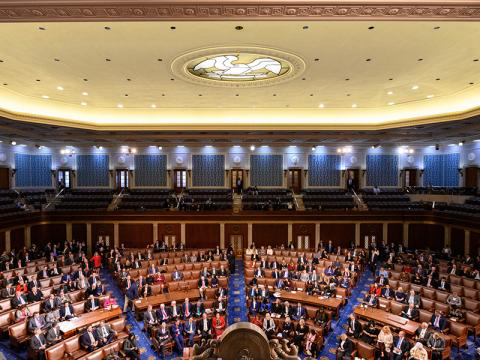
The debate over alleged Christian genocide in Nigeria intensified on Tuesday as senior members of the United States Congress received a rare joint briefing from House Appropriations and Foreign Affairs leaders. The session formed part of an ongoing congressional investigation into what lawmakers and experts describe as rising, targeted attacks on Christian communities across Nigeria.
The briefing was led by House Appropriations Vice Chair and National Security Subcommittee Chairman Mario Díaz-Balart (R-Fla.), and is expected to inform a comprehensive report ordered by President Donald Trump. The report will address recent mass killings of Nigerian Christians and outline possible policy actions Washington may take to pressure Abuja to respond more robustly.
President Trump instructed Reps. Riley Moore (R-W.Va.) and Appropriations Chairman Tom Cole (R-Okla.) to lead the probe. He has also openly suggested the United States could consider direct military action against Islamist groups carrying out deadly attacks.
Vicky Hartzler, Chair of the US Commission on International Religious Freedom, told lawmakers that religious freedom in Nigeria was “under siege,” citing the abduction of more than 300 schoolchildren and repeated assaults in which “radical Muslims kill entire Christian villages and burn churches.”
She said violations were “rampant” and “violent,” arguing that Christians were disproportionately targeted “at a 2.2 to 1 rate” compared with Muslims. While acknowledging that Nigeria had begun some reforms – such as reassigning roughly 100,000 police officers from VIP security duties – Hartzler warned that the country was entering “a coordinated and deeply troubling period of escalated violence.”
Her recommendations included targeted sanctions against Nigerian officials “demonstrating complicity,” visa bans, asset freezes, and conditioning US foreign and humanitarian assistance on verifiable progress. She also urged Congress to mandate a Government Accountability Office review of past US aid and called on Abuja to reclaim villages seized from Christian farming communities.
Dr Ebenezer Obadare of the Council on Foreign Relations offered one of the strongest challenges to the Nigerian government’s assertion that the violence is not religiously motivated. Describing claims of equal targeting as “a myth,” he argued that Boko Haram and similar groups “act for one reason and one reason only: religion.” Any higher Muslim casualty numbers, he said, stemmed from geography rather than deliberate targeting.
Obadare also criticised the Nigerian military as “too corrupt and incompetent” to dismantle jihadist networks without significant external pressure. He urged Washington to press Nigeria to disband armed groups enforcing Islamic law, tackle systemic corruption within the security agencies, and act promptly on early-warning intelligence.
Sean Nelson of Alliance Defending Freedom International described Nigeria as “the deadliest country in the world for Christians,” claiming more Christians were killed there than in all other countries combined and at rates “five times higher” than Muslims when population size is factored in. He added that extremists also attack Muslims who reject their ideology, undermining Abuja’s portrayal of the crisis as primarily criminal or communal.
Nelson called for stronger US oversight of assistance to Nigeria, including routing some aid through faith-based organisations to minimise corruption. He also urged greater transparency from Abuja on mass kidnappings and ransom payments.
Díaz-Balart criticised the Biden administration’s 2021 reversal of Nigeria’s designation as a “country of particular concern,” describing the decision as having “clearly deadly consequences.”
Members of the Appropriations, Foreign Affairs and Financial Services Committees signalled that further scrutiny and legislative action would follow as Congress prepares the Trump-mandated report.
Hartzler, however, noted recent steps taken by the Tinubu administration that may indicate a shift toward confronting the crisis, including the redeployment of about 100,000 police officers from VIP assignments to regular policing duties. She described the move as “a promising start after years of neglect,” adding that it reflects increasing recognition within Nigeria’s leadership that the scale of violence has become untenable.