Business
Shop like a billionaire or buy from your brother? Nigerians mount strong competition against Temu
By Temi Salako
There is a quiet, enduring democracy in affordability, one that continues to shape Nigeria’s vast and restless marketplace. From the dense commercial clusters of Yaba to the oil-rich corridors of Yenagoa, from the industrious lanes of Ariaria to the sprawling electronics hubs of Alaba and the auto parts stronghold of Ladipo, price has always been the great equaliser.

It is within this long-standing culture of bargain hunting and informal efficiency that the arrival of global e-commerce platform Temu is now stirring both excitement and resistance. While the platform’s promise to help users “shop like a billionaire” has resonated with many cost-conscious Nigerians, a parallel narrative is emerging—one that questions whether foreign platforms are simply repackaging a system local traders have mastered for decades.
Long before algorithm-driven recommendations and app-based flash sales became mainstream, Nigerian traders had built an intricate ecosystem of sourcing and redistribution. Their model was simple but effective: identify global supply gaps, procure goods at the lowest possible cost, and sell within local markets at modest margins. It was a system born not of convenience, but of necessity.
Historical context lends weight to this perspective. In the 1980s and early 1990s, Nigeria operated as a robust import-driven economy. Backed by strong oil revenues and a relatively stable naira, the country maintained extensive trade relationships with partners across the United States, the United Kingdom, and Europe. Analysts from that period suggested that up to 90 percent of consumer goods in Nigeria were imported, creating an illusion of prosperity while masking a fragile domestic production base.
At the centre of this import culture was the shipping container—an instrument that became symbolic of Nigerian commercial ingenuity. Traders maximised every inch of cargo space, stuffing vehicles and containers alike with goods ranging from clothing and electronics to spare parts and household items. The objective was clear: reduce shipping costs, minimise customs duties, and maintain competitive pricing in the local market.
However, economic realities soon forced a shift. The introduction of structural adjustment policies and the steady devaluation of the naira significantly increased the cost of imports from Western markets. In response, Nigerian traders pivoted strategically towards Asian markets, particularly China, where lower production costs offered a lifeline to their business models.
Today, platforms like Temu are stepping into this established terrain, digitising and streamlining what has historically been a deeply human and locally driven enterprise. By connecting consumers directly to international suppliers, they threaten to bypass the middlemen who have long sustained Nigeria’s informal retail economy.
Yet, the response from local traders suggests that the contest is far from one-sided. Many argue that beyond price, they offer immediacy, trust, and cultural familiarity—factors that global platforms often struggle to replicate in emerging markets.
As Nigeria’s retail landscape evolves, the tension between global convenience and local enterprise is becoming more pronounced. Whether consumers ultimately choose to “shop like a billionaire” or continue buying from their “brother” may depend not just on price, but on the deeper value of connection, reliability, and economic loyalty.
Nigeria and China formalised diplomatic relations on February 10, 1971. The real economic opening came explosively under President Obasanjo in the early 2000s, when Chinese President Hu Jintao made landmark state visits to Nigeria in 2004 and 2006. By 2016, bilateral trade had climbed to $14.7 billion, with Chinese exports accounting for roughly 80 percent of that volume. By January to September 2024, that trade volume had reached $15.1 billion. China remains Nigeria’s largest import partner, supplying N4.96 trillion worth of goods in Q2 2025 alone, more than double the United States.
On the ground, the shift happened market by market. Traders at Ladipo in Lagos, the sprawling auto-parts district functioning as a cathedral of mechanical knowledge, began sourcing from Guangzhou as far back as the late 1990s. Alaba International Market in Ojo, Africa’s largest consumer electronics hub, followed. So did Ariaria International Market in Aba. These markets built entire knowledge ecosystems around Chinese sourcing: which freight forwarder was reliable, which Shenzhen factories accepted small orders, how to navigate Chinese customs. The 2018 bilateral currency swap agreement between the Central Bank of Nigeria and the People’s Bank of China, valued at approximately $2.5 billion, formalised what the markets had practised informally for years. Then content creators arrived with their cameras and changed everything. The China trip video became a genre unto itself on Nigerian YouTube and TikTok. A new generation of Chinese agents advertised their services openly on Instagram and WhatsApp. Sourcing routes that Ladipo traders had guarded as proprietary intelligence were broadcast to hundreds of thousands of subscribers.
Before Temu arrived, AliExpress had cultivated a loyal Nigerian following. It lacked glamour and demanded patience; delivery took three to six weeks, and customs clearance was the buyer’s problem. But tech-savvy Nigerians sourcing phone accessories and hobby equipment found in AliExpress a direct line to Shenzhen at prices that made Computer Village in Ikeja look like a boutique tax.
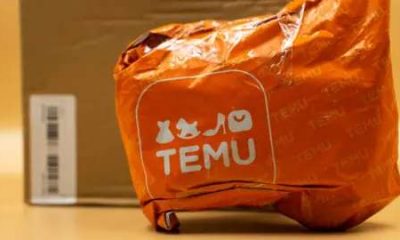
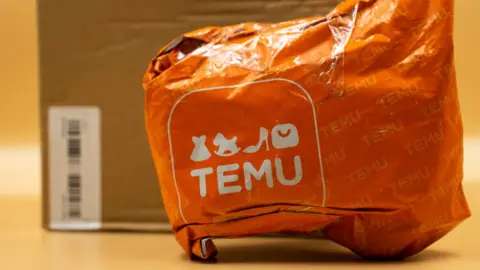
Temu, owned by PDD Holdings and founded by former Google employee Colin Huang, launched in the United States in September 2022. It announced itself with a reported $2 billion in social media advertising in 2023, the largest Meta ad spend of any company that year, with a full-year 2024 global marketing budget estimated at between $3.5 billion and $5 billion. Its three-word proposition, “shop like a billionaire,” was aimed squarely at people who felt excluded from modern consumption. By November 2024, after testing in South Africa, Temu launched in Nigeria. Within weeks, it topped both the Google Play and Apple App Store charts in the country, outranking WhatsApp, OPay, and ChatGPT according to SimilarWeb. Customs duties were prepaid and bundled into the sticker price, shipping was free, and a 90-day money-back guarantee neutralised the most common anxiety of the suspicious Nigerian online shopper. Analysts estimated Temu was subsidising 20 to 30 percent of each order through marketing funds and manufacturer rebates.
Oluwatobi Akapo, a former business development manager at Jumia Nigeria, told Weetracker: “If Temu sets up local operations in Nigeria, it could be game over for Jumia and other players in the space.” By mid-2025, Business Hallmark reported that Temu was fulfilling approximately 45 percent of daily e-commerce orders in Nigeria. Globally, Temu’s monthly active users reached 416.5 million in Q2 2025, a 68 percent year-on-year jump, according to PDD Holdings’ own earnings disclosures.
Precious Ntuko, a Lagos-based digital creator, was initially hesitant. One order converted her. Her Temu finds video accumulated a wave of approval, with one comment reading: “So Temu has nice stuff. Good to know.” Favour Kolapo, a civil engineer from Osun State, said: “The shipping and delivery are fast. I’d give them kudos on that,” though she added the platform remained “a work in progress” in Nigeria.
Oris Aigbokhaevbolo, Nigerian film journalist and online publisher, stated, “Across fields, we have a new anthem: if it comes from Nigeria and a rival shows up from overseas, they’ll win. But you can’t really build a country’s economy like this.” The concern is structural, not sentimental. Indonesia banned Temu from its app stores in October 2024 for precisely this reason. Nigerian China-based agents have responded by rebranding as quality guarantors, offering live factory-floor videos and pre-shipping inspections. What they cannot argue with is the landed price.
Temu’s logistics in Nigeria runs through partnerships with Flytexpress and Speedaf, with GIG Logistics handling last-mile volume. The company earmarked approximately RMB 2 billion, roughly $275 million, in 2024 for overseas warehousing infrastructure across 20 countries, targeting 40 to 50 global facilities. For the average Nigerian household navigating inflation above 30 percent and a naira that shed over 70 percent of its dollar value between 2023 and 2025, Temu’s price arithmetic is not a luxury proposition. It is survival math. E-commerce strategist Gregor Murray framed the logic: “The difference here is that it is the same product, sold without the additional costs or margins, at prices previously only available to those buying in huge bulk.” Held against the reality of buying a phone accessory at Computer Village where the markup culture is legendary, Temu feels less like shopping and more like emancipation.
Nigerian importers and agents have not been passive. Facing a platform that removes the middleman and ships prepaid to your door, the agent community has pivoted toward visibility as its competitive edge, opening supply chains to customer scrutiny, filming China sourcing trips in real time, and offering what Temu structurally cannot: relationship, negotiation, and local accountability. This transparency play is not sentimental. It is strategic. Gloria Otti, Corporate Relations Manager at AfriCred, speaking, framed the structural concern plainly: “The economic advantage of this for Nigeria? Not so sure. Production is done outside, and it only means more FX spending.” Obaro Aziza, a human resources consultant, offered a more measured counterpoint: “If they can navigate Nigeria’s logistics challenges, this could be a huge win for both the market and customers.” Between those two positions sits the honest answer. The warning is historically grounded. When cheap Chinese goods began flooding Nigerian markets in the early 2000s, by some accounts 65 textile mills closed over a decade and 150,000 workers lost jobs. E-commerce is not manufacturing, but the structural dynamic, foreign supply chains capturing domestic consumer spending at scale, is recognisable.
The future, as projected, belongs to whoever controls last-mile trust and physical availability. Nigeria’s e-commerce market, valued at $8.53 billion in 2024, is projected to reach $14.92 billion by 2029. With nearly 50 percent of the population internet-connected and smartphone penetration rising, the runway is real and the prize is large enough for multiple players. Jumia, reading the terrain, opened a sourcing office in Yiwu, China in 2025, joining its competitor at the factory gate rather than losing ground from a distance. Robert Awodu, Jumia’s regional head of public relations for Sub-Saharan Africa, maintained diplomatic composure on record: “We don’t see Temu’s entry as a bad thing; rather, it’s good for the industry.” By late 2025, Jumia Nigeria had posted a meaningful rebound in gross merchandise value, leveraging delivery speed and cash-on-delivery infrastructure that Temu’s cross-border model still cannot replicate at scale outside Lagos. By January to July 2025, China-Nigeria bilateral trade had risen a further 34.7 percent to $15.48 billion, as confirmed by Chinese Consul-General in Lagos Ms. Yan Yuqing. Nigeria is now China’s second-largest African trading partner.
Temu is not a chapter in that story. It is the current sentence, still being written. The question for the Nigerian side is not whether Temu can be stopped by market forces alone. It cannot. The question is whether local importers, vendors, and platforms can build something durable in the gap Temu does not and cannot fill: community, faster physical availability, and the kind of trust that comes from knowing the person on the other end of the transaction. The container stuffers of the 1980s knew the terrain. The Yiwu agents know it. The Instagram vendors building customer bases one DM at a time know it too. Nigeria has 200 million people who have always found a way to buy, sell, and survive in the gap between what the economy offers and what the market demands. That instinct will not be shipped away in a bonded warehouse.