Business
JUST IN: Iran declares Strait of Hormuz open as ceasefire eases tensions, oil prices fall

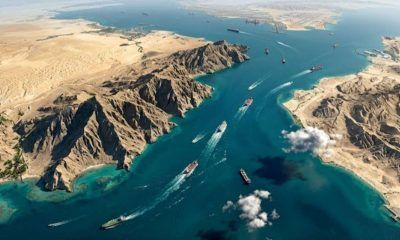
Iran has reopened the Strait of Hormuz to commercial shipping, announcing that the vital global oil route will remain accessible throughout the duration of the ongoing ceasefire, a move that has already led to a dip in international oil prices.
Iran’s Foreign Minister, Abbas Araghchi, confirmed the development, stating that the waterway is now fully open to vessels following weeks of restrictions tied to escalating tensions in the Middle East.

He said the decision aligns with the ceasefire agreement involving Lebanon, adding that all commercial ships can transit through the strait under previously coordinated maritime arrangements.
The announcement follows the commencement of a 10-day ceasefire between Israel and Lebanon, temporarily halting hostilities in a conflict that has claimed over 2,000 lives and displaced large numbers of civilians.
Reacting, US President Donald Trump welcomed the development in a post on Truth Social, describing the reopening as a positive step for global stability.
The Strait of Hormuz, which connects the Persian Gulf to the Arabian Sea, is one of the world’s most strategic energy corridors, facilitating the movement of oil and liquefied natural gas from major producers such as Saudi Arabia, Iraq, Kuwait, Qatar and the United Arab Emirates.
Industry estimates show that roughly 20 million barrels of oil pass through the route daily, accounting for about one-fifth of global supply, making any disruption a major concern for energy markets.
In recent weeks, access to the strait had been limited amid heightened geopolitical tensions, sparking fears of supply shocks and prompting international discussions led by countries including the United Kingdom and France on ensuring freedom of navigation.
Although the reopening has brought some relief to markets, analysts caution that the broader situation remains uncertain. The ceasefire is expected to last for only 10 days, with key issues still unresolved, including Israel’s continued military presence in parts of southern Lebanon and the stance of Hezbollah.
Israeli authorities have indicated that troops will maintain a buffer zone within southern Lebanon, while Hezbollah has maintained it will not disarm under current conditions.
Despite the fragile truce, there have been scenes of celebration in parts of Lebanon, including Beirut and Sidon, as residents welcomed a pause in the fighting.
However, many displaced persons are yet to return home due to widespread destruction and lingering security concerns.
Lebanese officials have described the ceasefire as an opportunity to pursue negotiations, though uncertainty remains over its durability.
For now, the reopening of the Strait of Hormuz is seen as a significant step toward easing immediate pressures on global oil supply, even as the region continues to navigate a delicate and evolving security landscape.