Business
Trump drops plan for 20% Strait of Hormuz cargo fee, opts for Gulf trade deals
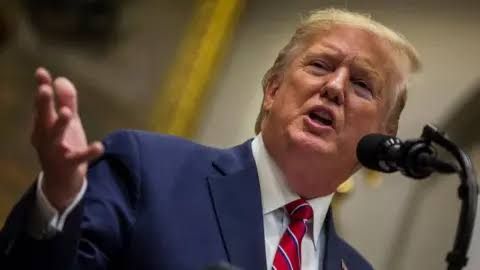
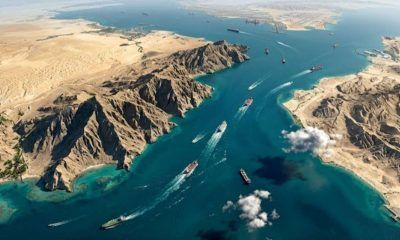
United States President Donald Trump has reversed his earlier decision to impose a 20 per cent fee on cargo passing through the Strait of Hormuz, saying the proposal will instead be replaced by trade and investment agreements with Gulf nations.
Trump announced the policy shift on Tuesday amid escalating tensions between the United States and Iran and renewed concerns over the security of one of the world’s most critical oil shipping routes.

The president had on Monday threatened to impose a 20 per cent levy on all cargo transiting the Strait of Hormuz, arguing that the United States bore a disproportionate share of the burden of protecting the strategic waterway.
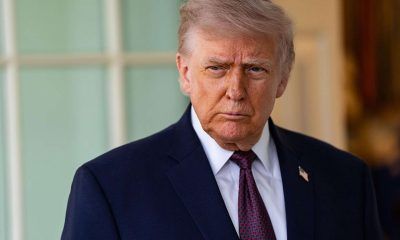
However, speaking at the White House, Trump said he decided against the plan following discussions with leaders from Gulf countries.
“I don’t like the concept of a fee,” Trump told reporters. “But at the same time, it’s not fair we’re protecting the strait for everybody.”
He added that the proposed charge would be replaced by trade and investment arrangements with Gulf states.
The reversal came as hostilities between Washington and Tehran intensified. The United States and Iran exchanged fresh strikes overnight, while Iran’s Islamic Revolutionary Guard Corps claimed responsibility for attacks on two tankers in the Strait of Hormuz.
According to the United Nations maritime agency, at least two seafarers were killed in the incidents.
The US military said it carried out strikes targeting facilities linked to Iran’s capacity to threaten commercial shipping in the region.
Iranian state media also reported explosions near the southern port cities of Bandar Abbas and Bushehr, though details of the incidents were not immediately clear.
Earlier, Tehran said it had launched attacks against US-linked sites in Bahrain and Jordan as the conflict continued to widen across the region.
Despite the deteriorating security environment, analysts said some shipping operators were still weighing the risks of navigating the Strait of Hormuz, a route through which a significant share of the world’s oil supplies passes.
Energy economist Jorge Leon of Rystad Energy said crude oil exports through the strait had fallen sharply since the conflict escalated.
According to him, about 15 million barrels of crude oil per day were moving through the waterway toward the end of June, but volumes have since dropped to below five million barrels daily.
“We see very limited traffic right now and that’s worrying,” Leon said.
He noted that oil prices had risen to about $87 per barrel but remained below levels that would indicate expectations of a prolonged disruption.
“The market appears to believe there is still a reasonable chance that the crisis will be resolved in the coming days or weeks,” he said, warning that a complete halt in shipping for several weeks could trigger further upward pressure on global oil prices.
Trump also defended his earlier decision to suspend a previous naval blockade against Iran, saying he had wanted to give Tehran an opportunity to reach an understanding with Washington.
“I wanted to give them a chance,” the president said, adding that Iran had resumed attacks after disagreements emerged over parts of the proposed arrangement.
The US is expected to resume its blockade of Iranian ports later on Tuesday, a move that could further heighten tensions in the Gulf region and raise concerns about global energy supplies.