Business
Oil shock waves: Iran war sends Africa scrambling to Dangote Refinery

The escalating conflict involving Iran, Israel and the United States is sending shock waves through global energy markets, triggering a surge in fuel demand across Africa and thrusting the Dangote Refinery into a pivotal role as the continent’s primary supply lifeline.
As tensions deepen in the Gulf, crude oil prices have surged to nearly $120 per barrel, driven by fears of prolonged disruption to key shipping routes – especially the strategic Strait of Hormuz, through which a significant share of the world’s oil flows. The resulting supply strain is forcing African nations to urgently pivot toward regional refining capacity, with Nigeria’s flagship facility emerging as a critical buffer against global volatility.
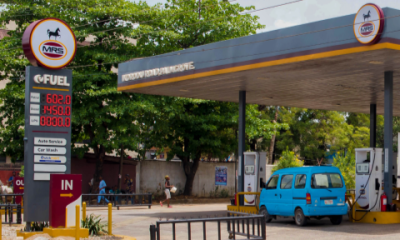
Reflecting the intensifying pressure, the refinery on Friday raised its ex-depot petrol price from N1,175 to N1,245 per litre, while its coastal price climbed to N1,606,518 per metric tonne. The adjustment, effective from March 21, was attributed to rising crude costs and escalating geopolitical risks.
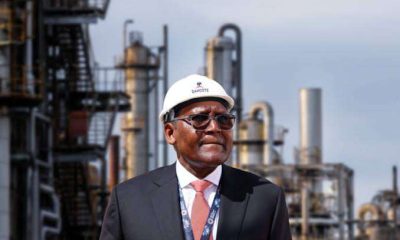
President of the Dangote Group, Aliko Dangote, painted a stark picture of the unfolding crisis.
“It’s a crazy situation right now,” he said, warning that instability in global markets is unlikely to ease anytime soon. “And I think it will continue for a while.”
With a processing capacity of 650,000 barrels per day – the largest in Africa – the refinery is witnessing an unprecedented spike in demand as countries across the continent scramble to secure fuel supplies.
“People are ready to pay anything now,” Dangote said, highlighting the fierce competition for limited refined products.
The development underscores the refinery’s growing strategic importance, not only for Nigeria but for Africa as a whole. By cutting reliance on imported petroleum products, the facility has helped ease pressure on foreign exchange and stabilise domestic supply in a period of global uncertainty.
“Nigeria would have been at a standstill now without the refinery,” Dangote noted.
Beyond immediate market pressures, he framed the project as a symbol of Africa’s long-overdue industrial awakening.
“If we Africans don’t lead in the industrialisation of Africa, Africa will never industrialise,” he said, urging greater investment in homegrown infrastructure and production capacity.
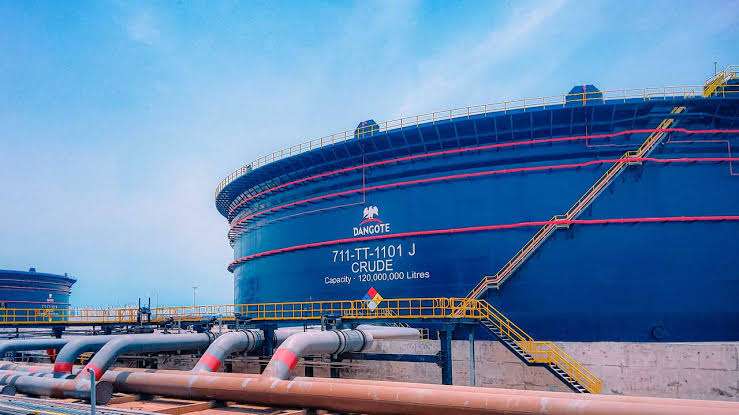
The refinery’s vast industrial footprint-including storage terminals, a dedicated port, and even an airstrip under construction-has positioned it as one of the most ambitious private-sector ventures on the continent.
“Actually we are building a runway there. Nobody believes something like this exists in Africa,” Dangote added.
Its importance has been further magnified by disruptions in the Strait of Hormuz, a critical artery for global oil, fertiliser, and petrochemical shipments. With traffic in the corridor under threat, the Dangote complex is increasingly serving as a regional hub not just for fuel, but for broader industrial inputs.
Looking ahead, Dangote revealed plans to expand refining capacity and list part of the business on both the Nigerian Exchange and international markets, including London. He also aims to leverage gas from the facility to power nearby industries, potentially transforming the area into a major manufacturing cluster.
The group’s ambitions extend across Africa, with investments planned in fertiliser production in Ethiopia and additional projects spanning cement, power, and mining in countries such as Zimbabwe, Zambia, Ghana and Côte d’Ivoire.
Yet Dangote expressed doubt that similar large-scale projects can easily be replicated elsewhere on the continent.
“I can’t see any African country today building a refinery,” he said. “Even when they have the capital, they are scared to invest. We are not.”
Meanwhile, geopolitical developments continue to shape the outlook. U.S. President Donald Trump signalled that Washington may be nearing the end of its military campaign against Iran, suggesting a possible drawdown of operations.
“We are getting very close to meeting our objectives as we consider winding down our great military efforts in the Middle East,” Trump said, claiming significant degradation of Iran’s military capabilities.
He also called on countries that depend on the Strait of Hormuz to take greater responsibility for securing the vital shipping route.
“The United States does not [need to police it],” he said. “If asked, we will help… but it shouldn’t be necessary once Iran’s threat is eradicated.”
Trump, however, lashed out at allies in the North Atlantic Treaty Organization, accusing them of failing to support U.S. operations.
“Without the USA, NATO is a paper tiger,” he wrote, branding member states “cowards” for avoiding military involvement while complaining about rising oil prices.
Amid the escalating tensions, the United Kingdom has authorised the U.S. to use its military bases to strike Iranian missile sites targeting vessels in the Strait of Hormuz -further raising the stakes in an already volatile conflict.