Business
Nigeria in dilemma over raging M/East war
*Fuel price, transport costs soar
* FG earns more revenue as crude price hits $94
The raging war in the Middle East between the United States, Israel and their gulf states allies on one side, and the Islamic Republic of Iran and its satellites on the other, has continued to have wide-ranging consequences for Nigeria’s economy and its populace.
While the government, made up of the three tiers of government (the federal, states and local governments), as well as the Nigerian populace are both impacted by the war, the contrasting fortunes of the two sides could not be more stark.
According to Business Hallmark findings, the national and sub-national governments, who had received knocks earlier in the year for setting seemingly unattainable revenue targets for 2026, are in sheer luck, as the prices of crude oil and natural gas in the international market continues to soar.
At the close of trading on Friday, March 6, 2026, crude oil (Brent benchmark); natural gas (European benchmark) and liquefied natural gas (Asian LNG benchmark), which represents about 50% of Nigeria’s distributable revenue and contributes over 80% of the nation’s foreign exchange earnings, traded at $92.69 per barrel, €39.40 per megawatt hour (MWh) and $15.068 per million British thermal units (MMBtu) respectively.
On the other hand, Nigerian oil grades traded higher due to their premium nature. For instance, while the nation’s popular grade, Bonny Light, closed at $95.36, Brass River and Qua Iboe closed at $95.16 and $94.96 respectively. This represents about 33% extra revenue for the government.
Windfall for Government
It would be recalled that the Federal Government had set oil production and price benchmarks at 1.84million barrels per day and $64.30 per barrel respectively in the 2026 Appropriation Budget.
With Nigerian oil production currently standing at 1.8 million barrels per day (including condensates), and its oil grades averaging $94, the country is currently earning roughly $30 above the benchmark, translating to about $53 million (N74.2billion) in additional revenue daily.
Consequently, Nigeria’s daily crude oil earnings (excluding gas) has risen to about $151 million or N186.3 billion. This translates to a monthly income of $4.530 billion and N6.35 trillion from oil sales at an average price of $90 per barrel and exchange rate of N1,400/$.
As a result, the nation is now awash in petro dollars, providing the government huge income to fund its underperforming budgets and cut deficits.
Some experts, who spoke on the development argued that if channelled properly, the huge inflow will further help in stabilizing the naira.
“With the extra $26 million daily inflow from its own share of oil revenue, and we have not even factored in revenues from gas sales, which is also huge, the Central Bank of Nigeria (CBN) will have more room to manoeuvre in its push to shore up the naira.
“The inflow will also help the government to balance its budget. I foresee appetite for borrowings slowing down in 2026 as there will be less need for it,” said Dr. Peju Beckley, a development economist.
Bad Fortune for Nigerians
While the national and sub-national governments are happy that more money is flowing into the national purse for sharing, millions of Nigerian masses, who are still struggling under the yoke of economic hardship, are in for a difficult period with the prices of goods, especially fuel, transportation and import-related goods soaring.
Barely a week after the the United States and Israel’s declared war on Iran on February 28th, 2026, prices of some goods and services, especially energy related, have skyrocketed.
According to BH checks, fuel marketers effected two increases in petrol prices in the spate of one week. On March 2nd, 2026, two days after the commencement of the war, Dangote Refinery increased its ex-depot petrol price from N774 to N874 per litre, a move that sent ripples through the fuel supply chain.
Immediately after the announcement, fuel stations increased the pump prices of petrol to between N830 to N835. Yet, again, the refinery increased its ex-depot petrol price from N874 to N995, about N121 increment.
As a result, petrol prices in filling stations across the country rose sharply to between N1,015 and N1,050. Commercial drivers immediately capitalized on the increment by raising their fares by 20% to 40%, depending on the location and routes.
BH also observed that the prices of some essential goods like tomatoes, fruits and liquefied cooking gas have gone up as traders quickly moved to offset the fuel price increase.
Prices spike
A kilogram of cooking gas, which sold for N950 to N1,100 in late February has gone up to between N1,150 to N1,300, depending on the seller and location.
In the same vein, cost of air transportation is expected to go up soon as rising crude prices will impact on the price of aviation fuel.
“We should expect a sharp increase in air transportation. Nigerians, both individuals and businesses, must be ready to pay more to travel and move goods through the air.
“This cost will surely be passed to the end users”, an aviation stakeholder declared.
In their responses to the development, economic and financial experts warned Nigerians to further brace up for price increases if the war doesn’t end soon.
“Every economic activities always have two sides of a coin. The state, I mean the government, will benefit more with additional revenues accruing into its coffers.
“But the flip side of that coin is that Nigeria is an import dependent nation. A larger chunk of the oil windfall will go out the back door from importing pricey goods already impacted by rising energy costs”, Dr. Peju Beckley added.
“There’s always a time lag for the effects of these kind of shocks to manifest. The first wave of price increases we are seeing are opportunistic. As all capitalists tend to do, Nigerian traders and marketers are capitalizing on the situation to make more money. There’s no justification for the upward movement in prices so early in the day as most of the products on the shelves now are old stocks.
“But this is just a tip of the iceberg. The real shocks will come later when rising energy costs are factored into shelve prices of new product. That’s when Nigerians will really start to feel the pinch”, the economic expert noted.
Foreboding Inflation Warning
The International Monetary Fund (IMF) at the weekend also warned that the surge in oil and liquefied natural gas (LNG) prices could test the resilience of the global economy.
In an interview with Bloomberg Television monitored by BH, the Managing Director of IMF, Kristalina Georgieva, said if global energy prices rise by just 10 per cent and remain elevated for a year, inflation could increase by 0.4 percentage points while economic growth could slow by between 0.1 and 0.2 percentage points.
Georgieva disclosed that the financial institution was already engaging vulnerable energy-importing countries to prepare financial support in case the crisis escalates further.
While Nigeria is expected to be negatively impacted by the energy crisis, the effect of the disruption is projected to be tempered by the local production of refined petroleum products by the Dangote Refinery in Lagos.
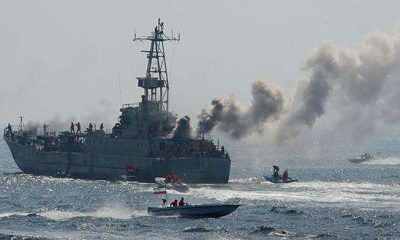
The blockade of the Strait of Hormuz, one of the world’s most important energy shipping routes by Iran, as well as the attacks on oil facilities in gulf states of Qatar, Bahrain, Oman, Kuwait, the United Arab Emirates and others by Iranian forces, have disrupted the flow of oil and gas from the region, sending energy prices into the sky.
Also speaking, Nigeria’s former envoy to Ethiopia, Ambassador Bulus Lolo, cautioned that it’s not in anyone’s interest, including Nigeria, for the war to continue.
According to Lolo, the market will respond naturally to the Middle East crisis and the attacks on oil facilities by feuding parties.
“Sometimes when you have a conflict of this nature, it is good; other times it’s not the best. Nigeria is not in a direct firing line, but any volatility in the oil market will affect us. So, it is in our interest for it to be stable so that our projections will hold.
“There may be a spike in the immediate future whereby prices will go up, but for how long? So, it’s a conflict we do not know what the end will be”, Ambassador Lolo cautioned.