Politics
Senate passes Electoral Act amendment after tense debate over e-transmission clause
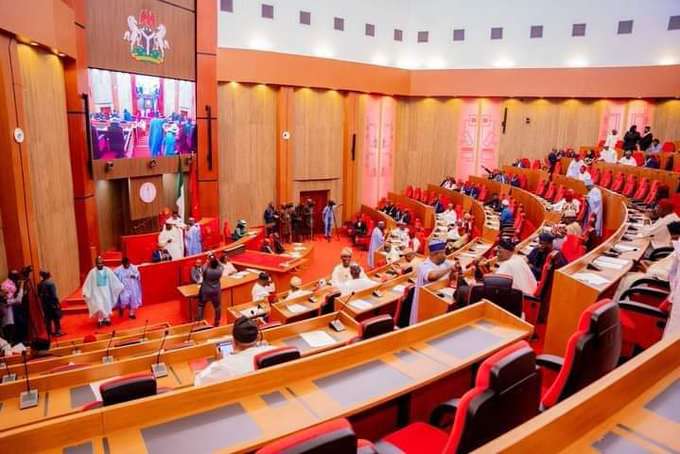
The Senate on Tuesday passed the Electoral Act, 2022 (Repeal and Re-Enactment) Bill 2026 following a tense session dominated by disputes over the electronic transmission of election results.
The row erupted when Senator Enyinnaya Abaribe (ADC/Abia South) demanded a division on Clause 60, specifically sub-clause 60(3), which allows manual transmission of results if electronic transmission fails. Abaribe argued that relying on Form EC8A as a fallback could undermine the integrity of the election process and called for the proviso to be removed.
The demand triggered immediate objections. Senate President Godswill Akpabio said he believed the demand had been withdrawn earlier, prompting opposition senators to challenge him. Deputy Senate President Barau Jibrin cited Order 52(6) of the Senate Standing Orders, saying it would be out of order to revisit a provision that had already been ruled on. The chamber briefly erupted into chaos, with heated exchanges and a face-off between Senators Abaribe and Sunday Karimi.
Senate Leader Opeyemi Bamidele intervened, reminding colleagues that his motion for rescission nullified previous decisions on the bill and aligned with Abaribe’s call for division. Following further debate, the Senate President sustained the point of order and called for a formal division.
During the vote, senators supporting the caveat for manual transmission stood first, followed by those opposing it. Fifteen opposition senators opposed the proviso, while 55 voted in favour, resulting in the retention of the clause allowing manual transmission if electronic transmission fails.
Earlier, the Senate had moved into the Committee of the Whole to consider the bill clause by clause. The motion to rescind the previous passage was formally seconded, allowing detailed reconsideration and re-enactment of the legislation.
The session was briefly stalled when lawmakers approached the Senate President’s desk to consult on Clause 60, prompting a closed-door session before plenary resumed.
Concerns over the timing of the 2027 general elections also influenced the debate. Bamidele explained that the Independent National Electoral Commission (INEC) had set the elections for February 2027, but stakeholders flagged potential conflicts with the Electoral Act’s requirement that elections occur no later than 360 days before the expiration of tenure.
He warned that strict adherence to this provision could push the presidential and National Assembly elections into the Ramadan period, affecting voter turnout, logistics, and overall inclusiveness.
The Senate also noted technical inconsistencies in the bill, including errors in the Long Title and clauses 6, 9, 10, 22, 23, 28, 29, 32, 42, 47, 51, 60, 62, 64, 65, 73, 77, 86, 87, 89, 93, and 143, which affected cross-referencing, numbering, and internal coherence.
With the contentious provisions resolved and discrepancies addressed, the Senate passed the Electoral Act, 2022 (Repeal and Re-Enactment) Bill 2026. The legislation now returns to the House of Representatives for harmonisation with its version ahead of Nigeria’s 2027 general elections.