
Business
Abia establishes SME village as electric bus free-ride service goes commercial next month
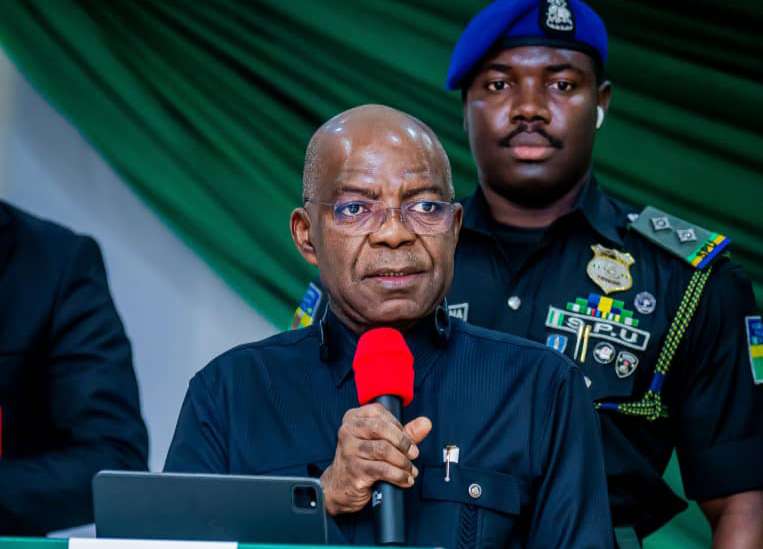
The Abia State Executive Council has approved the establishment of an SME Village and Innovation Hub in Aba as part of efforts to strengthen the state’s economy through small and medium-scale enterprises.
This is also as the state’s one-stop Export Growth Lab and trade support facility, located within the premises of Ogbonnaya Onu Polytechnic, Aba, is expected to be inaugurated before the end of February.
The Commissioner for Information, Prince Okey Kanu, disclosed this at Government House, Umuahia, while briefing journalists on the outcome of this week’s Executive Council meeting. He said the initiative is aimed at removing bureaucratic bottlenecks faced by small businesses, manufacturers and exporters, while positioning Aba as a more competitive commercial hub.
According to him, when completed, the SME Village will accommodate computer dealers, mobile phone sellers, repair technicians and other small-scale operators, while helping to decongest parts of Aba currently plagued by unregulated commercial activities.
He described the projects as part of the present administration’s deliberate policy thrust to create an enabling environment for enterprise growth, job creation and industrial expansion across the state.
“These facilities aim to facilitate the ease of doing business among SMEs in Aba and its environs.
“When fully operational, the Export Growth Lab will assist in activities such as business registration, NAFDAC approvals and other regulatory processes,” Kanu said.
Speaking on the electric bus free-ride service introduced in December, the commissioner said the government plans to introduce electronic ticketing before the scheme goes fully commercial at the end of February, when the free rides will cease.
“Upon the full commencement of the mass transit services, Abians will be expected to pay token fares to ensure the sustainability of the scheme. There will be electronic ticketing that will eliminate cash handling by conductors.
“The pricing model will be based on an analysis of existing market fares involving transport services such as tricycles and minibuses. It will also be based on distance cost rate, rather than first-stop pricing, with government-backed fare moderation.
“The electronic ticketing system will feature contactless smart cards, prepaid and pay-as-you-go options, time transaction recording and a centralised revenue monitoring dashboard,” Kanu stated.
He revealed that between December 22 and January 29, a total of 106,116 passengers were transported over a distance of 74,796.6 kilometres. Within the same period, 14 buses were deployed daily, each conveying an average of 3,034 passengers per day.
“The pilot rollout has offered the bus operators an idea of the intra-city and inter-city mobility demand for the service,” he said.
Kanu added that the scheme would give commuters the option of choosing between the mass transit buses and existing tricycle and minibus services.
“Abians will witness a transformed urban mass transit infrastructure that delivers affordability, comfort and a commuter-friendly experience,” he said.
Also speaking, the Senior Special Assistant to the Governor on Transportation, Dr Obioma Nwaogbe, said the government had commenced sensitisation campaigns to educate residents on the electronic ticketing system, noting that many people were accustomed to cash payments.
“Our people are used to paying with cash, which is why we are carrying out sensitisation. Everything is going digital.
“The card system is ‘tap and pay’. There will be a wallet feature and vendors stationed at bus shelters to assist commuters in loading their cards. Once the wallet is funded, commuters can simply tap and pay to board.
“The e-ticketing is the key component, and there are simple processes in place for both the young and the elderly to use the system without difficulty,” Nwaogbe explained.
He added that the electric buses would operate on designated routes and would not displace tricycle operators, stressing that commuters would be made to queue in an orderly manner before boarding.