Nation
Gunmen slaughter 162 in Kwara village in one of Nigeria’s deadliest attacks

At least 162 people have been confirmed dead after gunmen launched a deadly assault on Woro village in Kaiama Local Government Area of Kwara State, in what humanitarian officials say ranks among the most lethal attacks recorded in Nigeria in recent months.
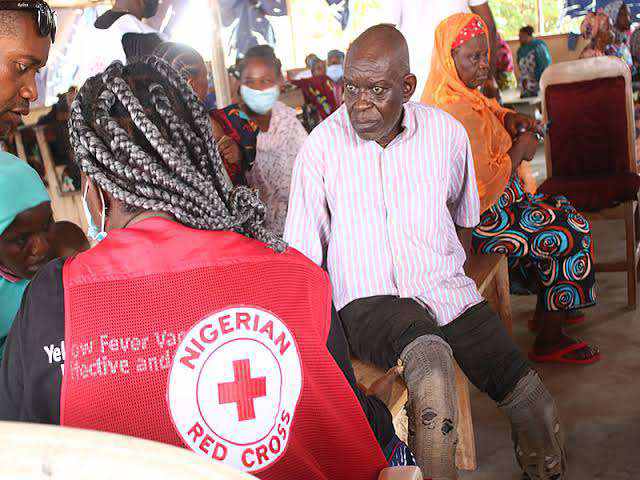
The Kwara State Secretary of the Red Cross, Babaomo Ayodeji, disclosed that rescue teams and volunteers were still recovering bodies days after the Tuesday evening attack.
“Reports said that the death toll now stands at 162, as the search for more bodies continues,” Ayodeji said, revising an earlier figure of 67 fatalities.
The attack, which took place at about 6:00 p.m., was also acknowledged by the police and the Kwara State Government, although both stopped short of giving official casualty numbers.
A lawmaker representing the Kaiama axis, Sa’idu Baba Ahmed, had earlier stated that between 35 and 40 bodies were initially counted shortly after the attackers fled the village.
He said the assailants arrived in large numbers, opened fire on residents, and set several structures ablaze, including shops and the palace of the traditional ruler.
“Many others escaped into the bush with gunshot wounds,” Ahmed said, warning that the final toll could rise as search efforts continue. He added that the whereabouts of the village head remained unknown in the aftermath of the attack.
The Kwara State Government attributed the killings to what it described as “terrorist cells” operating within parts of the state. Governor AbdulRahman AbdulRazaq condemned the incident, calling it “a cowardly expression of frustration by terrorist cells following the ongoing counter-terrorism campaigns in parts of the state.”
Nigeria has been contending with multiple, overlapping security challenges. Armed groups known locally as bandits have continued to raid rural communities and carry out kidnappings for ransom. Insurgent groups remain active in parts of the North-East and North-West, while intercommunal clashes frequently erupt in central states.
In recent weeks, the Nigerian military has stepped up operations in Kwara and adjoining areas. On January 30, the army announced that it had commenced “sustained coordinated offensive operations against terrorist elements” in parts of the state.
According to the military, about 150 bandits were “neutralised” during the operations, and several camps and logistics bases used by the armed groups were destroyed.
“They successfully neutralised terrorists, while others managed to escape into the forest,” the army said, noting that previously inaccessible hideouts had been cleared.
Prior to the Woro attack, authorities had imposed curfews in some affected communities and temporarily shut down schools as a precaution. Schools were reopened on Monday, just 24 hours before the deadly raid.
The massacre has once again drawn attention to the vulnerability of rural communities despite heightened security operations and government assurances.
The incident also comes amid renewed international focus on Nigeria’s security situation. United States President Donald Trump had recently alleged that Christians were facing a “genocide” in Nigeria, an assertion rejected by Nigerian authorities and independent analysts, who argue that violence across the country affects people of different faiths without distinction.
Reports have also indicated that the United States has increased its security engagement with Nigeria in response to the deteriorating situation.