Opinion
Europe’s puerile response to Trump over Greenland
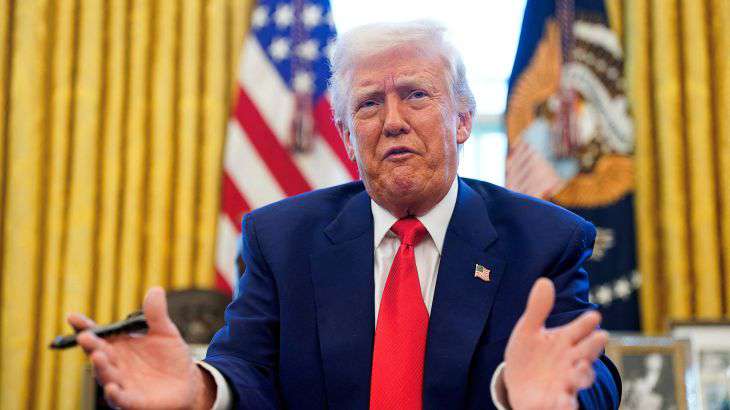
Europe’s reaction to President Donald Trump’s renewed musings about Greenland reveals less about American intentions than about European confusion. Once again, tone has been mistaken for strategy, and provocation for policy. Outrage has flowed freely across European capitals, yet little effort has been made to situate Trump’s remarks within the harder geometry of power that underpins transatlantic relations.
The real issue is not Greenland. It is NATO—and Europe’s unresolved dependence on the United States for its own security. Trump’s diplomatic style is by now familiar: transactional, abrasive, and deliberately unsettling. He speaks publicly in ways previous American presidents preferred to cloak in diplomatic euphemism.
But beneath the noise lies a continuity of interests. The United States has always treated Greenland as a strategic asset of first-order importance, not a distant Danish possession. Its Arctic geography matters for missile defence, early-warning systems, and great-power competition with Russia and China. Washington already acts accordingly. What has changed is not American behaviour, but its presentation.
Europe, however, continues to respond as if language itself were the threat. Trump’s bluntness is read as hostility rather than leverage. His opening gambits are taken literally rather than as negotiating positions. This misreading is costly. It encourages moral posturing where strategic calculation is required, and obscures the more uncomfortable reality that Europe lacks credible alternatives to U.S power.
That reality is starkest in NATO. Despite decades of rhetoric about “European strategic autonomy,” the alliance remains fundamentally American. The U.S supplies the bulk of NATO’s military capabilities: nuclear deterrence, intelligence, logistics, airlift, missile defence, and command-and-control.
Without Washington, NATO would still exist on paper, but its deterrent credibility would be severely diminished.
European armed forces, while capable in parts, remain fragmented, underfunded, and slow to mobilize at scale. This asymmetry explains Trump’s impatience. From his perspective, the U.S underwrites Europe’s security while Europeans debate symbolism. Alliances are not charities. Europe may dislike the framing, but it has struggled to refute the substance.
Greenland is as much symbol as substance. Danish sovereignty over the island is real, but so too is U.S strategic primacy. The U.S has long enjoyed exceptional military privileges there, with Denmark’s consent. Trump’s remarks do not meaningfully alter this balance; they merely expose it. Treating Greenland as a red line worth a transatlantic rupture elevates symbolism above security, and risks confusing the marginal with the essential.
The uncomfortable conclusion is that Greenland is, in strategic terms, a small price compared with NATO. Not because sovereignty is trivial, but because the loss or dilution of U.S security guarantee would impose far greater costs on Europe than any diplomatic affront over Arctic real estate. A NATO without the U.S would not be a more equal alliance; it would be a weaker one, and a more tempting target for adversaries.
Europe’s indignation also masks a deeper contradiction. European leaders insist on U.S protection while recoiling from its assertiveness. They demand U.S. commitment while resisting U.S. leverage. This posture might have worked when U S presidents were willing to absorb the imbalance quietly. Trump is not. He treats alliances as contracts subject to renegotiation, not moral inheritances.
Complaining about this approach does not change it. Nor does this mean Europe must simply acquiesce. The logical response to Trump’s pressure is not outrage but preparation. If Europe believes U.S demands are unacceptable, it must build the capacity to say no credibly. That means sustained defence spending, deeper military integration, and political willingness to assume risk.
These ambitions have been discussed for years, especially after Russia’s invasion of Ukraine. Progress remains uneven, and dependence on Washington persists. In this sense, Trump’s diplomacy, however inelegant, performs a clarifying function. It strips away comforting illusions, and forces Europe to confront choices it has long deferred.
Strategic autonomy cannot be proclaimed; it must be paid for. Until it is, Europe’s leverage in disputes with U.S will remain limited. The danger for Europe is not that Trump speaks too plainly, but that European leaders continue to misunderstand the message. Power relationships endure regardless of rhetoric. NATO, as it currently exists, is inseparable from U.S leadership.
To jeopardise that relationship over a misreading of diplomatic theatre would be an act of strategic self-harm. In geopolitics, the choice is rarely between principle and pragmatism, but between relative costs. Framed properly, Europe’s choice between NATO and Greenland is not a dilemma at all. It is a reminder of where power still lies, and of how much Europe has yet to do if it wishes, one day, to negotiate with U.S as an equal rather than a dependent.