Politics
Presidency knocks Atiku over claim Tinubu govt worse than military era
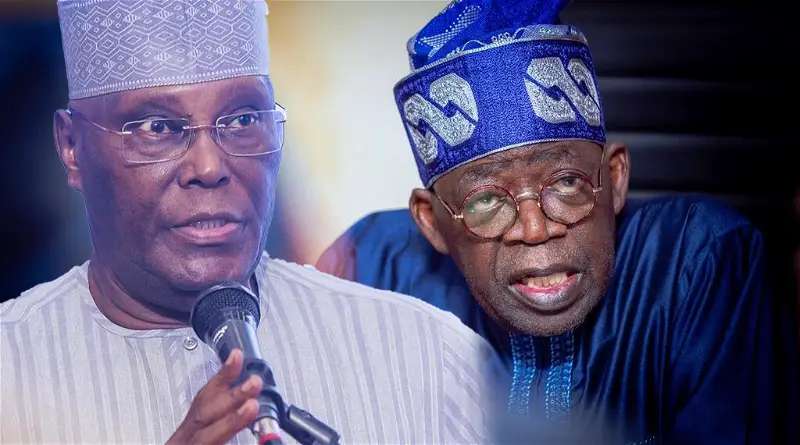
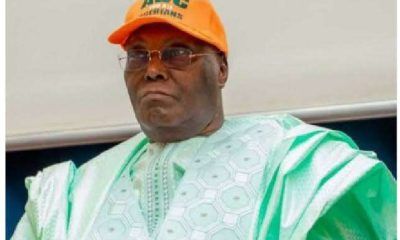
The Presidency has faulted former Vice-President Atiku Abubakar for likening the administration of President Bola Tinubu to military dictatorship, describing the comparison as reckless, historically dishonest and deeply disrespectful to the victims of past military regimes.
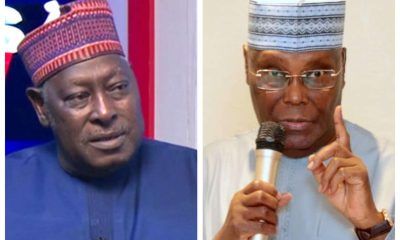
Atiku had made the remarks on Tuesday in Abuja during the public presentation of The Loyalist, a book written by the National Publicity Secretary of the African Democratic Congress (ADC), Bolaji Abdullahi.
The former vice-president, a two-time presidential candidate, described the All Progressives Congress (APC)-led government as the worst he had witnessed in nearly 40 years of political involvement, claiming that even Nigeria’s military dictatorships before 1999 were less damaging to the country’s national life.
Responding on Wednesday, the Special Adviser to the President on Media and Communication, Sunday Dare, dismissed Atiku’s remarks as a “willful distortion of history” driven by political frustration.
In a statement titled “Re: Tinubu’s Government a Dictatorship – Atiku Abubakar’s Cognitive Dissonance,” Dare said the former vice-president’s comments trivialised the brutality of military rule and insulted Nigerians who suffered under authoritarian regimes.
“For a man who once served as Vice President under a constitutional democracy, Atiku Abubakar’s inability to distinguish between military dictatorship and democratic governance is alarming,” Dare said.
“To suggest that the current administration is worse than military rule insults the memory of Nigerians who were jailed, exiled or killed under decrees and firing squads.”
Dare argued that Atiku’s claim collapses under scrutiny, noting that the former vice-president continues to enjoy unrestricted democratic freedoms.
“In the same republic he brands tyrannical, he moves freely, convenes political meetings, grants interviews and attacks the President almost daily, all under full constitutional protection,” he said.
“These liberties were extinguished without hesitation under military rule.”
The presidential aide further described Atiku’s criticism as a recurring post-election pattern, accusing him of recasting himself after every electoral loss as a victim of the system.
“Atiku has perfected the art of post-election grievance, reinventing himself every four years as the chief mourner of his own defeats,” Dare said.
“At this point, his only ideology appears to be unfulfilled ambition.”
At the book launch, Atiku had argued that the ADC represents a coalition of political actors seeking to rescue Nigeria from what he described as an unprecedented crisis of governance.
He said many of those present were involved in the formation of the APC but had become disillusioned by its performance in government, calling for the emergence of a credible political alternative.
However, Dare warned that equating an elected government with military dictatorship was dangerous and corrosive to Nigeria’s democratic culture.
“To argue that a government produced by the ballot is worse than one imposed by bullets is reckless,” he said.
“It undermines the legacy of June 12 and flirts with democratic sabotage.”
Dare concluded by describing Atiku as a diminished political figure resorting to exaggeration after exhausting ideas and credibility.
“Nigeria has moved on,” he said.
“Atiku Abubakar’s rhetoric is no longer a national issue; it is a personal crisis playing out in public.”