Politics
2027: Tension Mounts in Opposition Camp as Supreme Court Rules on ADC, PDP Leadership Disputes Today
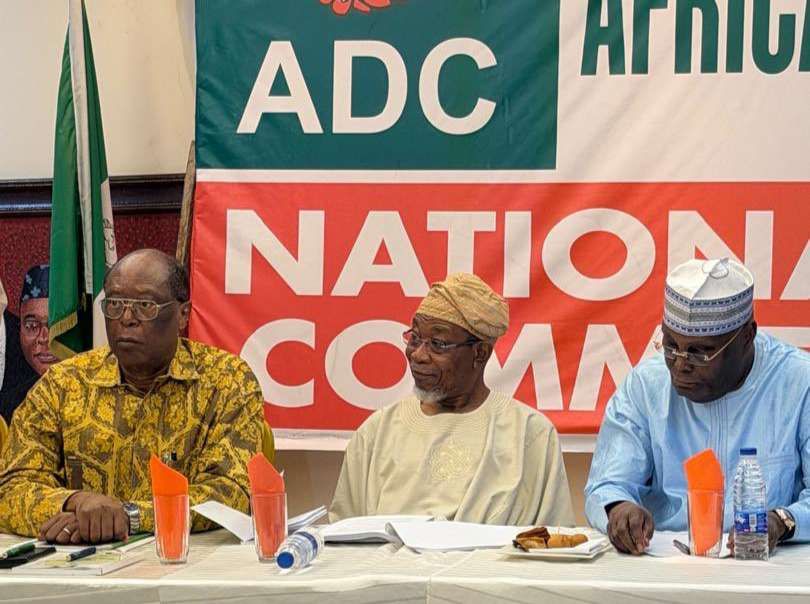
There is growing anxiety within Nigeria’s opposition ranks as the Supreme Court delivers judgment today on two major political cases involving leadership disputes in the Peoples Democratic Party (PDP) and the African Democratic Congress (ADC), rulings expected to significantly shape the country’s political landscape ahead of the 2027 general elections.
The apex court is set to determine appeals challenging earlier judgments of lower courts on contested party leadership structures, disputes that have fuelled prolonged internal crises and legal uncertainty within both parties.

Court documents indicate that the matters, listed under “Political Appeals,” are scheduled for judgment at 2pm today, with suit numbers SC/CV/166/2026 (PDP) and SC/CV/180/2026 (ADC).
Ahead of the ruling, tension has intensified across both parties, with senior stakeholders reportedly engaging in emergency consultations late Wednesday to review possible outcomes and prepare contingency strategies.
Political commentator Imran Wakili confirmed on social media that ADC leaders held a closed-door emergency meeting ahead of the judgment, focusing on the implications of the Supreme Court decision on the party’s structure and future participation in elections.
“ADC leaders are currently in an emergency strategic meeting ahead of tomorrow’s Supreme Court ruling on the party’s leadership tussle,” he wrote. “The closed-door meeting is expected to review possible outcomes of the judgment and chart the next line of action for the opposition coalition.”
He added that key opposition figures, including former presidential candidate Peter Obi and former Kano State governor Rabiu Musa Kwankwaso, were notably absent from the gathering, a development that has triggered fresh speculation about divisions within the coalition.
The ADC crisis stems from a protracted leadership struggle between factions aligned with former Senate President David Mark and another group led by Nafiu Gombe. The dispute has fractured the party’s structure and raised concerns over its readiness for the 2027 elections.
In a related development on Wednesday, the Federal High Court in Abuja restrained the Independent National Electoral Commission (INEC) from recognising congresses conducted by a disputed caretaker leadership within the ADC.
The court also barred some party leaders from interfering with the tenure of elected state executives, effectively strengthening the position of existing structures pending final resolution of the dispute.
Reacting to the ruling, ADC National Chairman David Mark expressed confidence that the party would overcome its legal challenges and remain united.
“You do not have anything to be afraid of regarding all the litigations before the party,” he said. “I want to assure you that we shall triumph in all the cases, and we shall be on the ballot for every election.”
He added that the party had already commenced the process of appealing the judgment and applied for a stay of execution, while confirming that an emergency meeting was held on Wednesday following the court decision.
However, 2023 ADC presidential candidate Dumebi Kachikwu welcomed the ruling, insisting it would help prevent what he described as attempts to hijack the party’s structure.
The Supreme Court had earlier concluded hearings on April 22 after listening to arguments from all parties, including INEC and rival factions within both political organisations. The five-member panel, led by Justice Mohammed Garba, reserved judgment without fixing a date until it was scheduled for today.
The urgency of the matter was underscored by a letter from ADC lawyers to the Chief Justice of Nigeria, urging an expedited ruling to prevent disruptions to the party’s participation in the 2027 elections.
The lawyers warned that delays in judgment could leave the party in a leadership vacuum, potentially jeopardising compliance with electoral timelines and risking exclusion from the polls.
Meanwhile, both factions within the PDP are also closely monitoring today’s decision, with rival blocs positioning themselves for possible shifts in leadership depending on the outcome.
The Independent National Electoral Commission (INEC) has already released the timetable for the 2027 elections, with presidential and National Assembly elections scheduled for January 16, 2027, while governorship and state assembly polls are fixed for February 6, 2027.
Political parties are expected to conduct primaries between April and May 2026, with campaign activities slated to begin in August 2026 for national elections and September 2026 for state contests.
With today’s ruling expected to clarify long-standing disputes, analysts say the Supreme Court’s decision could redefine party control structures and significantly influence opposition strategy ahead of the next general election cycle.