Business
Three years of pain, promise still pending: How Tinubu’s shock reforms remade Nigeria’s macroeconomy, but left millions behind
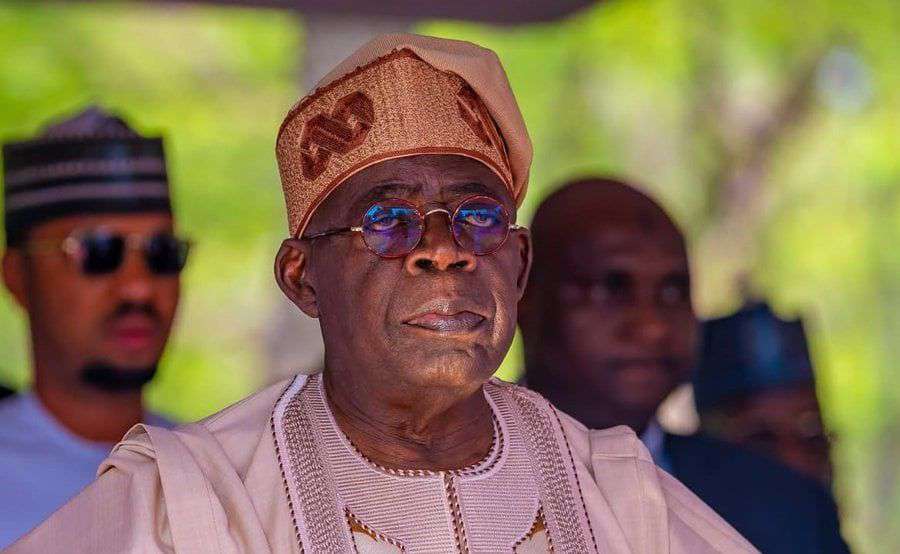
The IMF applauds. Investors are returning. But food inflation hit multi-decade highs, poverty deepened sharply, and ordinary Nigerians are asking a simple question: when does the suffering end?
By Josiah Nkemakolam

On 29 May 2023, barely minutes after being sworn in as Nigeria’s president, Bola Ahmed Tinubu leaned into the microphone and delivered a declaration that would define his tenure: “Fuel subsidy is gone.” It was a stunning, unscripted act of policy,one that international economists had long demanded and that Nigerians had long feared. Three years later, both responses have proven entirely justified.
The government that Tinubu assembled has moved with remarkable speed on reforms that previous administrations avoided for decades. It removed the fuel subsidy. It liberalised the foreign exchange market. It raised interest rates aggressively to tame inflation. It began reforming public finances and restoring a degree of credibility with multilateral lenders. On each of these fronts, the results are visible, at least in the language of macroeconomics.
But macro-stability and human welfare are not the same thing. And in the gap between those two realities lies the central tragedy of Tinubu’s first three years: a government that has earned international applause while millions of its own citizens have grown measurably poorer.
The Economy Tinubu Inherited, and Why It Could Not Wait
To understand what happened, one must first reckon with what Tinubu inherited. By May 2023, Nigeria’s economy was being held together by a series of expensive and distorting fictions.
Fuel subsidies were consuming billions of dollars annually, money that funded imports of refined petroleum for a country that exports crude oil but cannot refine enough of it for domestic use. The multiple exchange-rate regime had created a thriving arbitrage industry, with those with access to cheap official dollars selling at premium parallel-market rates and pocketing the difference. The Central Bank under its previous governor had resorted to printing money, so-called “Ways and Means” financing, to plug fiscal holes, injecting inflationary pressure into the system. Oil theft had gutted export revenues. Reserves were weak. Investor confidence had deteriorated sharply.
“The economy Tinubu inherited was unsustainable. There were distortions everywhere, in fuel pricing, in foreign exchange allocation, in monetary financing. The question was not whether reforms were needed. The question was how quickly and how painfully they would be implemented.”
That assessment came from Bismarck Rewane, chief executive of Financial Derivatives Company and one of Nigeria’s most respected economists. He spoke those words not as a criticism of the reform agenda, but as a sober description of the fiscal reality Tinubu faced on day one. The inheritance was grim. The reform path was unavoidable. The only real debate was over sequencing and speed, and it is here that the government’s choices become most consequential and most controversial.
Shock Therapy: The Choice for Speed
Tinubu chose speed. Within days of taking office, the fuel subsidy was gone. Within weeks, the foreign exchange market was liberalised, the naira was allowed to float more freely, and the era of cheap official dollars for connected insiders was, at least formally, over.
The international financial community responded with rare enthusiasm. The International Monetary Fund declared that the government had implemented major reforms that improved macroeconomic stability and enhanced economic resilience. It credited the reforms with improving foreign exchange market functioning, reducing monetary financing of deficits, strengthening reserves, and restoring investor confidence. Eurobond issuance resumed. Moody’s upgraded Nigeria’s sovereign credit rating, citing stronger fiscal and external positions.
Portfolio flows returned.
By the numbers that matter to international investors, Nigeria was healing.
But for the tens of millions of Nigerians who live on wages, sell in markets, and run small businesses, the experience of those same months was something else entirely.
Petrol prices more than tripled in many parts of the country almost overnight. Transport fares surged immediately. The naira’s depreciation, a necessary correction, economists argued, but a brutal one in practice, pushed up the cost of everything imported: raw materials, machinery, medical supplies, food staples, consumer goods. Food inflation, already elevated before Tinubu’s inauguration, accelerated sharply.
By 2024, Nigeria’s average inflation had surged past 31 per cent, according to IMF estimates, a rate not seen in a generation.
“At first we thought prices would come down after a few months. Instead, everything became more expensive, transport, rent, diesel, food. Customers stopped buying.”
Chinedu Okafor, a spare-parts trader in Lagos’ Ladipo market, is not an economist. But his experience captures what the data confirms: for those at the base of the Nigerian economy, the reform shock was not a temporary inconvenience. It was a sustained assault on purchasing power that, three years in, has not fully relented.
Growth Without Gain: The GDP Illusion
Nigeria’s economy grew. The headline numbers, when they emerged, were not disastrous. Real GDP expanded by 2.9 per cent in 2023 and accelerated to 3.4 per cent in 2024. Growth was supported by a recovery in oil production, a buoyant financial services sector, telecommunications expansion and the ongoing surge in fintech activity. In parts of 2025, Nigeria recorded some of its fastest quarterly growth in years, driven by services and hydrocarbon output.
But growth figures, stripped of context, are the most deceptive of all economic statistics in a country like Nigeria.
Nigeria’s population is growing at roughly 2.5 per cent annually.
When a country of over 220 million people grows at 3.4 per cent, the per-capita gain , what actually reaches individuals, is barely over one per cent. Set against inflation running above 30 per cent, that arithmetic produces a deeply uncomfortable conclusion: most Nigerians were getting poorer in real terms even as the headline economy grew.
“Three to four per cent GDP growth sounds respectable on paper. But when population growth, inflation and unemployment are considered, many Nigerians are still becoming poorer in real terms.”
That candid assessment came from Muda Yusuf, former director-general of the Lagos Chamber of Commerce and Industry and one of the most authoritative voices on the Nigerian private sector. Even the IMF, which has broadly endorsed the Tinubu reform programme, acknowledged that per-capita growth remained too low. It is a telling concession from an institution not typically given to understatement.
The Factory Floor: Manufacturing’s Triple Squeeze
Manufacturing has become one of the sharpest lenses through which to examine the contradictions of the Tinubu era. In theory, manufacturers should have welcomed FX liberalisation: the old multiple-rate system encouraged arbitrage, distorted input costs and rewarded political connections over productive investment.
In practice, the speed and scale of naira depreciation overwhelmed whatever benefits FX reform might have brought.
Firms dependent on imported machinery, industrial chemicals, packaging materials and spare parts saw input costs surge almost overnight. The Central Bank, in its effort to tame inflation, raised interest rates sharply, increasing the cost of borrowing at precisely the moment when many manufacturers needed credit most. And electricity shortages, endemic to Nigeria’s power infrastructure crisis, forced continued dependence on diesel generators whose operating costs had themselves soared after subsidy removal.
“Nigerian manufacturers are facing a triple squeeze, high energy costs, high financing costs and weak consumer demand.”
The diagnosis came from analyst Ayodeji Ebo of Optimus by Afrinvest. It is a precise description of an industry caught between three compounding forces, any one of which would be challenging in isolation. Together, they have been devastating for many producers. Smaller factories reduced production shifts. Expansion plans were shelved. Staff were let go. The IMF itself noted that elevated energy costs and naira depreciation weighed heavily on manufacturing and trade, a significant acknowledgement within a document otherwise broadly supportive of the government’s direction.
The Market Women and the Invisible Economy
If manufacturing is struggling, the informal economy, which accounts for the majority of Nigerian employment and livelihoods, has absorbed a level of pain that no official statistic fully captures.
Across the great commercial hubs of Lagos, Kano, Aba and Onitsha, traders and small business owners have told a consistent story over the past three years: customers have stopped buying anything beyond food. Ceremonies, clothing, household items, school supplies, purchases that represent a modest dignity of life, have been deferred or abandoned entirely.
“People only buy food now. Before, customers could buy clothes for ceremonies or school events. Now they say they are struggling to feed their families.”
Amina Bello runs a small clothing shop in Kano. Her account is not exceptional. It is, by all available evidence, representative. The informal sector absorbed the brunt of the adjustment because it had no buffer: no bank credit facilities, no import duty exemptions, no political connections to leverage. Interest rates climbed as the Central Bank tightened, making even small business loans expensive. Consumer purchasing power collapsed. And through it all, the sector, which employs more Nigerians than any formal industry, was largely invisible in the policy debate.
The Naira: Stabilisation for Whom?
No issue has crystallised public anger more acutely than the fate of the naira.
The foreign exchange liberalisation was, by technocratic consensus, the right call. The old regime, with its multiple rates, its access-rationing, its enormous rents for the connected , was economically indefensible and socially corrosive. Reforming it was necessary. The IMF argued persuasively that FX reform improved market functioning and strengthened external resilience. Nigeria’s reserves improved. The premium between official and parallel rates narrowed. These were real gains.
But liberalisation, whatever its long-term merits, imposed immediate and severe costs on importers, manufacturers, and every Nigerian household that buys anything produced with imported inputs, which is to say, almost every Nigerian household.
“What matters to people is not whether the IMF is happy. What matters is whether salaries can still buy food.”
Johnson Chukwu, managing director of Cowry Asset Management, articulated the defining tension of the Tinubu economic narrative in a single sentence. It is a tension the government has not yet resolved. International investors and domestic citizens are evaluating the same economy through entirely different lenses. For investors, the story is one of restored credibility and improved fundamentals. For citizens, it is one of collapsed purchasing power and daily economic anxiety.
The Hunger Behind the Statistics
The most damning numbers in Nigeria’s three-year economic ledger are not the inflation figures or the exchange-rate charts. They are the poverty statistics.
The World Bank estimated that over 60 per cent of Nigerians were living below the poverty line by 2025, with inflation pushing millions more into hardship. The institution warned that rising prices disproportionately affected the poorest households, who spend up to 70 per cent of their income on food. For these families, and there are tens of millions of them, the distinction between a 31 per cent inflation rate and a 20 per cent inflation rate is largely academic. Both rates represent hunger.
“Sometimes we eat once a day. Everything is expensive. Rice, beans, transport, all have doubled.”
Fatima Usman is a widowed mother of four in Kaduna. Her account requires no analytical gloss. It is the unmediated economic reality of Tinubu’s Nigeria for an enormous share of the population, a population the president himself often describes, in his public addresses, as the beneficiaries of his reform programme.
Even as inflation began easing in 2025, economists were careful to explain that lower inflation does not mean lower prices. It means prices are rising more slowly than before. For Fatima Usman and families like hers, that is a distinction without a meaningful difference.
Insecurity: The Reform the Government Cannot Fix
Perhaps the most underappreciated constraint on Nigeria’s economic recovery is one that monetary and fiscal policy cannot directly address: insecurity.
Banditry, kidnappings and insurgency have continued disrupting farming communities across swathes of northern Nigeria, limiting agricultural output, displacing rural populations and worsening food inflation in ways that no interest rate decision can cure. The World Bank flagged insecurity as a major obstacle to growth and employment generation. The IMF noted that agriculture remained subdued because of security challenges and declining productivity.
Nigeria must absorb millions of new labour market entrants annually. The World Bank has emphasised that job creation has remained grossly insufficient to meet this demand. And as economic pressures have intensified, a generation of skilled professionals, graduates and entrepreneurs has increasingly chosen to leave, a brain drain that poses long-term structural risks that do not appear in any quarterly GDP release.
“Food inflation in Nigeria is not just a monetary issue. It is also a security issue, a logistics issue and a productivity issue.”
Agricultural economist Yusuf Ali identified a structural reality that the reform debate has largely ignored. Nigeria’s food crisis has multiple, intersecting causes. Monetary tightening can reduce demand-pull inflation. It cannot replant farms abandoned because of bandit attacks. It cannot rebuild rural supply chains destroyed by displacement. These require a different kind of policy response, one that has been slower to materialise.
The Social Protection Failure
One of the most pointed criticisms of the Tinubu reform programme is not that reforms were wrong, but that they were launched without adequate cushioning for those least able to absorb the shock.
The government announced cash-transfer programmes aimed at vulnerable households. The World Bank noted that these programmes were rolled out more slowly than planned, a significant failure given the pace at which the reforms themselves were implemented. The asymmetry is stark: the pain arrived instantly; the relief arrived late, partially and at far smaller scale than the crisis demanded.
Critics across the political spectrum have argued that subsidy removal should have been preceded, or at minimum accompanied, by stronger social protection architecture, more targeted SME support, and faster investment in public transportation. Instead, the government moved on FX and fuel pricing first and built the safety net later, incompletely.
Even the IMF, which has been broadly supportive of the reform programme, acknowledged that the gains from reform had “yet to benefit all Nigerians”, a formulation that is diplomatically understated but analytically damning.
A Dangerous Political Gap
The divergence between macro indicators and lived experience is not only an economic problem. It is a political one.
For investors, Tinubu’s government has restored a degree of policy credibility that Nigeria had visibly lost in its final years of the Buhari administration. Eurobond markets are open again. Reserves are stronger. The fiscal accounts, while still under pressure, are more transparent. Global rating agencies have responded positively. These are genuine achievements that any fair assessment must acknowledge.
“The macro numbers are improving faster than household welfare. That creates a dangerous political gap.”
The candid observation came from a Lagos-based investment banker who spoke on the condition of anonymity. It captures the core political risk of the current moment: a government that can point to real macroeconomic progress while a substantial majority of its citizens feel that their lives have gotten materially worse. As Nigeria moves closer to the 2027 electoral cycle, that gap will become increasingly difficult to manage, and increasingly tempting for political opponents to exploit.
The Verdict: Necessary But Insufficient
Was the pain necessary? The answer, on the evidence available, is mostly yes. Nigeria’s pre-2023 economic architecture was genuinely unsustainable. Fuel subsidies were a fiscal haemorrhage that primarily benefited the wealthy and the connected. FX distortions corrupted investment decisions and rewarded rent-seeking. Deficit monetisation was inflating away Nigerians’ savings.
Reforms were needed. The IMF was right about that. Many respected Nigerian economists agreed. The case for action was strong.
But the case for action and the case for this particular sequencing, rapid, front-loaded, with inadequate social cushioning, are not the same argument. And it is the sequencing, more than the direction, that explains why three years of reform have produced macroeconomic stabilisation alongside a measurable deterioration in mass welfare.
The ultimate measure of Tinubu’s economic legacy will not be written by the IMF or Moody’s. It will be written by whether the macroeconomic gains now visible in reserve figures and credit ratings translate, in the years ahead, into food on tables, factories operating at capacity, young people finding work, and the kind of broad-based prosperity that was promised when the first painful reforms were launched.
That translation has not yet happened. Whether it does, and how long it takes, will determine whether history records the Tinubu reforms as painful but necessary surgery, or as a prolonged and poorly managed economic crisis that restructured the balance sheets while the people bled.
Three years in, that question remains open.