
Opinion
The Miss That Silenced a Nation: Nigeria’s World Cup tragedy
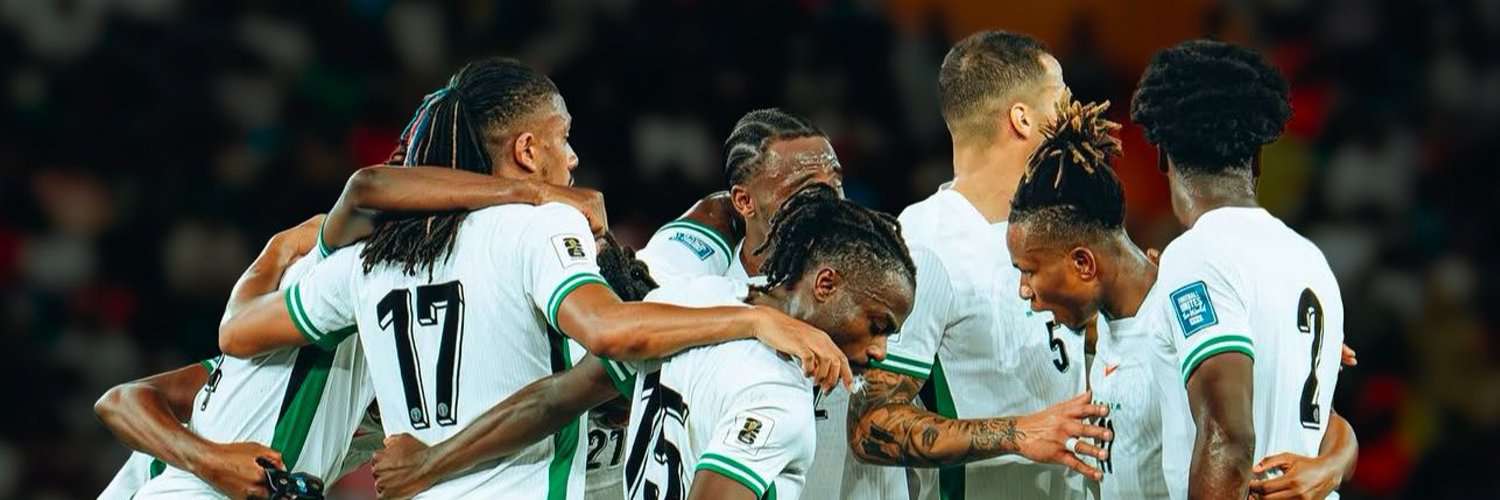
The Rot in Nigerian Football: Why Super Eagles Keep Missing the World CupNigeria has just crashed out of qualifying for the 2026 World Cup, making it two straight misses after sitting out 2022. That means no Super Eagles at the global stage for eight years running, a painful blow for a country that lives and breathes football.
As Mikel Obi put it in a recent outburst, “If we miss out again, the entire NFF board should go.” Sunday Oliseh echoed that, calling two misses in a row “incompetence, not misfortune.”
These legends are not just talking; the finger points straight at the Nigeria Football Federation, where corruption and poor management have turned our national pride into a joke.Nigerians love their Super Eagles, but the relationship with the NFF and players is like a bad marriage, full of blame and heartbreak.
Every failure circles back to the federation’s mess, from player welfare to team preparation. Players show up out of patriotism, but the NFF treats them like afterthoughts. Take Mikel Obi, who had to dig into his own pocket more than once to cover flight tickets for teammates just to get them to matches.
In 2016, ahead of the Rio Olympics, Mikel paid for the entire team’s flight to Brazil after they got stranded in Atlanta. He said it was either that or watch the dream die. Yet, nobody in the NFF faces questions for such lapses.Ahmed Musa, the team captain, has been that glue holding things together. Even when issues pile up, Musa rallies the boys to fight on the pitch. Recently, despite nursing an injury at Kano Pillars, he showed up at training to motivate the squad, reminding them that representing Nigeria is bigger than the headaches. But how long can players like Musa carry the load when the system keeps failing them?These problems did not start yesterday.
They go back to the 90s, and nobody tells it better than Jay-Jay Okocha. In a recent interview recalling the 1996 Atlanta Olympics, Okocha painted a picture of pure neglect. The team arrived in the US, but the NFF had not paid for their hotel rooms. For a whole week, the hotel served them the same meal every day: rice, sauce, and chicken. When the players complained about the menu not changing, the hotel staff broke it down: “You should be grateful we are even letting you stay here because your federation has not paid a dime for accommodation.” It got worse.
The coach, Jo Bonfrere, vanished from camp because he was owed salaries for months. The players had to scramble, paying some bills themselves just to avoid eviction. Despite all that chaos, they went on to win gold, beating Brazil and Argentina. Okocha said it was a miracle, but the NFF’s rot almost cost them everything. Imagine, a team eating charity food while representing the giant of Africa.Fast forward, and the story repeats. In November 2025, during World Cup qualifiers in Morocco, the Super Eagles boycotted training over unpaid bonuses and allowances dating back years.
A video from Alex Iwobi showed their dilapidated hotel, sparking outrage back home. The NFF tried to defend it, saying the clip only captured an “old building view,” but the damage was done. Players like William Troost-Ekong spoke up, saying they felt abandoned. This boycott came after a Libya fiasco where the team was stranded at an airport without food or water for hours. No wonder performance suffers.The NFF’s bad name has even reached FIFA.
Back in 2018, during the World Cup, Super Eagles players protested over unpaid bonuses right before a crucial match against Argentina. FIFA stepped in, warning the NFF to sort it or face sanctions. By 2023, things got so bad with the Super Falcons at the Women’s World Cup that FIFA decided to pay player bonuses directly to avoid the money vanishing into federation pockets.
FIFA’s president, Gianni Infantino, announced this policy globally but highlighted Nigeria’s issues, saying it was to prevent protests and ensure players get what they earn. No more routing through corrupt officials. For the men, similar threats have lingered, with recent boycotts showing the problem persists.
FIFA does not want strikes at their events, so they bypass the NFF where possible.Yakubu Aiyegbeni has his own tale from the 2000 Sydney Olympics. He and teammate Bright Igbinadolor had to grab an NFF official by the waist at the airport to force him to cough up their $1,200 ticket reimbursement.
The official kept promising to pay after the next match, but Yakubu was not having it. In a recent chat, Yakubu said, “Before me, money issues were a rot in the NFF. While I was active, it was the same. And it hasn’t changed after I left.”
He praised modern players for being patient, showing up for camp and training despite the mess. But he compared them to Sunday Oliseh and Nwankwo Kanu, who would strike until paid. Yakubu’s point? The corruption is generational, and without accountability, it kills motivation.
Why has there been no serious probe into the NFF or other sports bodies? Budgets flow from the National Assembly to the Sports Ministry every year, plus funds from FIFA and CAF for tournaments. Yet, officials pocket it all. Chinedu Obasi, a former Super Eagle, has been vocal about this, accusing NFF leaders of demanding bribes for national team spots. He claimed in 2020 that he missed the 2014 World Cup because he refused to pay up.
On infrastructure, look at the abandoned projects. The National Stadium in Abuja, up north, sits like a ghost town, overgrown with weeds despite millions budgeted for renovation. Down in Delta, the Stephen Keshi Stadium in Asaba got FIFA funds for upgrades, but it’s underused and poorly maintained, with reports of siphoned cash through ghost contracts. Obasi and others like Segun Odegbami have called out these “non-existent projects” funded by FIFA, yet no action.If things were funded right, results would follow.
Not just World Cup wins, but consistent growth. Victor Osimhen has been Nigeria’s top striker for three years, scoring 23 goals since 2022, including a hat-trick against Benin in 2025. But others need encouragement too, through timely rewards and support. Without it, talent wastes away.Nigerians deserve better. The NFF must face a full probe, or we’ll keep missing out. Time to clean house and let football thrive. As Oliseh said, this is incompetence we can’t afford.