Politics
Royal war of superiority amongst Yoruba monarchs

– Controversies diminishing the institution – Elders
The recent imbroglio at the Oyo State Council of Obas and Chiefs’ chambers at the Parliament building in Ibadan, during the inauguration of the council, which has been in comatose for the past 15 years, was a pointer to the fact that there will never be an end to the supremacy battles, among. traditional rulers in Oyo State and the entire Yoruba land.

Governor Seyi Makinde, who in his wisdom, decided to bring the Obas council alive, inaugurated it after many years of not being active in order to strengthened the democratic culture in the state, by getting the traditional rulers involved collectively in the affairs of the state, would have by now, been stunned by the new development among the traditional rulers, especially about the defiance of the new Alaafin of Oyo, Oba Akeem Abimbola Owoade, who is opposed to the chairmanship of the Olubadan of Ibadanland, Oba Rashidi Adewolu Ladoja of the newly constituted council.
The Alaafin may have got wind of what was to happen, and did not showed up at the inauguration, but later vented his anger over Gov. Makinde announcement of the Olubadan as the chairman, which the governor said would be on rotational basis among the three rulers of Olubadan, Alaafin and Soun of Ogbomoso.
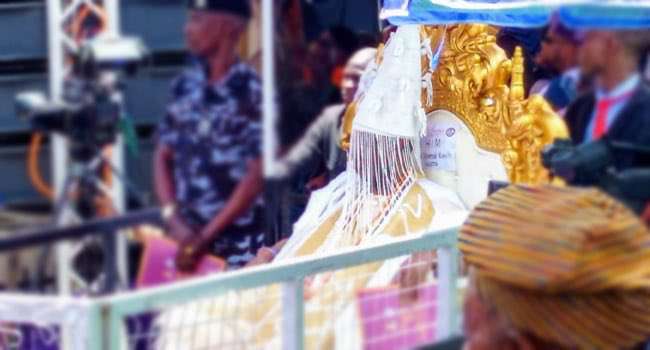
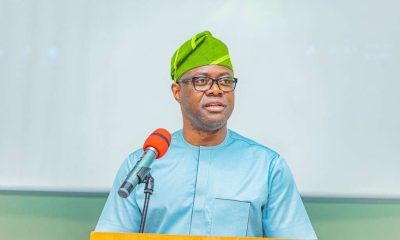
Olubadan, Oba Rasheed Ladoja
Smothered By Good Intentions
Gov. Makinde, in his address at the inauguration of the monarchs’ council, announced that the chairmanship of the council would operate on a rotational basis among the three foremost traditional rulers in the state, namely, the Olubadan, the Alaafin, and the Soun, each monarch expected to serve for a two-year term.
According to him, the rotational arrangement was designed to foster unity, mutual respect, and cooperation among the traditional institutions, while allowing each of the royal fathers to contribute meaningfully to governance and development in the state.
The governor, said, the agreement among the trio favors the Olubadan to commence the rotation, and that was why he was announced as chairman.
Makinde, going down memory lane, argued that the council last convened in 2011, saying that the situation was not good enough for a state like Oyo known for its pace-setting standards, in view of the critical role traditional rulers play in governance, peace-building and grassroots intelligence.
He further argued that his government could have exploited divisions among traditional institutions, but for harmony and tranquility, it deliberately chose consensus and consultation, as he pointed out, that many of the achievements recorded by his government were traceable to regular engagements and feedback from royal fathers across the state.
The governor further lamented the decay of the House of Chiefs and the absence of a structured body to interface with the government on matters affecting traditional institutions, adding that the lack of a council had reduced engagements to ad-hoc arrangements over the years.
Makinde disclosed that to correct the anomaly, his administration worked with the Oyo State House of Assembly to review the necessary legal framework, culminating in the signing of the amended law on August 14, 2025, which paved the way for the council’s formal inauguration.
In his acceptance remarks, the Olubadan of Ibadanland, Oba Rashidi Ladoja, said the inauguration signified the beginning of responsibility rather than an accomplishment, urging residents to place confidence in the council’s mandate.
He stressed that the council was not established to promote rivalry or personal ambitions among traditional rulers, noting that public trust would deepen after its first sitting, as people would realise that members were united in purpose and not in competition.
Oba Ladoja explained that the council’s foremost responsibility is to promote peace and safety within their domains, while also contributing to the overall progress and stability of Oyo State.
“This inauguration is not an achievement in itself; it marks the beginning of serious work,” the Olubadan said, adding that the council exists to bring people together and work collectively for the common good of the state.
Stirring the Hornet Nest
However, before the inauguration ended, and even before the governor left the House of Chiefs, reactions started flying around, and the Alaafin Oba Owoade, came out with a statement to punch hole in Makinde’s statement that he consulted the affected rulers before the inauguration and there was no time, Gov. Makinde held any meeting with him and other traditional rulers.
He pointed out that the position on the matter had been communicated to Oyo State Government by the Oyo Alaafin traditional council, elders in a memorandum that Alaafin remains a paramount ruler of Oyo Kingdom and he is the superior head in Yorubaland.
This statement by the Alaafin reopened old wounds among traditional rulers in Oyo State, which people thought 15 years after the chairmanship tussle, which made the late governor, Senator Abiola Ajimobi, to suspend their sittings indefinitely, would have been enough to bring sanity into the council and end the age-long rivalries among the monarchs, especially between the Alaafin, Soun and Olubadan.
Going back to the era of Ladoja as governor, who is now the Olubadan and on whose head the chairmanship falls now, in order to do away with the rivalry had decentralised the headship of the council into zones, on rotational basis and this could have even given the rulers in Oke-Ogun the opportunity to be able to chair the council.
Ladoja’s arrangement change the situation and it was late governor Adebayo Alao Akala, who reversed Ladoja’s position and brought back Oba Adeyemi as the permanent chairman, which was kicked against by the late Olubadan, Oba Samuel Odulana Odugade and the late Soun of Ogbomoso, Oba Oyewumi Ajagungbade III.
However, as faith would have it, due to political reasons and the quest for Akala to go for a second term, which Oba Adeyemi did not allegedly support, Akala in 2011 before he left office, changed the status quo and went back to rotational chairmanship and in order to deal with Oba Adeyemi, and named the Olubadan Oba Odugade to go first after which the Soun Oba Oyewumu would go and the Alaafin to come third, with each spending two years.
Cycle of Change
This was however the situation until Ajimobi came into office and the first council meeting of the Obas he witnessed ended in chaos and the he had to suspend the council sittings indefinitely on the excuse of a court order and series of litigations on the matter.
Although, before Makinde took that decision to inaugurate the council on January 15, 2026, he claimed to have consulted widely, which led to the amendment of the Chieftaincy law of the State in 2025, by the State House of Assembly, which initially wanted to put the Alaafin as the permanent chairman, but this was vehemently opposed by other legislators, and the Assembly had to reverse its decision and settled for rotational chairmanship among three rulers, which was eventually contested by traditional rulers from Ibarapa and Oke Ogun areas.
The new law then formed the basis for which Makinde inaugurated the new council and placed Olubadan as the first beneficiary of the new council chairman.
Reactions have trailed this development, one coming from the Eselu of Iselu Kingdom in Yewa North Local Government Area of Ogun State, Oba Akintunde Akinyemi, who called on the Alaafin Oba Owoade, to desist from taking issues with Gov. Makinde over the newly reconstituted rotational Oyo Council of Obas, emergence of Olubadan, Oba Ladoja, as chairman.
In a statement issued at the weekend, Oba Akinyemi noted that as a traditional ruler, Oba Owoade should understand that he should not be challenging the decisions of the G
governor (Makinde) of his state on the pages of newspapers and social media.
The statement read in part: On Thursday, 15th January, 2026, Governor Seyi Makinde of Oyo State, inaugurated the maiden rotational Oyo State Council of Obas with the appointment of Olubadan of Ibadanland, Oba Adewolu Rashidi Ladoja as the Chairman of the council for a two-year term.
According to the governor, he consulted the three prominent monarchs in Oyo State- Alaafin of Oyo, Olubadan of Ibadan and Soun of Ogbomoso before the inauguration, and the trio supported the appointment of Olubadan of Ibadan, Oba Adewolu Rashidi Ladoja as the pioneer chairman of the council for a two-year term. The Alaafin was conspicuously absent at the inauguration ceremony for a reason known to him.”
”As a Traditional Ruler with over two (2) decades of experience, I, Eselu of Iselu, view the reaction of the Alaafin as an affront to the Office of the Governor of Oyo State. My candid advice to His Imperial Majesty, Oba Abimbola Akeem Owoade I, is that he should withdraw the press release and stop further comments on the matter on the pages of newspapers so as not to incur the wrath of the Government of Oyo State. Rotation of Chairmanship of a Traditional Council (of monarchs) happens in many States in our country, Nigeria, so the action of Governor Seyi Makinde should not be seen as a strange decision. The truth is that the days of the Oyo Empir,e when the Alaafin of Oyo could lay claim to the Permanent Chairmanship of the State’s Council of Obas, are gone.”
Also, the leader of the Oodua Peoples Congress (OPC) and the Aare Onakakanfo of Yorubaland, Iba Gani Adams, has warned that internal rivalries and open contests for supremacy among monarchs were gradually weakening the traditional institution, which has historically served as a cornerstone of Yoruba identity, governance and unity.
Adams, who spoke at Ife at the 2026 Oodua Festival held at the historic Enuwa Palace Square, lamented the growing level of disunity among royal fathers across Yorubaland, saying that such development is alarming and dangerous to the collective interests of the people.
In his reaction, a Journalist Olabode Makinwa posited that the chairmanship tussle between the Alaafin and Olubadan should be handled carefully, saying that the Yoruba traditional institutions are sacred, built on centuries of history, values and clearly defined roles.
“The strength of a monarch has never been in titles of association or chairmanship or ceremonial supremacy, over one another but in their ability to protect their territories, preserve culture, ensure peace and serve as moral authorities within their domains.”
More Controversies
At a time the Olugbo of Ugboland Oba Fredric Akinrutan Obateru (Obat Oil) when he headed a reconciliation committee set up to reconcile warring Obas in Yorubaland, caused a big rancor amongst committee members, and the entire Yorubaland, when he declared and claimed to be the leader of all Yoruba Obas.
He had claimed that Oduduwa, believed to be the progenitor of Yoruba race met his forefathers at Ife and it would be an insult for the children of “immigrants” to claim headship over the aborigines. Oba Akinruntan argued, “Ugbo traditional stool pre-dates Ooni”
This generated a big controversy, as the late Oba of Ido Osun in Osun State, Oba Aderemi Adedapo, in a swift reaction to Oba Akinrutan’s claim, asked him to retract the claim within seven days, which he refused to.
Subsequently another traditional rule from Ondo State, who was the
Assistant General Secretary of Conflict Resolution Committee and Oluyani of Iyani-Akoko, Ondo State, Oba Sunday Daodu, described the ultimatum given to Oba Obateru to retract his claim as “laughable and baseless,” while he urged Nigerians to disregard the threat.
“The ultimatum issued by the Olojudo is laughable, baseless, empty and an advertisement of his ignorance about the people of Yoruba before the arrival of Oduduwa.”