Business
NGX rally gains strength as all-share index breaks 200,000 barrier
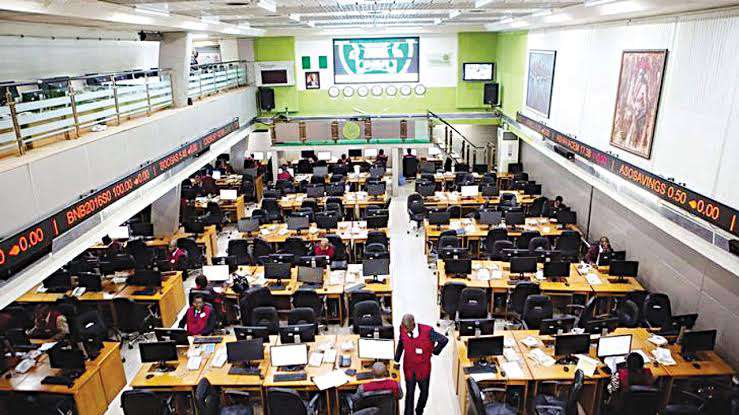
Nigeria’s stock market extended its upward trajectory this week, with the benchmark All-Share Index (ASI) crossing the key 200,000 mark, a development widely seen as a boost to investor confidence and market sentiment.
Figures from Nigerian Exchange Limited (NGX) show the index closed at 202,559.41 points on Tuesday, March 17, marking its highest level within the review period. This represents a notable rise from 195,898.54 points recorded on March 11, reflecting five straight sessions of gains.

Market capitalisation mirrored the positive trend, climbing from ₦125.75 trillion to ₦130.03 trillion over the same timeframe. The steady increase underscores sustained buying interest across key sectors, particularly banking, industrial, and dividend-paying equities.
Market analysts describe the 200,000 threshold as a significant psychological milestone, attributing the rally to strong earnings expectations, portfolio adjustments, and persistent liquidity inflows. Despite the decision by the Central Bank of Nigeria (CBN) to retain the Monetary Policy Rate at 26.50 percent, equities have continued to attract investors seeking better real returns amid rising inflation. Negative yields in fixed income instruments have further strengthened the appeal of stocks.
Sectoral Performance
The banking sector led the rally, with the NGX Banking Index rising from 1,869.62 points on March 11 to 2,000.63 points by March 17, driven by expectations of improved profitability in a high-interest-rate environment.
Industrial stocks also recorded strong gains, as the NGX Industrial Index surged from 7,652.60 points to 8,771.07 points. The performance was largely supported by demand for heavyweight stocks benefiting from infrastructure-related spending and stable earnings outlooks.
Institutional participation remained robust, with indices such as the NGX Pension Index and NGX 30 Index posting steady increases, indicating sustained buying from pension funds and large investors. The NGX Premium Index, which tracks blue-chip companies, recorded mixed but generally positive performance.
On the downside, losses were relatively limited. The NGX Insurance Index declined from 1,288.57 points to 1,262.34 points, while the NGX Consumer Goods Index edged slightly lower to 4,338.12 points. The NGX Oil and Gas Index also recorded marginal dips amid fluctuations in global crude oil prices.
Meanwhile, income-focused indices outperformed, as the NGX AFR Dividend Yield Index rose sharply to 29,991.83 points, reflecting increased investor appetite for dividend-paying stocks. The NGX MERI Value Index also posted notable gains.
Outlook
The average ASI level during the period stood at 199,049.78 points, with a low of 195,898.54 and a high of 202,559.41, indicating strong market breadth and momentum rather than gains driven by a few large-cap stocks.
Going forward, market participants are expected to monitor macroeconomic indicators, policy direction from the CBN, and upcoming corporate earnings releases for further cues. While high interest rates remain a potential headwind, current liquidity conditions and earnings expectations continue to support bullish sentiment.