Business
NDDC to automate procurement processes by end of first quarter – Ogbuku

The Niger Delta Development Commission (NDDC) has announced plans to fully automate its procurement processes by the end of the first quarter of the year, as part of efforts to deepen transparency, accountability and service delivery.
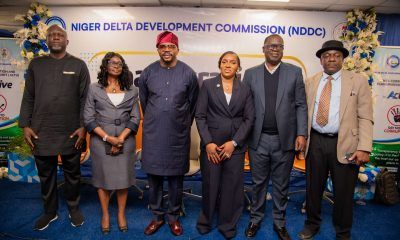
The Managing Director of the Commission, Dr Samuel Ogbuku, disclosed this at the Mandatory Continuous Procurement Capacity Development Training Programme organised by the Bureau of Public Procurement (BPP) at the PTDF Centre for Skills Development in Port Harcourt.

Ogbuku said the move towards automation was a key aspect of ongoing reforms within the Commission, noting that NDDC had already restructured its corporate governance framework and internal processes to align with best practices.
“We will soon automate our procurement processes to ensure compliance, transparency and better service delivery,” he said. “We have recently reformed our corporate governance structure and internal processes.”
He added that the Commission had commenced the implementation of a new Governance Advisory Service designed to strengthen accountability and transparency in its operations.
Ogbuku described the hosting of the procurement training in the Niger Delta as symbolic, saying it reflected peace and stability in the region. According to him, the Commission has shifted its focus “from transaction to transformation,” a change he said is evident in its approach to public procurement.
“In NDDC, we take public procurement very seriously. Last year, we collaborated with the BPP to train some of our staff. Training and retraining are essential in every organisation,” he said, adding that staff were also being trained in information and communication technology to enhance digital capacity.
He disclosed that the Commission currently has 35 BPP-certified procurement professionals in its procurement unit, stressing that continuous capacity building remains a priority.
Highlighting some of the Commission’s achievements, Ogbuku said the Operation Light Up the Niger Delta initiative, one of NDDC’s flagship programmes, has recorded significant success. He explained that projects executed by the Commission are based on needs assessments.
“Mr President loves the Niger Delta, and we are doing our best to bring his programmes home to the people,” he said.
In his welcome address, the Director-General of the Bureau of Public Procurement, Dr Adebowale Adedokun, commended President Bola Ahmed Tinubu for his commitment to procurement reforms and transparency, which he said has helped to strengthen professionalism within the procurement system.
Adedokun said the capacity-building programme underscored the Bureau’s resolve to institutionalise a pool of trained, certified and accountable procurement professionals, in line with the objectives of the Renewed Hope Agenda.
“The training is in line with the requirements of the Procurement Act,” he said. “This programme is meant to enhance your capacity. Procurement is a distinct cadre that provides the foundation for effective project delivery.”
He urged participants to take full advantage of the programme, stressing that Nigeria needs competent and ethical procurement officers to uphold due process at all times.
Delivering the keynote address titled “The role of Procurement Officers in the Delivery of the Renewed Hope Agenda,” the Chairman of the Federal Capital Territory Civil Service Commission, Engr. Emeka Ezeh, described procurement as a critical tool for good governance and a mechanism for combating corruption.
Ezeh urged procurement officers to internalise the eight priority areas of President Tinubu’s Renewed Hope Agenda, noting that effective procurement practices are central to the successful delivery of government programmes.
The training programme brought together procurement officers from across the Niger Delta region as part of ongoing efforts to strengthen transparency and efficiency in public sector procurement.