Business
Julius Berger advocates low-carbon construction at Future Cities Summit
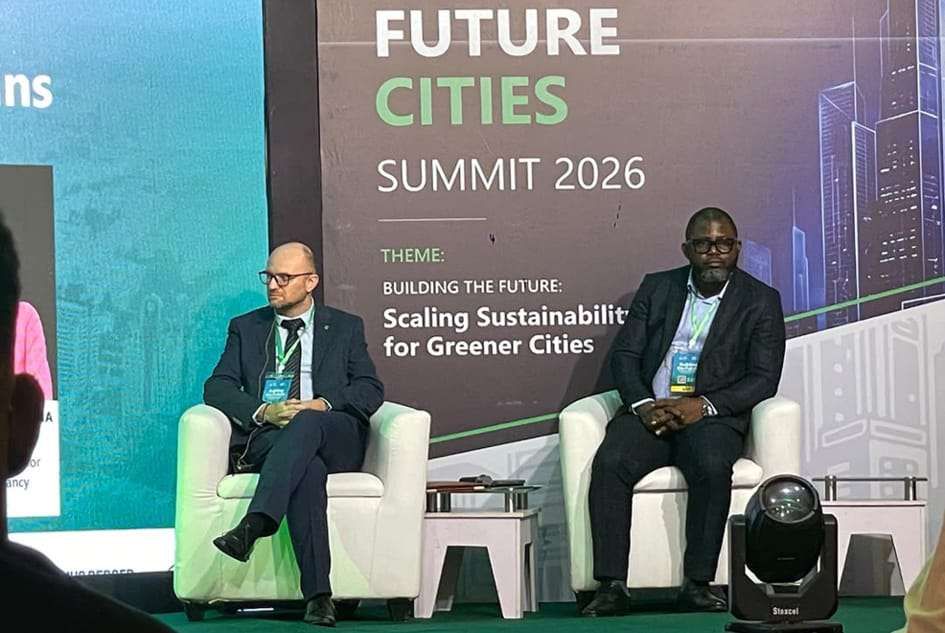
Julius Berger Nigeria Plc has reiterated its commitment to sustainable construction and environmentally responsible infrastructure development at the Future Cities Summit 2026 organised by the Green Building Council Nigeria (GBCN) in Lagos.
The two-day summit, themed “Building the Future: Scaling Sustainability for Greener Cities,” brought together policymakers, construction professionals, financiers, researchers and other stakeholders to discuss strategies for promoting sustainable urban development and building climate-resilient cities.

Representing Julius Berger at the event were the company’s Regional Manager, Engr. Thomas Christl, and Chief Risk Officer, Mrs. Shakira Mustapha.
Christl participated in a plenary session titled “Materials, Methods, and Margins: Low Carbon Construction Constraints and Opportunities,” where industry experts examined the challenges and prospects of adopting sustainable construction practices in Nigeria.
Other panellists included representatives of Saint-Gobain Nigeria, Alitheia Capital and Enflor, while the session was moderated by sustainability consultant Ariyike Maama Adeshina.
Speaking during the discussion, Christl identified the high initial cost of low-carbon construction as one of the key obstacles limiting its widespread adoption. He, however, argued that sustainable buildings deliver long-term economic and environmental benefits through lower maintenance costs, improved operational efficiency and reduced energy consumption.
According to him, decisions on sustainable construction should be based on the entire lifecycle of a building rather than the upfront investment alone.
He also highlighted the potential of recycled concrete as an environmentally friendly alternative to conventional construction materials, noting that reusing concrete from demolished structures could significantly reduce carbon emissions and lessen dependence on newly produced materials.
Christl called for closer collaboration among universities, construction firms, manufacturers and regulatory agencies to develop standards that would encourage the use of recycled concrete in the country.
He said stronger partnerships would promote innovation, facilitate knowledge sharing and support the integration of sustainable solutions into construction projects from the design stage.
The Julius Berger executive further stressed that while the construction industry possesses the technical expertise required for sustainable building, greater effort is needed to ensure that research findings and emerging technologies are effectively shared across the sector.
He urged architects, engineers, contractors, procurement professionals and project owners to remain informed about developments in green construction materials and other sustainable building technologies.
Participants at the panel agreed that stronger collaboration among government institutions, academia, financial organisations and private sector operators would be critical to overcoming the financial, technical and regulatory barriers to low-carbon construction.
They noted that such partnerships would help accelerate Nigeria’s transition to greener, more resilient and resource-efficient cities.
Julius Berger also commended the Green Building Council Nigeria for providing a platform for industry stakeholders to exchange ideas and explore practical solutions for advancing sustainable urban development.