Politics
Iran Responds with Ballistic Missiles to US, Israel’s Sweeping Assault as Conflict Rages Across Middle East
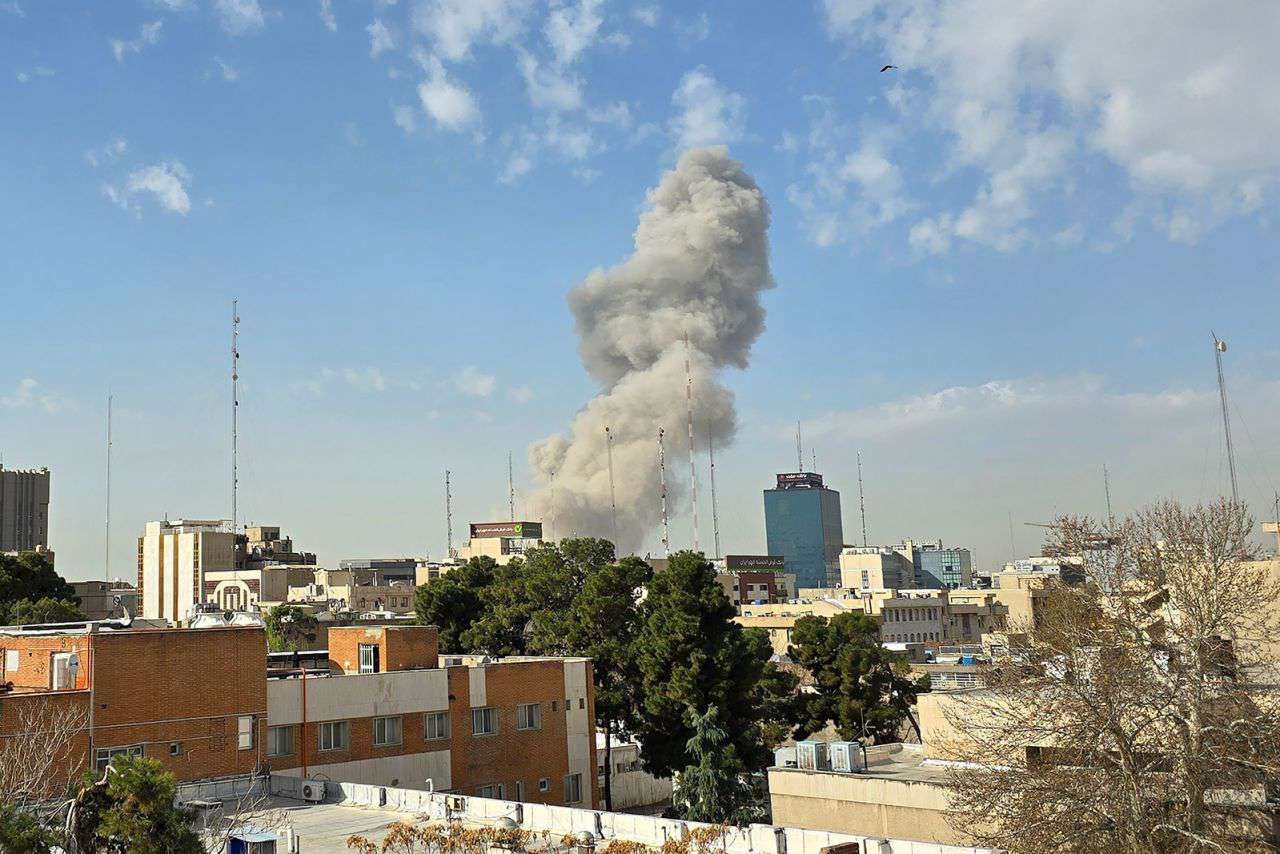
Iran unleashed ballistic missile strikes across the Middle East on Monday after the United States and Israel began what President Donald Trump described as a “massive and ongoing” military operation against the Islamic Republic.
Explosions rocked Tehran and other cities as US and Israeli forces carried out coordinated attacks in an operation reportedly codenamed “Epic Fury.” Plumes of smoke were seen rising from parts of the Iranian capital, with one of the first reported strikes landing near the offices of Iran’s Supreme Leader, Ali Khamenei.

In a recorded address from his Mar-a-Lago residence, Trump vowed to cripple Iran’s military infrastructure.
“We are going to destroy their missiles and raze their missile industry to the ground. It will be totally — again — obliterated. We’re going to annihilate their navy,” he said.
He also urged Iranians to force political change, telling citizens to “take over your government,” while warning Iranian security forces to stand down or “face certain death.”
Within hours, Iran retaliated.
The Israeli military said Tehran launched ballistic missiles toward northern Israel, prompting air raid sirens and emergency alerts. Israel’s defence minister declared a “special and permanent state of emergency” as the country braced for further attacks.
The confrontation quickly spilled across the Gulf.
Iran’s Islamic Revolutionary Guard Corps (IRGC) claimed responsibility for missile strikes targeting four key US military installations: Al Udeid Air Base in Qatar, Ali Al Salem Air Base in Kuwait, Al Dhafra Air Base in the United Arab Emirates, and the US Navy’s Fifth Fleet headquarters in Bahrain.
Explosions were reported in Doha, Kuwait and Abu Dhabi, while Bahrain confirmed attacks within its territory, including on facilities linked to the Fifth Fleet. Qatar said its air defence systems intercepted incoming missiles. The UAE, Kuwait and Qatar closed their airspace amid the escalating crisis.
Missiles and warplanes were also seen crossing Iraqi airspace, according to witnesses and security sources. An Iranian official told Reuters that “all US bases and interests are within Iran’s reach.”
Inside Iran, authorities imposed a near-total internet blackout, with connectivity reportedly dropping to just four per cent of normal levels. The government activated its national crisis response system, shut schools and placed emergency and Red Crescent teams on full alert.
Heavy traffic clogged Tehran’s streets as residents rushed to petrol stations amid fears of further escalation. Iranian officials accused Washington and Tel Aviv of violating international law by launching strikes during diplomatic negotiations.
Video footage circulating online appeared to show damage to the Tehran residence of former president Mahmoud Ahmadinejad in the Narmak district, though there was no immediate confirmation of his whereabouts.
The latest escalation follows weeks of US military build-up in the region, with Washington deploying additional fighter jets and warships to pressure Tehran over its nuclear programme.
With missiles flying across borders and US assets in the Gulf under fire, the conflict has rapidly evolved into a multi-front confrontation, raising fears of a broader and potentially prolonged regional war.