Business
FG demands climate justice, reparations for oil-affected Niger Delta communities

Adebayo Obajemu
The Federal Government has called for climate justice and comprehensive reparations for oil-producing communities in the Niger Delta, saying decades of crude oil extraction have left the region with severe environmental degradation, worsening climate vulnerability and damaged livelihoods.

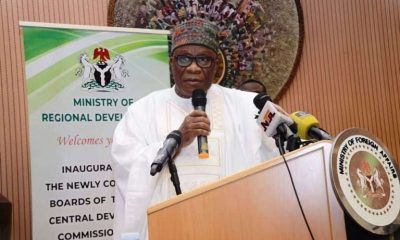
The Minister of Regional Development, Engr. Abubakar Momoh, made the call while delivering the keynote address at the Niger Delta Climate Change Conference 2026 in Port Harcourt.
Speaking on the conference theme, “Unite for Justice: Niger Delta Communities Rise for Climate Action and Reparations,” Momoh described the Niger Delta as Nigeria’s economic engine that had paid an unacceptable ecological price for decades of petroleum production.Demographics
“The Niger Delta has functioned as the engine room of Nigeria’s economic prosperity. Yet, it was treated as a sacrifice zone,” the minister said.
“You know the grim reality all too well: decades of oil spills, gas flaring and ecosystem degradation have devastated the lands and waters that sustain our farmers, fishers and local communities.”
According to him, although the Niger Delta contributes only a small fraction of global greenhouse gas emissions, it continues to bear a disproportionate burden of climate change through flooding, coastal erosion and rising sea levels.
“The region contributes a fraction of global carbon emissions, yet bears the disproportionate brunt of global heating. The Niger Delta is on the frontline of flooding, sea-level rise and coastal erosion that threaten to submerge our communities.”Oil & Gas
Momoh, represented at the event by his senior technical assistant, Mr Frederick Odika, argued that climate action in the region must go beyond technical remediation and energy transition policies to include environmental accountability and economic justice.
“True climate action for the Niger Delta cannot be achieved solely through transition policies or technical clean-up efforts. The damage done is both ecological and economic, requiring systemic restoration and accountability.”Energy & Utilities
He maintained that multinational oil companies and international stakeholders that profited from petroleum extraction in the Niger Delta owe the region an ecological debt.
“The multinational corporations and international stakeholders who extracted billions in profits from our soil owe an ecological debt to our people. This includes fully funding the environmental restoration of polluted lands and ensuring comprehensive compensation before abandoning ageing infrastructure.”
The minister stressed that climate reparations must directly benefit communities most affected by pollution and climate impacts while supporting a just transition to cleaner energy.
“The quest for justice is also a quest for a just transition. It is time for a transition to renewable energy systems that are owned, managed and driven by the communities themselves.”
He also advocated reviving traditional agricultural practices to strengthen food security and reduce dependence on fossil fuels.
“We must revive our traditional knowledge and shift back to a sustainable agro-economy, ensuring food security in the face of climate adversity.”
Describing the environmental situation as one of injustice, Momoh said frontline communities continue to suffer the greatest consequences of a crisis they contributed least to creating.
“Every day, the farmers, fishermen, women and youths of our communities bear the heaviest burden of a climate crisis they did the least to cause. This is the epicentre of environmental injustice. It is ecocide.”
He insisted that climate reparations must go beyond financial compensation to include ecosystem restoration, transparent clean-up of polluted land and groundwater, healthcare interventions and green job creation.
“Reparations mean more than token compensation. They require ecosystem restoration, a complete, comprehensive and transparent clean-up of all polluted lands and groundwater. Divesting oil companies cannot abandon our communities.”Oil & Gas
Calling for stronger government action, the minister urged authorities to enforce environmental laws and ensure communities play central roles in climate policy formulation.
“As we unite, government shall enforce corporate accountability, honour conservation laws and amplify frontline community voices in national climate policies.”
He charged participants to leave the conference committed to building a resilient Niger Delta.
“Our quest is not just for survival, it is for justice, for dignity and for reparations. Let us rise together to build a resilient, just and sustainable Niger Delta,” Momoh added.