Nation
CNN founder Ted Turner dies at 87
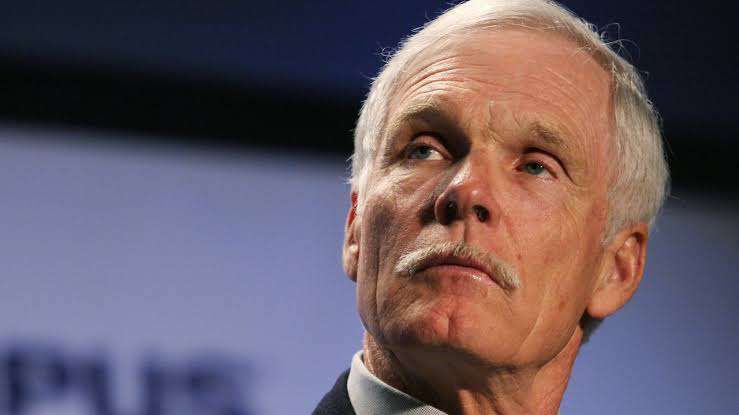
Ted Turner, the bold media entrepreneur who transformed global news broadcasting with the launch of CNN, has died at the age of 87, his family confirmed on Wednesday.
Turner, widely regarded as one of the most influential figures in modern media history, passed away peacefully surrounded by family, according to a statement from Turner Enterprises.

The Ohio-born businessman, often nicknamed “The Mouth of the South” for his outspoken personality, reshaped television journalism with the creation of the world’s first 24-hour news channel, Cable News Network (CNN), launched on June 1, 1980.
His vision revolutionised how the world consumes news, turning breaking events into real-time global broadcasts and laying the foundation for today’s nonstop news cycle.
He was later named Time magazine’s Man of the Year in 1991 for his role in “influencing the dynamic of events and turning viewers in 150 countries into instant witnesses of history.”
A media empire built from scratch
Ted Turner began his career by taking over his father’s struggling billboard advertising business after the elder Turner’s death by suicide in 1963. At just 24, he inherited Turner Outdoor Advertising and began expanding it into a regional powerhouse.
From billboards, he moved into broadcasting, acquiring radio stations and later a struggling television station in Atlanta in 1970. He renamed it Channel 17 and began experimenting with programming that mixed syndicated shows, films, and sports.
His breakthrough came in 1976 when he used satellite technology to broadcast his Atlanta station nationally, creating what became America’s first “superstation,” WTBS. The move laid the financial foundation for his future expansion into cable television.
Turner then acquired sports franchises, including the Atlanta Braves baseball team and the Atlanta Hawks basketball team, integrating live sports into his growing media empire and boosting viewership across the United States.
Birth of CNN and global transformation
Turner’s most enduring legacy came in 1980 when he launched CNN, a 24-hour news network that fundamentally changed journalism.
At the time, many critics dismissed the idea as unrealistic. Established broadcasters believed audiences would not watch news continuously. Turner disagreed, arguing that people were missing key events due to the limited evening news cycle.
“I worked until 7 o’clock, and when I got home the news was over,” he once said. “So I figured there were lots of people like me.”
CNN went on air from Atlanta on June 1, 1980, and despite early technical challenges and skepticism from competitors, it quickly established itself as a global force in journalism.
The network’s profile rose dramatically during the 1991 Gulf War, when CNN became the only news organisation broadcasting live from Baghdad, bringing the reality of war into homes around the world in real time.
Turner later expanded his media portfolio with the launch of CNN Headline News, CNN International, and entertainment networks including TNT, TCM, and Cartoon Network.
He also acquired a vast library of films through MGM, a move that sparked controversy when he colorised many classic black-and-white movies.
Despite diversifying into entertainment, CNN remained Turner’s proudest achievement. He frequently described it as the most important contribution of his life.
Philanthropy and global influence
Beyond media, Turner became one of America’s most prominent philanthropists and environmental advocates.
He donated $1 billion to the United Nations in 1997 and later established the United Nations Foundation to support global development and humanitarian initiatives. He also contributed millions toward nuclear disarmament advocacy and environmental conservation.
Turner became one of the largest private landowners in the United States, with more than two million acres across multiple states. He used much of this land for conservation efforts, including restoring bison populations in the American West. His herd eventually became one of the largest privately owned bison populations in the world.
He also founded the Captain Planet Foundation, inspired by the environmental-themed animated series Captain Planet and the Planeteers, which he helped create to educate children about ecological responsibility.
Personal struggles and public life
Born Robert Edward Turner III in Cincinnati in 1938, Turner’s early life was shaped by family instability and tragedy. His relationship with his father was strained, marked by discipline and emotional distance.
Following his father’s suicide, Turner was thrust into running the family business while still in his early twenties. The experience deeply shaped his drive and ambition.
He attended Brown University but left before completing his studies after disagreements with his father over his choice of major.
Turner was married three times and had five children. His high-profile relationship with actress Jane Fonda in the 1990s drew widespread media attention. The couple married in 1991 and divorced a decade later but remained close friends.
In later years, Turner spoke openly about health challenges, including his diagnosis of Lewy body dementia in 2018. He also suffered bouts of pneumonia but continued to remain active in philanthropy and public life.
Sale of media empire and decline in influence
In 1996, Turner sold his media company to Time Warner in a deal valued at about $7.5 billion. He remained a senior executive after the merger but gradually lost control of the empire he had built.
The subsequent AOL-Time Warner merger in 2001 led to financial losses and restructuring, marking the end of Turner’s direct involvement in the media industry.
By the early 2000s, he had stepped away from corporate leadership, focusing instead on philanthropy, conservation, and environmental advocacy.
Despite financial setbacks, Turner remained a billionaire and continued to fund major charitable initiatives.
Legacy of a media revolutionary
Tributes have poured in from across the media industry following his death. CNN described Turner as a “fearless innovator” who fundamentally changed television journalism and created the blueprint for modern news coverage.
Former colleagues say his influence continues to shape global media, with 24-hour news now a standard across the world.
“Without Ted Turner, there is no CNN as we know it, and arguably no modern 24-hour news cycle,” one media analyst said.
Turner is survived by his five children, 14 grandchildren, and two great-grandchildren.
His legacy spans far beyond broadcasting. From reshaping global news to environmental conservation and philanthropy, Turner leaves behind an enduring imprint on media, politics, and public life, cementing his place as one of the most transformative figures of the 20th century.