Business
CBN’s 26% interest rate fuels frustration across economy
…as manufacturers, SMEs lament crushing borrowing costs

. Experts warn of job losses, slower growth, rising hardship
By AYOOLA OLAOLUWA
The recent decision of the Central Bank of Nigeria (MPR) to retain the Monetary Policy Rate (MPR) at 26 per cent has triggered widespread anger and frustration among businesses, manufacturers, and struggling households already weighed down by high operating costs, soaring inflation, and weak consumer spending across the country, Business Hallmark can report.
Some Nigerians, who spoke across the manufacturing, real estate, agriculture and small business sectors, questioned the apex bank’s sustained high interest regime, lamenting that the action is choking productivity, discouraging investment, and worsening the cost-of-living crisis across the country.
According to them, commercial bank lending rates have climbed to unbearable levels, making access to credit nearly impossible for productive enterprises.
It would be recalled that the CBN’s Monetary Policy Committee (MPC) had on Wednesday, May 20, 2026, announced the decision to retain the monetary policy rate at 26.5 percent for the month of May.
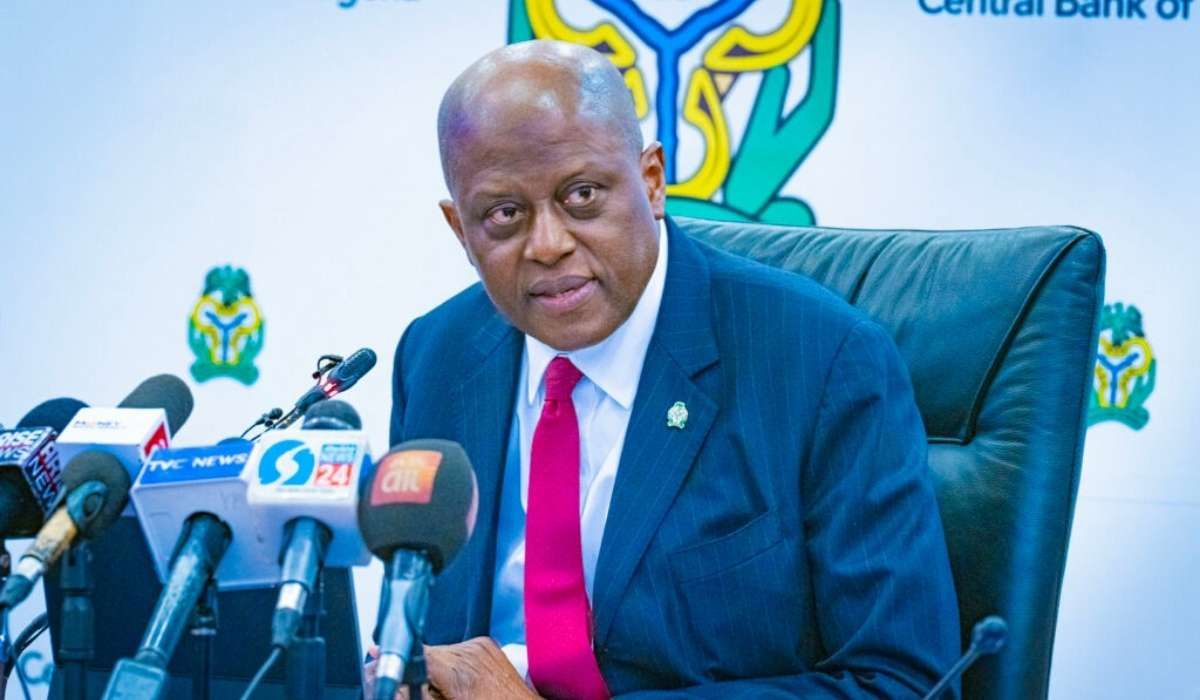
Speaking at the end of the 305th meeting of the MPC held from May 19 to 20, 2026, CBN Governor, Yemi Cardoso, said the committee retained the MPR at 26.5 per cent, Standing Facilities Corridor (SFC) around the MPR at +50/-450 basis points, Cash Reserve Requirement (CRR) for Deposit Money Banks (DMBs) at 45.00 per cent, merchant banks at 16.00 per cent, and non-TSA public sector deposits at 75.00 per cent.
“The decisions of the MPC were anchored on a comprehensive assessment of risks to the outlook.
“Although inflation has risen marginally for two consecutive months, largely induced by external shocks, the MPC recognized its transitory nature and remained confident that the current macroeconomic environment is sufficiently robust to support a return to disinflation.
Reasons for Policy
“In reaching its decisions, the MPC, particularly noted the spillovers from the Middle East crisis, which have exerted upward pressure on energy prices, cost of transportation and other logistics.
“However, available evidence indicates that the impact of the crisis on the Nigerian economy has been largely muted due to the benefits of prior policy reforms.
“These include exchange rate stability, improvements in external reserve buffers, strengthened monetary policy transmission, well-capitalized banking system, and ongoing fiscal consolidation, which have significantly bolstered the economy’s ability to absorb external shocks.
“As a result, the pass-through of global commodity and energy price shocks to domestic inflation has been significantly mitigated and would have been more pronounced in the absence of these reforms.
“The MPC was, therefore, convinced that the essential conditions for price stability remain firmly in place”, the CBN governor had explained.
However, several individuals and businesses that spoke on the CBN’s action warned that it could trigger fresh layoffs, rising operational costs, and increased company closures, as firms battle declining purchasing power and shrinking profit margins.
An economist, Dr. Peju Beckley, while agreeing that maintaining a tight monetary stance remains necessary to tame inflation and stabilize the naira, argued that the policy has inflicted severe damage on the real economy.
According to her, the prolonged high-rate environment has failed to significantly reduce food prices or ease hardship, despite months of aggressive monetary tightening by the CBN.
Adverse Effect
“My worry is that the decision to retain MPR at 26.5 percent will slow down Nigeria’s fragile economic recovery.
“Continued pressure on borrowing costs slow industrial growth, weaken private sector expansion, and worsen unemployment in the coming months”, the economist warned.
In the same vein, the Chief Executive Officer of the Centre for the Promotion of Private Enterprise (CPPE), Dr. Muda Yusuf, described the decision of the CBN’s MPC as pragmatic and reflective of prevailing inflationary realities confronting the Nigerian economy.
The CCPE boss said Nigeria’s inflationary pressures remain largely structural and externally induced rather than purely monetary in nature.
“Attempting to force down structural inflation solely through aggressive monetary tightening would amount to applying a monetary solution to a structural problem,” he said.
He, however, warned that further tightening measures could suppress productivity and weaken the country’s industrial recovery efforts at a critical economic period.
According to Yusuf, excessive tightening could discourage private investment, reduce business confidence, and undermine sustainable job creation across productive sectors.
Also speaking, a financial analyst, Mukhtar Muhammed, cautioned that monetary policy alone cannot bring down prices.
“The fiscal side must intervene to ease the burden on people”, Muhammed implored.
In his own submission, development economist, Dr. Justin Amase, said while the CBN’s decision is justified by structural imbalances — including insecurity, inflation and high energy costs — caution must be taken not to further suffocate businesses and households with elevated living and production costs.
According to Amase, while the CBN is anchoring its decisions on inflation control, it must also acknowledge that the purchasing power of most Nigerians has been eroded by double-digit interest rates, which have increased the cost of funds for businesses.
“Industries cannot expand production anymore because the cost of financing has become very high. Purchasing power will keep declining. This will have negative consequences on production and aggregate demand”, Dr. Amase said.
He also urged monetary authorities to liaise with fiscal authorities to address structural challenges, including fiscal deficits, poor infrastructure and insecurity, as well as election-related spending pressures.
Policy Positive
Meanwhile, other financial analysts threw their weights behind the CBN, arguing that the retention of MPR at 26.5% was best for the economy. Nigeria’s first professor of Capital Markets, Prof. Uche Uwaleke, noted that the balance of risks for the MPC was in favor of retaining the policy rate.
“I think the MPC held the rates on the basis of the following considerations: ‘First, external shocks from the US-Iran-Isreal war as rising global inflation rates such as US 3.8% and China 1.2% (April).
“Another reason is the reversal of disinflation in Nigeria following an uptick in inflation to 15.69% (April) and also resumed pressure in the FX market and on External Reserves resulting in depletion in external reserves as well as the downside risk to inflation from election season related spending.
“These factors should ordinarily result in further tightening of monetary policy by raising the MPR.
“But, given that the MPR is currently elevated at 26%, and the need for the CBN to be mindful of its impact on economic growth, the balance of risks for the MPC was in favor of retaining the policy rate”, Prof. Uwaleke explained.
Meanwhile, pressure has continued to mount on monetary authorities to strike a balance between inflation control and economic survival as frustration spreads among investors and ordinary citizens.