Business
IMF raises concerns over N8.83tn unreported public spending in Nigeria’s budgets

The International Monetary Fund (IMF) has raised concerns over Nigeria’s fiscal transparency, disclosing that about two per cent of the country’s Gross Domestic Product (GDP), estimated at N8.83 trillion, was omitted from recent official budget documents.
The IMF said the unreported expenditure has created a significant gap between Nigeria’s reported fiscal deficit and its actual financing requirements, making government borrowing appear lower than it truly is.

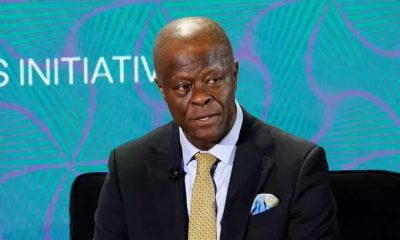
Speaking at an industry event in Lagos on Wednesday, the IMF’s Resident Representative in Nigeria, Christian Ebeke, said the expenditure should have been reflected in the country’s fiscal accounts to present a more accurate picture of public finances.
“So far we think that there are about two per cent of GDP of expenditure that were not reported that should be reported and should be recorded, so that this statistical discrepancy will disappear,” Ebeke said.
The estimate translates to approximately N8.83 trillion, based on the National Bureau of Statistics’ (NBS) latest nominal GDP figure of N441.5 trillion for 2025.
According to the NBS, Nigeria’s nominal GDP increased from N372.8 trillion in 2024 to N441.5 trillion in 2025 following improved performance across both the oil and non-oil sectors.
Using the Central Bank of Nigeria’s average exchange rate of N1,436 to the dollar for 2025, the omitted expenditure amounts to about $6.15 billion.
Ebeke attributed the discrepancy largely to capital projects executed outside the formal budget framework, noting that the omission had distorted assessments of Nigeria’s fiscal position and public investment profile.
He explained that some government spending was neither captured in approved budget documents nor reflected in budget implementation reports, resulting in an understatement of the country’s actual fiscal deficit.
According to him, the lack of comprehensive reporting also complicates coordination between fiscal and monetary authorities, as policymakers are left without a complete picture of government finances.
“The lack of full reporting can also complicate coordination between fiscal and monetary policy, as policymakers may not have a clear picture of the true deficit,” he said.
Ebeke warned that off-budget spending raises broader concerns about accountability, procurement processes and institutional oversight, stressing that improving fiscal transparency should remain a priority for the government.
“Improving transparency is critical,” he added, noting that expenditures outside the formal budget process undermine effective oversight and public accountability.
The IMF representative, however, acknowledged that the Federal Government has begun taking steps to address the problem through legislative reforms aimed at bringing previously unreported expenditures within the formal budget framework.
He said the authorities were working to amend existing budget laws to ensure greater disclosure of government spending but stressed that such reforms must be accompanied by timely and comprehensive budget implementation reports.
According to him, closing the reporting gap is essential to strengthening public financial management, improving transparency and restoring confidence in Nigeria’s fiscal framework.
The IMF’s latest observations come months after the National Bureau of Statistics rebased Nigeria’s economy, changing the GDP base year from 2010 to 2019, a revision that significantly increased the size of the country’s economy and, by implication, the value of expenditure estimates expressed as a percentage of GDP.
The concerns also follow the IMF’s recent Article IV Consultation on Nigeria, in which the Fund commended the Federal Government’s ongoing economic reforms for improving macroeconomic stability and boosting investor confidence, while cautioning that persistent structural weaknesses continue to limit the impact of the reforms on the broader population.