

Business
NDDC reaffirms commitment to human capacity development
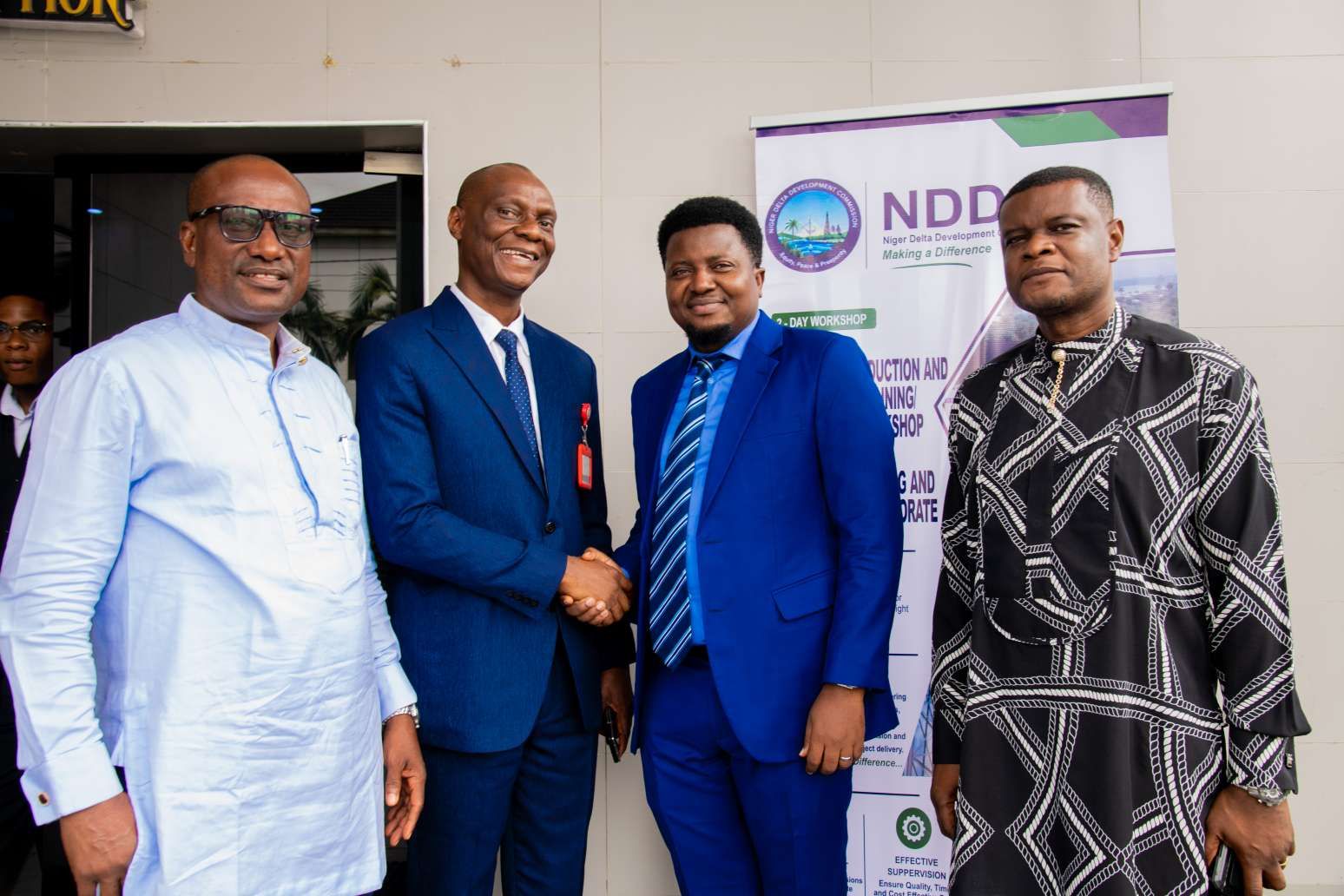
The Niger Delta Development Commission has reiterated its commitment to strengthening human capacity development by equipping staff of its Directorate of Project Monitoring and Supervision with the skills and knowledge required for effective service delivery.
Speaking during a two-day workshop organised for staff of the directorate, the Director of Project Monitoring and Supervision, Engr. Gbenga Omowanle, described the exercise as both a refresher course and induction programme for old and new employees.
Omowanle said the training was aimed at familiarising participants with the core principles guiding the operations of the Project Monitoring and Supervision Directorate as well as the Commission’s monitoring procedures.
According to him, all staff members in the directorate must understand the step-by-step processes involved in effective project monitoring to ensure improved oversight and delivery of projects across the Niger Delta region.
He added that the workshop would further reinforce the values of integrity, professionalism and confidentiality expected of staff in the discharge of their duties.
The PMS director commended the Managing Director of the NDDC, Dr Samuel Ogbuku, for approving the workshop titled, “Building Competence for Effective Project Oversight and Development Outcomes,” noting that the initiative would enhance the operational efficiency of the directorate.
In his remarks, the Lead Consultant for the training, Mr Dagogo Tolofari, stressed the critical role played by PMS personnel in monitoring infrastructural projects executed by the Commission.
He said engineers engaged in project supervision must be adequately equipped with modern technology and technical expertise to ensure effective quality monitoring of projects.
Tolofari noted that the workshop would expose participants to practical field realities and some of the strategies often adopted by contractors, while also introducing them to modern monitoring tools and contemporary project supervision techniques.
A resource person at the workshop, Dr Dada Joseph, who delivered a lecture on “Ethical Issues in Supervision,” identified unethical conduct as one of the major challenges confronting project monitoring in the country.
He urged staff of the PMS Directorate to maintain integrity and professionalism while carrying out their responsibilities, stressing that accurate documentation and accountability remained essential to the success of the Commission.
“Corruption exists everywhere in the world, but for us as a developing country, it remains a serious challenge. As staff of the PMS Directorate, document exactly what you observe in the field and submit your findings appropriately. Do not compromise,” he advised.
One of the participants, Engr. Akpekpe Jairus, said the training had provided deeper insight into project tracking within the Commission.
He explained that with the introduction of the Project Monitoring Information System, staff in state offices could now monitor projects remotely without travelling to the headquarters to obtain project information.