Business
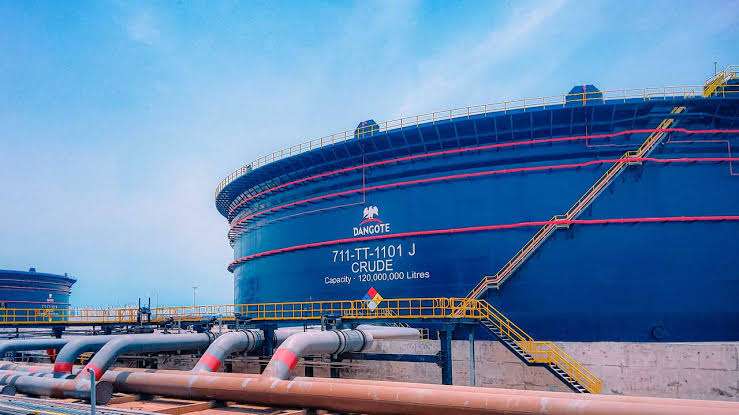
Dangote Refinery powers Nigeria’s aviation fuel supply, exports surge to Europe

Airlines Operators of Nigeria has credited the Dangote Petroleum Refinery and Petrochemicals with stabilising Nigeria’s aviation sector, revealing that the facility now supplies more than 95 per cent of the Jet A1 fuel consumed locally while ramping up exports to Europe.
According to AON spokesperson Obiora Okonkwo, the refinery has become indispensable to domestic airline operations, particularly amid global supply disruptions linked to tensions in the Middle East and rising energy costs.

“It is a matter of fact that over 95 per cent of aviation fuel supplied across the country comes from the Dangote refinery,” Okonkwo said during a televised interview. “To airline operators, Dangote is more than a refinery – it is a game changer and a lifeline.”
Despite the steady supply, airline operators say they remain under pressure from escalating Jet A1 prices. Okonkwo alleged that inefficiencies and sharp practices within the downstream distribution chain are driving artificial scarcity and inflating costs.
He disclosed that operators have faced price increases of up to 300 per cent since the escalation of geopolitical tensions, describing the situation as exploitative given that supply from the refinery has remained stable.
“We are seeing price levels that do not reflect what is obtainable at the depot,” he said, suggesting possible racketeering among fuel marketers.
These concerns were echoed by Allen Onyema, chairman of Air Peace, following discussions between industry stakeholders and the Federal Government.
Onyema questioned the sharp rise in prices, noting that Dangote’s products are comparatively cheaper and that some marketers source directly from the refinery.
“How do prices increase so drastically when supply remains available and competitively priced?” he asked, calling for greater scrutiny of fuel marketers.
Meanwhile, the refinery is expanding its presence in international markets. Industry data indicate that between March and April 20, it exported about 876,000 metric tonnes of aviation fuel to Europe, equivalent to roughly 1.1 billion litres.
The export figure includes approximately 456,000 tonnes shipped in March and an additional 420,000 tonnes delivered by April 20, reflecting growing production capacity and improved logistics.
Analysts say the development highlights Nigeria’s increasing relevance in the global downstream oil market, while also strengthening domestic energy security through reliable local supply.
As the aviation sector continues to grapple with cost pressures, stakeholders maintain that addressing distortions in the distribution chain will be critical to ensuring that the benefits of increased local refining capacity are fully realised.