Business
Diezani Alison-Madueke trial exposes deep sleaze of $672m, £11m

– Court papers reveal role of fronts, banks in public corruption
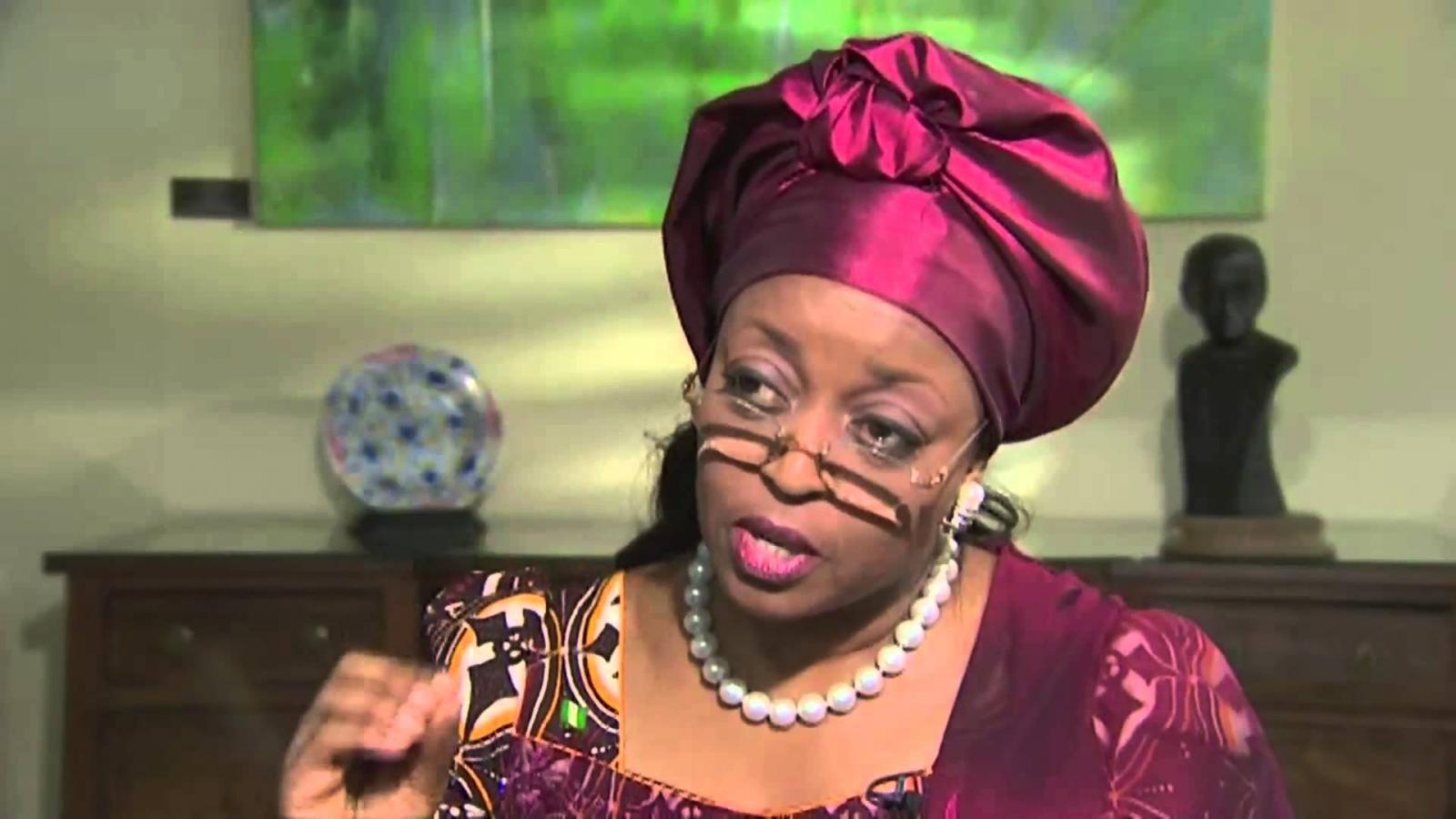
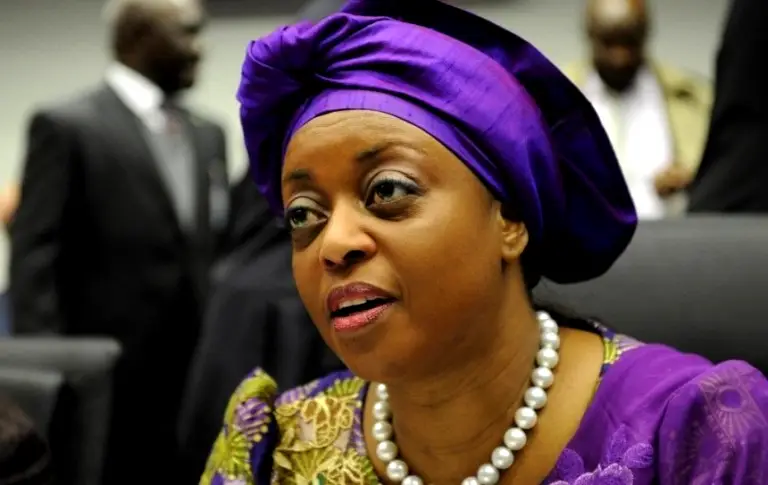
On January 26, 2026, after eleven years of evasion, bail extensions, passport seizures, and a cancer treatment excuse that conveniently kept her on London soil, Diezani Alison-Madueke finally sat in the dock at Southwark Crown Court to answer for what prosecutors allege was a systematic, brazen abuse of Nigeria’s petroleum ministry.
The charges are multiple: Five counts of accepting bribes and one count of conspiracy to commit bribery. She pleaded not guilty to all six charges. The trial, expected to last 10 to 12 weeks, presided over by Justice Thornton, opened with prosecutor Alexandra Healy delivering an open speak in a language that should make every Nigerian’s blood boil: Alison-Madueke “enjoyed a life of luxury in London,” bankrolled entirely by oil and gas operators, who believed she would use her ministerial influence to steer contracts their way.
“During that time, those, who were interested in the award and retention of lucrative oil and gas contracts…provided significant financial or other advantages to Alison-Madueke,” Healy said.
The trial proceeds: Evidence 1: Intercepted Phone Calls
U.S prosecutors intercepted telephone conversations between Alison-Madueke, Kola Aluko, and Jide Omokore. In one exchange, she was heard telling them: “We stuck our necks out regarding the SAA and supported it.” The SAA — the Strategic Alliance Agreements — were the very contracts the Central Bank of Nigeria determined were designed to funnel state income into private hands. In another call, after Aluko bought an $82 million yacht (the infamous Galactica Star), she told them “to be a bit more careful” not out of moral horror, but because the spending might attract scrutiny. She was not a whistle-blower. She was the risk manager,” the prosecutor said.
Evidence 2: The $153 Million Cash Heist
In December 2014, Diezani Alison-Madueke instructed a former banker to move $153,310,000 from a government agency’s account, issuing explicit directions that the funds should be neither credited to any identifiable account nor captured on any transaction platform.
The funds were subsequently broken up and warehoused across financial institutions. The EFCC later recovered the entire amount. However, investigations further uncovered an additional $72.87 million still lodged in one of the banks, long after the initial recovery.
Evidence 3: The Harrods Spending Spree & London Properties
Prosecutors told the jury that payment cards linked to Kolawole Aluko and his company Tenka were used to charge over £2 million at Harrods. Aluko also provided a £3.25 million property outside London, covered £500,000 in rent for two central London flats between 2011 and 2014, and spent £4.6 million refurbishing properties in London and Buckinghamshire. A chauffeur, private jets; her son’s school fees paid by Benedict Peters. Domestic staff all funded by contractors holding NNPC business. This was not a minister living on a salary. This was a minister living like a queen on someone else’s oil money.
The Defence Claims She was “Just a Rubber Stamp” and Was Not Even in the Country.
Defence lawyer Jonathan Laidlaw argued, that Alison-Madueke had “no real influence over the award of lucrative government contracts” and was merely signing off on civil servants’ recommendations, although as Minister of Petroleum Resources (2010–2015), she effectively controlled NNPC, NPDC, and PPMC — the three pillars of Nigeria’s entire state oil apparatus.
Account to him, “A rubber stamp does not get called Nigeria’s “super minister.” A rubber stamp does not have the Central Bank Governor fired for daring to expose the money she was moving.”
Laidlaw also challenged the continuation of the trial itself, arguing that critical defence documents have vanished and that UK authorities have held her passport for eleven years. The court approved a request for her legal team to travel to Nigeria to seek the missing records, but that effort has yielded nothing, with Nigerian authorities not responding to the defence’s access requests.
The most dramatic development in the trial so far came last week, when Jonathan Laidlaw stood before the jury and presented what he called exculpatory evidence: Diezani Alison-Madueke was not in the United Kingdom on the very days that Kolawole Aluko swiped his card to make the luxury purchases that prosecutors have pegged at over £2 million.
Travel records, passport stamps, and itineraries, the defence claims, placed her outside the country during the period in question. In Laidlaw’s framing, she did not receive these gifts because she was not there to receive them.
It is, on its face, the sharpest counter-move the defence has made. For weeks, the prosecution has built its case on the idea that Aluko’s spending at Harrods and on London properties was directly for Alison-Madueke’s benefit, and that she was the intended and knowing recipient. If the defence can prove she was abroad during those transactions, it creates a crack in that narrative. Or so they want the jury to believe.
“She was not in this country on the days these purchases were made. The prosecution’s entire narrative of direct, knowing receipt collapses if you accept what the travel records show,”Jonathan Laidlaw said.
The alibi argument sounds clever until you examine what the prosecution has already laid on the table. Physical presence is not required for a bribe to land. The prosecution’s case does not hinge on Alison-Madueke walking into Harrods herself and handing over a card. It hinges on the fact that Aluko’s spending was done on her behalf, at her direction, and for her sole and exclusive use.
The properties were in her name or hers to occupy. The rent was paid for flats she lived in. The refurbishments were carried out on her instructions. The Harrods receipts covered items that ended up in her possession, according to court records filed by the prosecution.
In UK bribery law, specifically the Bribery Act 2010, the offence is receiving a financial or other advantage in connection with the performance of a public function. It does not require the recipient to be physically present at the point of transaction.
A gift sent to your home while you are abroad is still a gift you received. A flat paid for by a third party while you are travelling is still a benefit that accrues to you. The defence knows this.
What the alibi evidence actually reveals and what the prosecution will almost certainly hammer during cross-examination is something far more damning: the sophistication of the arrangement.
The fact that Aluko could spend £2 million on luxury goods and property improvements for Alison-Madueke while she was overseas does not exonerate her. It proves that the system of benefit was organized, ongoing, and independent of her physical location. You do not need to be in the room for your corrupt arrangement to keep running. You only need to have set it up.
There is also the matter of the intercepted phone calls. On those recordings already in evidence – Alison-Madueke is heard advising Aluko on how to manage the optics of his spending. She knew about the yacht. She knew about the lifestyle. She was actively steering the risk management of the very corruption she is now alleged to have received. An innocent bystander does not do that from 30,000 feet.