Politics
U.S. House moves to tie Nigeria aid to protection of Christians
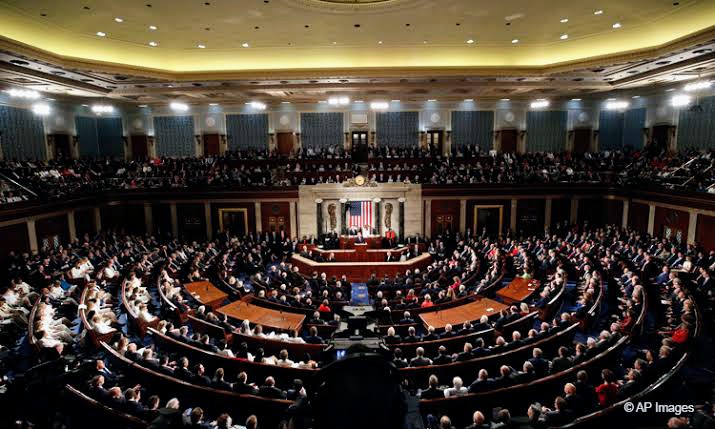
The United States House of Representatives has approved a spending measure that would make American assistance to Nigeria conditional on the country’s efforts to address violence against Christians and other religious minorities, introducing a new dimension to relations between Washington and Abuja.
The provision forms part of the Fiscal Year 2027 National Security, Department of State, and Related Programs Appropriations Act, which was passed by the House and now advances in the U.S. legislative process.

The legislation, backed by Republican Congressman Riley Moore, proposes withholding a significant portion of U.S. assistance to Nigeria unless the government demonstrates measurable progress in protecting Christian communities and tackling religiously motivated violence.
In a related move, lawmakers also approved an amendment sponsored by Republican Congressman Greg Steube that seeks to suspend all U.S. assistance to Nigeria until specific conditions on religious freedom and security are met.
Steube argued during debate on the House floor that the Nigerian government has not done enough to prevent attacks against Christians and other vulnerable groups.
According to him, extremist violence has continued to affect communities across parts of the country, resulting in deaths, displacement and destruction of property.
The Florida lawmaker maintained that U.S. foreign assistance should be used as a tool to encourage accountability and stronger action by recipient governments.
He said American support should be linked to demonstrable efforts to protect citizens and combat terrorism, adding that governments receiving aid must show commitment to safeguarding vulnerable populations.
Moore, who championed the broader provision in the spending bill, said the measure was intended to ensure greater accountability in the use of U.S. assistance while drawing international attention to attacks targeting Christian communities in Nigeria.
He stated that the legislation would require evidence of progress in addressing security threats, including violence attributed to armed groups operating in different parts of the country.
The congressman also said the bill supports continued engagement between U.S. and Nigerian law enforcement agencies through training and accountability programmes, while directing the U.S. State Department to provide Congress with regular assessments of the situation.
Beyond Nigeria, the legislation contains several foreign policy and national security provisions, including funding aimed at combating human trafficking, organ trafficking and ritual killings in parts of Africa.
It also prioritises initiatives targeting transnational criminal networks and perceived security threats from countries such as China and Iran, while proposing the elimination of funding for certain climate, diversity and gender-related programmes introduced under previous administrations.
The bill remains subject to further consideration by the U.S. Senate and must complete the congressional appropriations process before it can be signed into law.
If eventually enacted, the measure could place additional pressure on Nigeria to demonstrate progress in addressing security concerns and protecting religious communities as a condition for continued access to U.S. assistance.