Business
Tinubu moves to extend 2025 budget to March 2026, seeks lawmakers’ backing
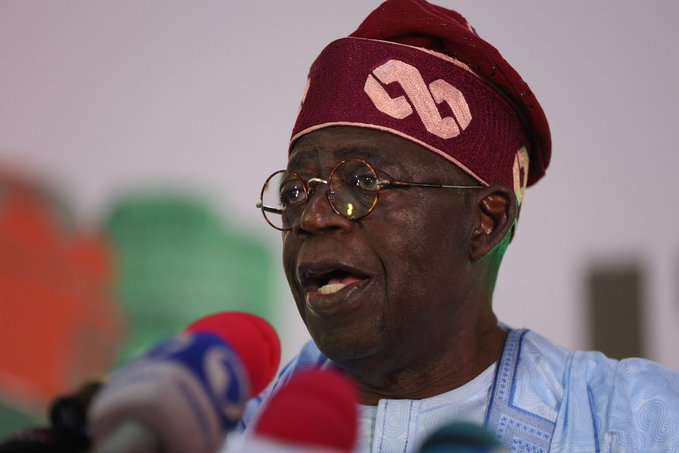
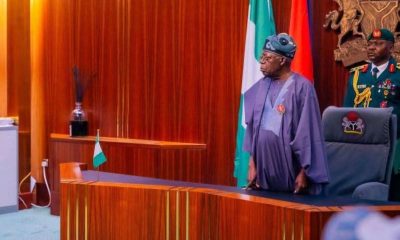
President Bola Tinubu has formally asked the National Assembly to approve an extension of the implementation of the 2025 Appropriation Act to March 31, 2026, in a bid to end Nigeria’s recurring problem of overlapping budget cycles.
The request was contained in a letter dated December 18, which was read on Friday at a special plenary of the House of Representatives by the Speaker, Tajudeen Abbas.
Tinubu said the request replaces an earlier letter sent on December 16, 2025, and is intended to address structural weaknesses in the country’s budget execution process, particularly the practice of running multiple budgets at the same time.
According to the President, the proposed extension is part of wider fiscal reforms aimed at improving planning, strengthening budget execution and enhancing accountability in government spending.
He explained that delayed release of capital funds has continued to undermine budget performance, stressing that the amendments would make it possible to achieve the full release of at least 30 per cent of capital allocations to Ministries, Departments and Agencies (MDAs).
As part of the proposal, Tinubu disclosed that the 2024 Appropriation Act would be repealed and re-enacted with an adjusted total of N43.56 trillion, while the 2025 budget would be revised downward to N48.32 trillion and extended to cover expenditure up to March 31, 2026.
In the letter, the President stated that the repeal and re-enactment of the 2024 budget would authorise spending of N43.56 trillion, comprising N1.74 trillion for statutory transfers, N8.27 trillion for debt service, N11.27 trillion for recurrent (non-debt) expenditure, and N22.28 trillion for capital expenditure and development fund contributions for the year ending December 31, 2025.
He also said the repeal and re-enactment of the 2025 Appropriation Act would authorise total expenditure of N48.32 trillion, made up of N3.65 trillion for statutory transfers, N14.32 trillion for debt service, N13.59 trillion for recurrent (non-debt) expenditure, and N16.77 trillion for capital expenditure and development fund contributions, for the period ending March 31, 2026.
Tinubu noted that the proposed bills were designed to accommodate items not previously captured in the budgets, while also reflecting a revised capital implementation target of 30 per cent.
He added that the adjustments align with current fiscal realities and government’s execution capacity, while helping to restore credibility and transparency to the budget process.
The President urged lawmakers to give the bills accelerated consideration in the overall interest of national development.
Since taking office in May 2023, the Tinubu administration has struggled with overlapping budget cycles, a challenge attributed to delayed passage of appropriation bills, revenue constraints and slow disbursement of capital funds.
The Presidency has repeatedly warned that operating multiple budgets simultaneously weakens fiscal discipline, disrupts project planning and complicates accountability in public finance management.