Politics
Rivers: APC dumps Wike for Gov. Fubara as race for 2027 begins

For nearly two years, Rivers State has been Nigeria’s most combustible political arena, a place where power is never surrendered quietly, godfathers rarely retire gracefully, and loyalty is often a temporary currency.
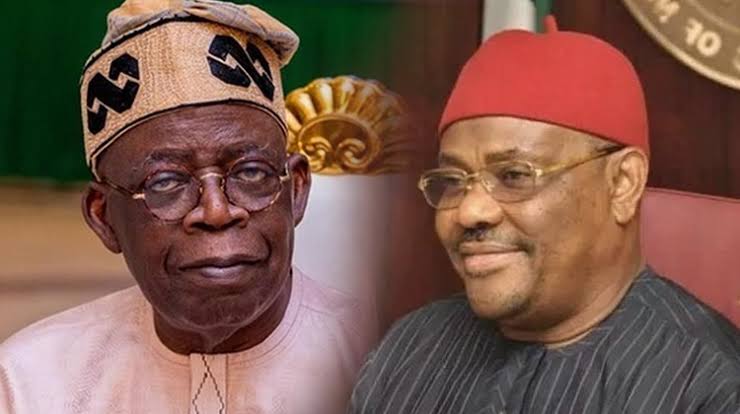
What began as a carefully choreographed succession plan in 2023 has mutated into an existential political war involving three of the most powerful actors in the country: President Bola Tinubu, Federal Capital Territory (FCT) Minister and former Rivers governor, Nyesom Wike, and the incumbent governor, Siminalayi Fubara.
At different moments, each of the trio has appeared dominant. At others, each has looked vulnerable.
But as the dust settles at the close of 2025, the balance of power in Rivers State is shifting in a way few predicted when the crisis first erupted. The quiet, technocratic governor once dismissed as weak and expendable has staged a comeback that now threatens to upend Wike’s long-standing grip on the state, and potentially redraw Tinubu’s political calculus ahead of 2027.
Heir apparent to political adversary
When Fubara emerged as Rivers governor in 2023, his victory bore the unmistakable fingerprints of Wike. As outgoing governor, Wike not only anointed Fubara as the Peoples Democratic Party (PDP) candidate but also deployed his formidable political machine, built over eight turbulent years, to secure the win.
At the time, the relationship was portrayed as seamless, a loyal protege inheriting power from a political godfather, who had become one of the most influential figures in Nigeria’s ruling circles. But the illusion of harmony barely survived Fubara’s swearing-in.
Within months, cracks appeared. Control of state finances, appointments, party structures and the legislature became flashpoints. What was initially whispered disagreement soon hardened into open confrontation. Rivers State House of Assembly, overwhelmingly loyal to Wike, became the primary weapon in the conflict.
By October 2023, the rivalry turned explosive. The Assembly complex was bombed in an attack widely seen as linked to an impeachment plot against Fubara. The incident shocked the nation and signalled that Rivers politics had crossed into dangerous territory.
Trapped in permanent crisis
The bombing ushered in a prolonged season of instability. The Assembly split into rival camps, producing two speakers: Martin Amaewhule for the Wike faction and Edison Ehie for the governor’s supporters. Court cases piled up, ricocheting from the State High Court to the Court of Appeal and eventually the Supreme Court.
Governance suffered. Projects stalled. Investor confidence dipped. For Rivers people, the crisis became an exhausting background noise, a constant reminder that the state’s enormous economic potential was being held hostage by elite power struggles.
Despite attempts at mediation by party leaders, elders and even the presidency, the conflict refused to abate. By early 2025, it had become clear that Rivers was no longer just a local political feud but a national problem.
Emergency rule
On March 18, 2025, President Bola Tinubu invoked emergency powers, suspending Gov. Fubara, his deputy Professor Ngozi Odu, and the entire Rivers State House of Assembly. Vice Admiral Ibok-Ete Ibas (retd.) was appointed sole administrator for six months.
The decision sent shockwaves through Nigeria. Lawyers, constitutional experts and civil society groups questioned its legality, arguing that the threshold for emergency rule had not been met. But politically, the message was unmistakable: Abuja had lost patience.
For Fubara, the suspension was devastating. Stripped of office and authority, he endured six months of political exile. Critics mocked him as weak, timid and incapable of standing up to Wike. In contrast, the former governor appeared vindicated: still powerful, still relevant, still calling the shots from Abuja. Yet beneath the surface, something was shifting.
Calm that followed the storm
During the six months of emergency rule, Rivers experienced an uneasy calm. With politics temporarily frozen, tensions eased. But the cost was high as democratic institutions were sidelined, development slowed, and the state’s political energy went dormant.
When emergency rule ended in September 2025 and Fubara returned to office, he did so under strict conditions, including dissolving parts of his cabinet appointed during the crisis. The concessions were painful, alienating some loyalists, but they bought him breathing space.
Fubara later admitted that he only began to experience relative peace after the emergency was lifted. “Before then, there was hardly any week without one crisis or another,” he recalled.
Many assumed the governor would tread cautiously, permanently subdued by the experience. Instead, he watched. He listened. And he waited.
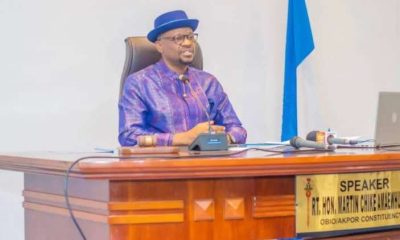
By early December 2025, the political temperature began to rise again. The House of Assembly, led by Speaker Martin Amaewhule, launched a fresh attack on Fubara, accusing his administration of neglecting public schools despite inheriting over N600 billion in state savings.
Following an inspection of schools in Port Harcourt, lawmakers painted a dire picture of collapsed infrastructure, overcrowded classrooms and the absence of basic facilities. Amaewhule’s words were scathing, describing conditions as “heartbreaking and unacceptable.”
The timing was telling. It was barely three months after the return of democratic rule, the familiar pattern of confrontation was re-emerging. Fubara responded carefully. Speaking to traditional rulers, he acknowledged the decay but insisted it was a long-standing problem predating his administration. He promised massive education spending in the 2026 budget and accused critics of weaponizing systemic neglect against him.
Yet even as the public drama played out, the real battle was moving to a different arena.
Lawmakers defect
In a dramatic twist, at least 17 lawmakers loyal to Wike, including Amaewhule himself, defected from the PDP to the All Progressives Congress (APC), citing the deepening crisis within the opposition party at the national level.
The move was widely interpreted as self-preservation. With the PDP fractured and Wike himself facing expulsion, the lawmakers sought refuge in the ruling party ahead of 2027.
But their defection created a paradox, bringing about an APC-dominated Assembly confronting a PDP governor in a state already scarred by instability. Then came the move that has changed everything.
Fubara’s silent pivot to power
Unknown to many observers, Gov. Fubara had already begun recalibrating his political strategy. Sources say he quietly opened direct channels to President Tinubu, bypassing Wike entirely.
When Wike realized what was unfolding, he reportedly made frantic efforts to stop it, reaching out to Tinubu and key figures in the Presidency. But by then, the President’s priorities had evolved.
For Tinubu, Rivers is too strategic to gamble on perpetual instability. While Wike had delivered the state in 2023, his combative style and polarizing politics were increasingly seen as liabilities. Fubara, by contrast, remained the sitting governor, with access to state resources, grassroots networks and organic local legitimacy.
In early December, after a closed-door meeting with Tinubu in Abuja, Fubara made his move.
Crossing the Rubicon
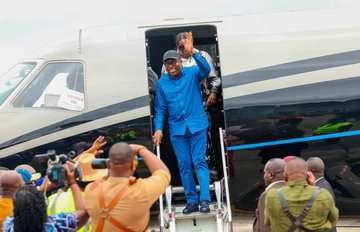
On December 9, Fubara announced his defection from the PDP to the APC at a stakeholders’ meeting in Port Harcourt. Singing Tinubu’s campaign anthem and pledging total loyalty, he left no ambiguity about his intentions.
“Without Mr President, I would have been a former governor,” Fubara declared. “We cannot support him from the backyard.”
The symbolism was profound. Within days, the Rivers APC leadership formally registered Fubara as a party member. Acting on instructions from the national chairman, state chairman, Tony Okocha, assured the governor that the party was now firmly behind him.
Speaking on Friday, December 12, when he formally went to register the Fubara as a member of the APC at the Government House in Port Harcourt, Okocha said he was directed by the party’s National Chairman, Nentawe Goshwe Yilwatda, to officially issue the governor his party membership card.
He described the assignment as a “holy one” and congratulated the governor for his decision to join the ruling party. According to Okocha, he was satisfied with the reasons given by Gov. Fubara for joining the APC, adding that the party in Rivers State would fully support him.
In one stroke, Fubara became the de facto leader of the APC in Rivers State.
“Your excellency, I was called up by the Chairman of our great party and given the mandate to visit you, and to formally present our membership card to you as a prelude to your official reception. Let me take this time out to congratulate you on your decision to join the All Progressive Congress,” Okocha said.
A godfather out-flanked
Fubara’s defection marked a decisive turning point. For the first time since the crisis began, Wike appeared politically out-manoeuvred. But it would be naive to count the minister out at this point.
A source close to the corridors of power in Abuja told Business Hallmark that Wike’s aggressive politics had begun to wear thin. “Tinubu looked at the numbers and the reality. Fubara brings stability and grassroots acceptance. With him, Rivers is APC in substance, not just name,” the source said.
Public reactions echoed this sentiment. Commentators on social media described Fubara as the only figure capable of delivering “organic support” for Tinubu in Rivers. Others bluntly suggested that Tinubu no longer needed Wike to win the state in 2027.
Former governor Peter Odili openly endorsed Fubara’s move, describing Rivers’ alignment with the federal government as “perfect” and urging the state to remain close to the centre.
Continuing, Odili said the governor’s decision translates to the state aligning with the Federal Government, which he described as “perfect” because, according to him, Rivers State stands to benefit more from the centre.
The former governor, who made the remarks during the 8th Founders’ Day and 5th Convocation of PAMO University of Medical Sciences, Port Harcourt, on Friday, said, “So, the alignment of Rivers State with the Federal Government is perfect. We support it, we encourage it because our people are in the kitchen, where the national cake is baked.”
Odili continued, “If you take a look at all those, who work in the kitchen, they eat better than everybody else and they look better than everybody else. Let Rivers people align with the Federal Government behind our governor to ensure that the best that the state can get, we get it.”
Women stakeholders in the state have also come out to declare their full support for Tinubu and the governor ahead of 2027. While it had looked, few weeks ago, as though Fubara was destined to be a one term governor, the governor is now looking poised for another four years post 2027.
War within the ruling party
Yet, the crisis is far from resolved. Despite sharing party affiliation, tensions persist between Fubara and the Amaewhule-led lawmakers. The Assembly’s adjournment amid budget preparations raised fresh concerns about sabotage and unfinished reconciliation.
The irony now is that the lawmakers, who once sought to impeach Fubara, now operate within a party, where he holds the highest political authority. Whether they will submit to his leadership or continue their resistance remains an open question.
Rivers and cycle of dethronment
History offers a sobering lesson. Rivers has a habit of devouring godfathers. Peter Odili’s structures were dismantled by Rotimi Amaechi. Amaechi’s were later destroyed by Wike. Now, many believe Fubara is positioning himself to do the same to Wike’s.
Political analysts argue that Rivers’ political culture simply does not tolerate permanent overlords. “Fubara controls the resources, the structures and the legitimacy of office,” one analyst noted. “That makes him more valuable to Tinubu than Wike.”
Stoop, endure, conquer
Fubara’s journey from political exile to kingmaker-in-waiting is a study in patience and survival. He absorbed humiliation, endured suspension and allowed opponents to underestimate him. Then, at the decisive moment, he aligned himself with the ultimate centre of power.
As 2027 approaches, Rivers State is no longer merely a battle ground between a godfather and his rebellious son. It has become a proving ground for Tinubu’s broader strategy of power consolidation.
Speaking during the commissioning of the 9.7km Ogbakiri Road project last week, Fubara, affirmed that he has strong grassroots structures and committed supporters to deliver the required backing for Tinubu in 2027.
Fubara said that the mobilisation of support for Tinubu ahead of the general elections is already about 70 per cent completed across the state.