Business
Proton Energy CEO says N501bn bond will revive investor confidence in power sector
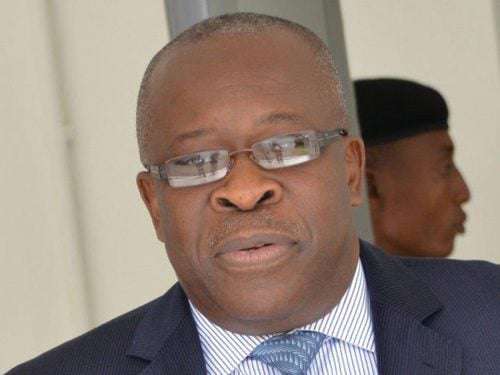
Oti Ikomi, the Chief Executive Officer of Proton Energy, has described the Federal Government’s N501 billion power sector bond as a major milestone that could unlock fresh investments and restore confidence in Nigeria’s troubled electricity industry.
Speaking on CNBC Africa, Ikomi said the bond issuance under the Presidential Power Sector Debt Reduction Programme (PPSDRP) had addressed a critical bottleneck that had long discouraged investment – the accumulation of legacy debts owed to power generation companies.

The inaugural bond, which recorded 100 per cent subscription from pension funds, banks, asset managers and other institutional investors, is the first tranche of a broader plan to settle an estimated N4 trillion in outstanding obligations across the Nigerian Electricity Supply Industry (NESI).
“For years, GenCos have been burdened by legacy debts arising from inefficiencies in the value chain, subsidies and payment shortfalls,” Ikomi said. “This bond is an excellent development because it brings liquidity back into the system and gives operators the confidence to invest again.”
He explained that the N501 billion issuance would be used to settle part of the debts owed by distribution companies and Nigeria Bulk Electricity Trading (NBET) to generation companies, adding that the settlement involved compromises by all parties.
“From what we can see, GenCos are taking roughly a 40 per cent haircut,” he noted. “But the objective is to clear old debts, inject cash into the system, pay gas suppliers, improve plant performance and ultimately increase power supply.”
Ikomi said the bond issuance was already being reflected in renewed investor interest in the sector, pointing to a string of high-profile transactions completed in recent months.
He cited the $750 million Geregu Power deal concluded in December 2025, as well as the N360 billion acquisition of a controlling stake in Eko Electricity Distribution Company by Transgrid Enerco Limited, as signs that the capital market was warming up to Nigeria’s power sector once again.
“These are transactions we haven’t seen in over a decade,” he said. “They show that confidence is gradually returning. What is needed now is for the rest of the value chain – distribution, metering and transmission – to keep pace with these developments.”
Clearing the backlog
The N501 billion bond was issued by NBET Finance Company Plc as part of the Federal Government’s Power Sector Multi-Instrument Issuance Programme, a N4 trillion framework designed to resolve verified legacy debts for electricity supplied between February 2015 and March 2025.
The Series 1 issuance comprised N300 billion raised from the capital market and N201 billion in bonds allocated to participating generation companies, reflecting strong investor confidence in the reform agenda.
So far, five generation companies operating 14 power plants – including Geregu Power Plc, Ibom Power Company Limited and Niger Delta Power Holding Company Limited – have signed settlement agreements with NBET, with a total negotiated settlement value of N827.16 billion, to be paid in four instalments.
According to the Federal Government, proceeds from the first bond tranche will fund the initial two instalments, estimated at N421.42 billion, covering about half of the agreed settlement amounts.
Speaking at the bond signing ceremony in Lagos, Minister of Finance and Coordinating Minister of the Economy, Wale Edun, said the programme was critical to restoring liquidity, strengthening balance sheets and improving power supply nationwide.
The Special Adviser to the President on Energy, Olu Arowolo Verheijen, also said the initiative marked a decisive reset of the electricity market, stressing that it was designed to resolve verified obligations rather than serve as a bailout.
By settling long-standing arrears in a structured and transparent manner, the government expects the programme to stabilise power generation assets, unlock new investment across the electricity value chain and improve electricity supply to millions of Nigerian homes and businesses.