Business
Oil surges past $80 as US-Iran tensions escalate over Strait of Hormuz

Global oil prices climbed above $80 per barrel on Monday after a fresh escalation in hostilities between the United States and Iran heightened concerns over the security of the Strait of Hormuz, a critical artery for global energy supplies.
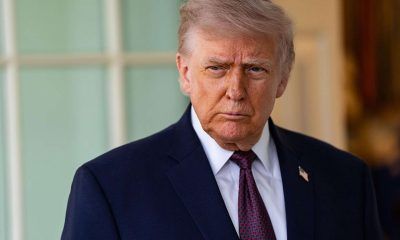
Market sentiment was rattled after US President Donald Trump unveiled plans to impose a 20 per cent charge on cargoes transiting the strategic waterway, arguing that countries benefiting from American-led security efforts should contribute to the costs of maintaining safe navigation through the route.

The announcement coincided with reports of renewed military exchanges between Washington and Tehran, triggering fears of disruptions to crude oil shipments from the Gulf region and pushing Brent crude prices above the $80-per-barrel mark.
In a statement posted on his Truth Social platform, Trump declared that the United States would continue to guarantee access to the Strait of Hormuz while introducing measures to recover the costs associated with securing the corridor.
He also announced the restoration of a maritime blockade against Iran, accusing Tehran of repeatedly violating agreements reached with Washington.
“The Hormuz Strait is open and will remain open. The United States will be reimbursed for providing security in one of the world’s most volatile maritime regions,” Trump stated.
Speaking earlier in a television interview, the US leader suggested Washington could assume a more direct role in overseeing security operations along the route, describing the proposed arrangement as a fair burden-sharing mechanism for nations that rely on the passage for trade and energy supplies.
Iran reacted sharply to the proposal, rejecting any suggestion that the United States had the authority to impose fees on vessels navigating an international waterway.
Iranian Foreign Minister Abbas Araqchi insisted that Tehran had historically safeguarded the Strait of Hormuz and criticised the proposed levy as unjustified and excessive.
The Islamic Revolutionary Guard Corps also warned that continued American military activity in the Gulf could further destabilise shipping operations and threaten global energy markets.
Adding to market anxiety, reports emerged that the US military would begin enforcing a maritime blockade targeting Iranian ports, oil terminals and coastal facilities.
According to maritime advisories cited by international media, vessels entering or leaving designated Iranian waters without authorisation could face interception or diversion, although transit to and from non-Iranian destinations through the Strait of Hormuz would remain unaffected.
The military tensions intensified further after US Central Command confirmed strikes on Iranian naval assets and support facilities, which Washington said were carried out in response to attacks on commercial shipping in the Gulf.
Iran, in turn, claimed responsibility for strikes on American military installations across the region, including facilities in Bahrain, Kuwait, Jordan and Oman.
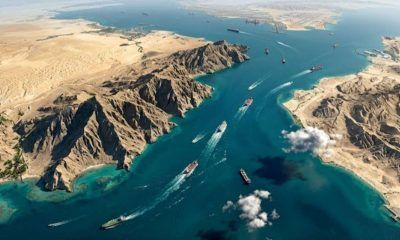
Shipping activity through the Strait of Hormuz remained limited, according to vessel-tracking data, reflecting growing caution among operators navigating one of the world’s most strategically important maritime corridors.
The latest developments have cast doubt on a temporary understanding reached between Washington and Tehran last month aimed at reducing tensions and ensuring uninterrupted navigation through the waterway while broader diplomatic negotiations continued.
The Strait of Hormuz serves as the primary export route for crude oil and liquefied natural gas from major Gulf producers, including Saudi Arabia, Iraq, Kuwait, Qatar, the United Arab Emirates and Iran. Analysts estimate that roughly 20 per cent of global oil consumption passes through the narrow channel each day, making any disruption a significant concern for energy markets.
The proposed US cargo charge has also sparked legal debate. International maritime law generally guarantees vessels the right of transit passage through international straits, and experts note that the imposition of tolls on ships solely for passage through such waterways could face significant legal and diplomatic challenges.
While the White House has yet to provide details on how the proposed levy would be enforced, uncertainty surrounding the plan, combined with escalating military tensions, has already injected fresh volatility into global oil markets and raised concerns about the potential impact on fuel prices worldwide.