Business
NNPC signs MoU with Chinese firms to revive Port Harcourt, Warri refineries
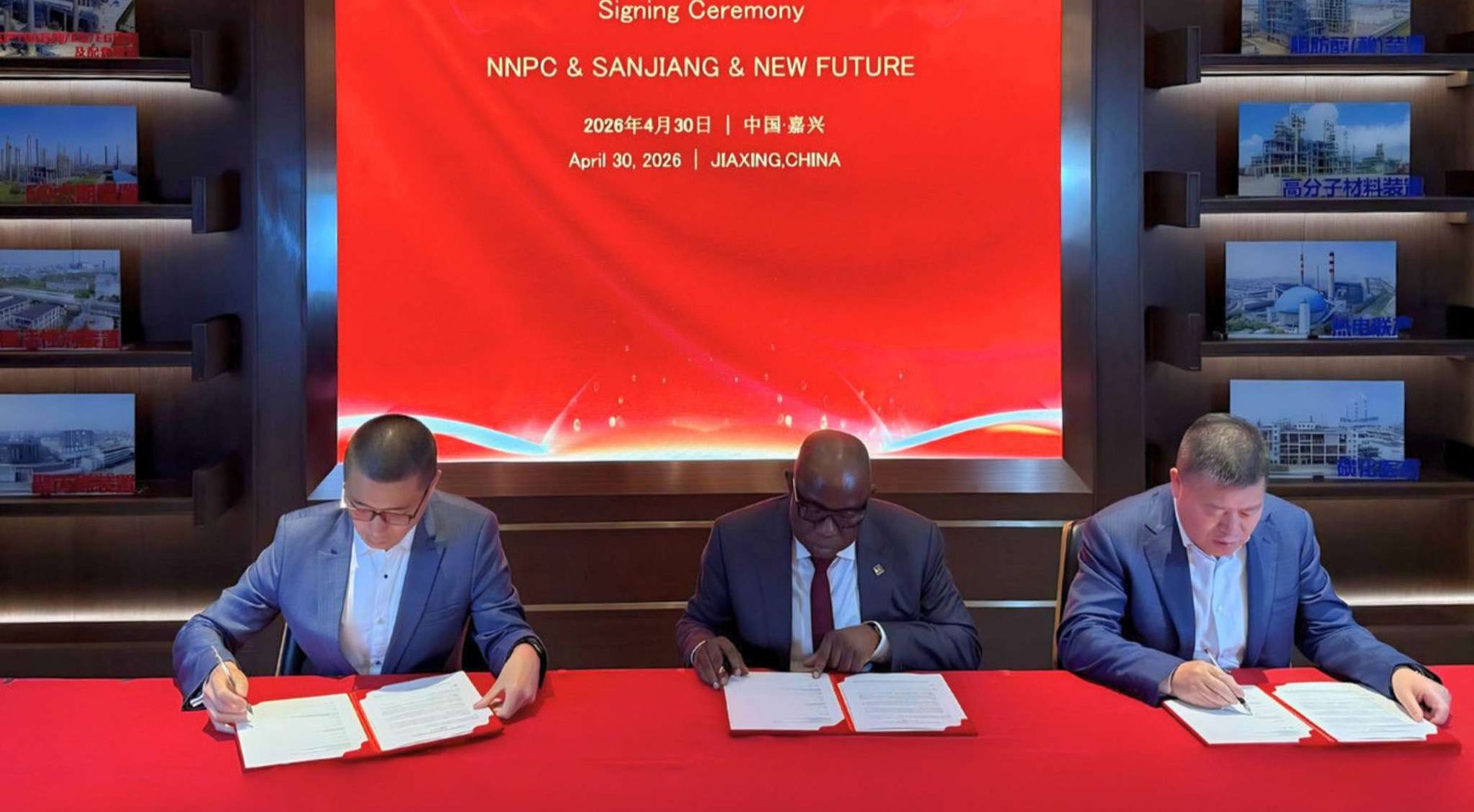
The Nigerian National Petroleum Company Limited (NNPCL) has signed a Memorandum of Understanding (MoU) with two Chinese firms as part of efforts to advance the completion and long-term operation of the Port Harcourt and Warri refineries.

The agreement, signed in Jiaxing City, China, on April 30, 2026, involves a proposed Technical Equity Partnership (TEP) with Sanjiang Chemical Company and Xinganchen (Fuzhou) Industrial Park Operation and Management Co Ltd.
NNPC’s Group Chief Executive Officer, Bayo Ojulari, signed on behalf of the company, alongside Sanjiang Chairman Guan Jianzhong and Xinganchen Chairman Bill Bi.
According to the company, the proposed framework is expected to address the completion of outstanding work at the refineries, while also covering their operation and maintenance to achieve improved and sustainable performance.
The arrangement also includes plans for expansion and upgrades aimed at enhancing product quality and profitability, as well as aligning operations with cleaner fuel standards.
In a statement issued by NNPC’s Chief Corporate Communications Officer, Andy Odeh, the company said the MoU signals a shared commitment by all parties to continue discussions, with final agreements subject to regulatory approvals.
The potential partnership is also expected to explore opportunities beyond refining, including the development of petrochemical capacities and gas-based industrial hubs located alongside the facilities.
Speaking after the signing, Ojulari described the development as a milestone following months of engagement between NNPC and the prospective partners.
He noted that the collaboration could support the long-term sustainability and profitability of the company’s refining assets, while also opening up additional opportunities in petrochemicals and gas-based industries.
The company emphasised that the MoU is non-binding and represents an initial step toward identifying suitable technical partners for the rehabilitation, restart, and expansion of Nigeria’s state-owned refineries.