Business
NDDC Reaffirms Commitment to Climate Action, Environmental Sustainability
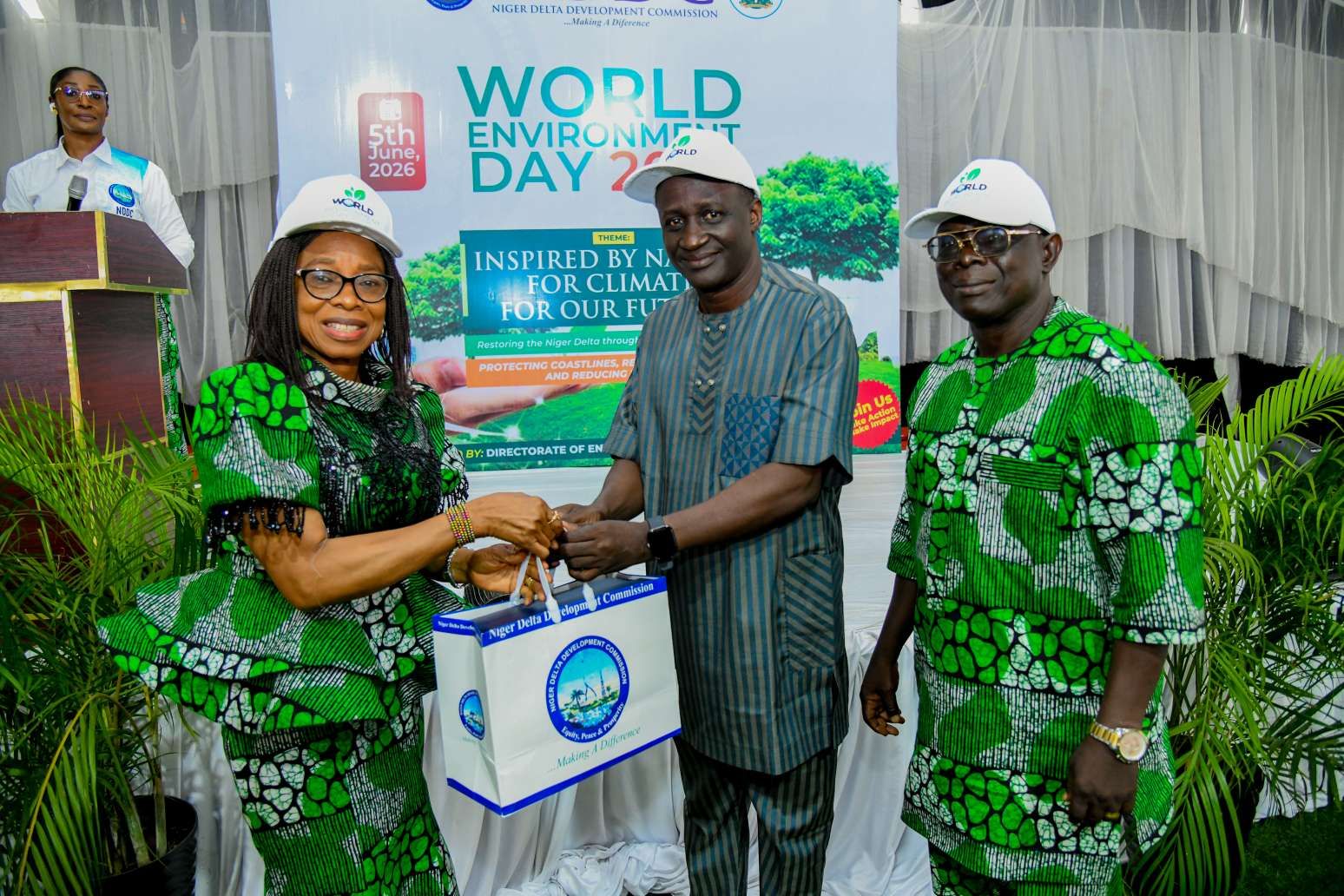
The Niger Delta Development Commission (NDDC) has reaffirmed its commitment to climate action, environmental protection and sustainable development, pledging to intensify efforts aimed at restoring degraded ecosystems and strengthening climate resilience across the Niger Delta region.
The commitment was reiterated during the 2026 World Environment Day celebration held in Port Harcourt, where the Commission highlighted ongoing initiatives designed to address environmental challenges and promote sustainable development.

Speaking at the event, the NDDC Executive Director, Projects, Victor Antai said the Commission remained focused on implementing strategic environmental projects to restore damaged ecosystems and improve the capacity of communities to withstand the effects of climate change.
Represented by Elder Henry Okokon, Director II, Environmental Protection and Control, Antai noted that the 2026 World Environment Day theme, “Inspired by Nature. For Climate. For Our Future,” underscored the urgency of collective action in tackling environmental challenges confronting communities in the Niger Delta and beyond.
He observed that the region had endured decades of environmental degradation resulting from intensive resource exploitation, with oil spills, gas flaring, coastal erosion, flooding, deforestation and poor waste management continuing to threaten livelihoods, biodiversity and sustainable development.
According to him, under the leadership of the NDDC Managing Director, Samuel Ogbuku environmental sustainability remains central to the Commission’s development agenda, as socio-economic progress cannot be achieved without a healthy and resilient ecosystem.
Antai highlighted several interventions being undertaken by the Commission, including environmental remediation and ecosystem restoration programmes, flood and erosion control projects, sustainable waste management initiatives and climate-resilient livelihood schemes aimed at improving environmental health and enhancing community resilience.
He further disclosed that the Commission was expanding partnerships with research institutions, environmental agencies, development partners and civil society organisations to support the conservation of mangrove forests, wetlands and other critical ecosystems that serve as natural buffers against climate-related disasters.
The NDDC executive also stressed the importance of environmental education and awareness, noting that the Commission was engaging schools, youth groups, women’s organisations and community stakeholders to encourage environmental stewardship across the region.
He called on stakeholders, particularly operators in the oil and gas sector, to comply with environmental regulations, adopt cleaner technologies and demonstrate stronger commitment to environmental remediation and sustainability efforts.
Earlier, the Director of Environmental Protection and Control, Mrs Anthonia Akpan, described World Environment Day as a global platform established by the United Nations to promote environmental awareness and action.
She noted that climate change had become a reality for communities across the Niger Delta, manifesting through rising sea levels, flooding, environmental degradation and increasingly unpredictable weather conditions.
Akpan stated that the Commission continued to subject major projects to Environmental Impact Assessments in line with statutory requirements to ensure that development initiatives were implemented in a manner consistent with environmental sustainability objectives.
She added that the NDDC had maintained active engagement with oil and gas companies on pollution prevention and control while organising environmental summits that generated recommendations on integrated waste management, shoreline protection, canalisation, land reclamation and biodiversity conservation.
In a keynote presentation, described climate change as both a global environmental issue and a local development challenge, stressing the need for coordinated responses involving governments, institutions, communities and individuals.
He urged stakeholders to work together in addressing the environmental and developmental impacts of climate change, particularly in vulnerable regions such as the Niger Delta.