Business
Economic hardship forces Nigerians to adopt survival strategies
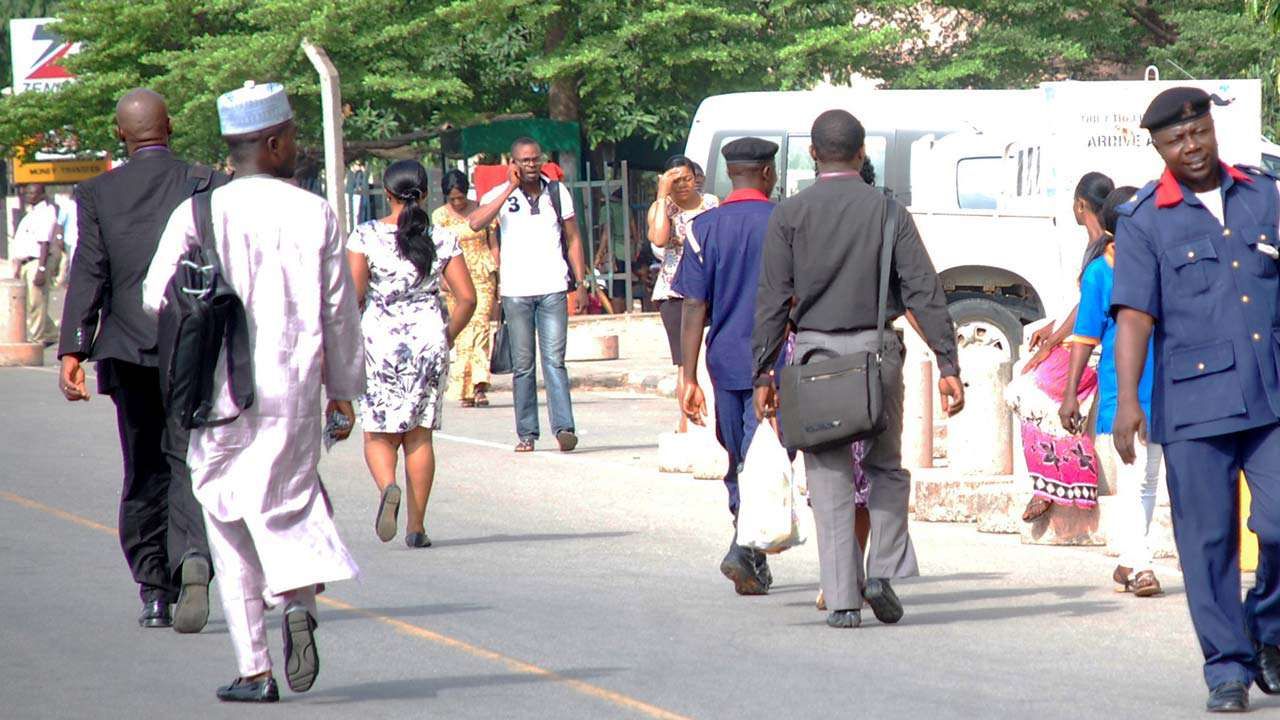
...as many trek more, cut rations, others
Adebayo Obajemu

Nigeria is going through its worst cost of living crisis in nearly 30 years – and President Bola Tinubu, who was praised in the West as a “renewer of hope” is widely perceived to be partially responsible. With deepened poverty and frustration over government inaction leading to public outrage and several protests in the past nearly three years of his administration, the country is, without doubt, at an inflection point. And it needs a stark policy turnaround to face its economic woes.
Life for many Nigerians has become hellish as they daily grapple with difficulties -driven by high inflation, effects of fuel subsidy removal, and currency devaluation, with many resorting to extreme survival measures. For many, coping strategies include reducing daily meals, trekking, bulk food purchases, and starting urban farming. Even those who say they support the reforms for long-term stability, are beginning to buckle under, as many face intense economic strain.
But for many Nigerians who had endured suffering and hardships under former President Muhammadu Buhari, the Tinubu presidency was widely anticipated to be an elixir, one that would relieve their suffering, so at Tinubu’s inauguration in May 2023 the anticipating speech from the new president,it was widely believed, would encapsulate the “renewed hope” he had promised during his campaign.
Instead, in a single jarring sentence, he announced the abrupt removal of fuel consumption subsidy without adequate compensatory measures. This, and other economic decisions that neglect economic rights, have contributed to Nigeria’s worst cost of living crisis in almost 30 years, pushing millions of people deeper into poverty.
Three years into his presidency, Nigerians, who spoke with Business Hallmark, expressed sadness, frustration and deep regrets for what many of them consider ” wrong political choices”.
Key Coping Mechanisms adopted by many Nigerians
Many families are cutting back on non-essential purchases, reducing food portions, and opting for cheaper alternatives to manage the rising cost of living.
“We only eat twice in my house,”
Abiodun, a middle aged man, who is a vulcanize, said he made a big mistake during the last election. I wanted to vote for Labour Party, but a friend convinced me to vote for All Progressives Congress, saying “this is our time, after the North, it’s the turn of the Yoruba,” the consequences of the choice is what I’m living with today.
“At least, under Buhari, in my family of four, we could eat three times a day; but today it ranges between one and two, depending on what I make. My wife is a petty trader, so I carry the burden. When last did we buy meat, it’s”ponmo” (skin hide of animal). My last born is of school age, but I can not afford to send him to school. As I speak, I have not balanced my rent.
“My husband is always angry as if I’m responsible for our hardship,” says
Mrs.Monsurat, a house wife at Abule Egba, says she is an unhappy woman. According to her, it has not always been like that, but the whole psychological torture began in late 2024 when her husband lost his job as a driver. “With no help anywhere except what I make from petty trading in condiments, there’s no other source of money.
Two of our four children are at home. No money to send them to school private school again. The rest two were withdrawn from private to public, to eat is a daily battle. Our landlord is on our neck, because the little I make goes for feeding.
Extended family members, who used to come to our aid up to a year ago have withdrawn to their shell, citing biting economic hardships of their own. My husband is taking this on me, as if I’m responsible. He has become withdrawn, isolated and irritable at the slightest opportunity.
Our children know this, government should come to our aid. Everything is expensive. If i go to the market now, I’m selective in what I buy. Before I used to buy half bag of rice, but now I can’t remember when I bought more than five dericas of rice at a go. Chicken or meat is no-go-area, what I buy is smoked fish of about N300 for the whole family. Then Garri, I no longer go for Semovita or Wheat.”
“Life is extremely hard now,”
according to Aniebo, a business man.
Johnson Aniebo, a dealer in spare parts at Sango, told Business Hallmark that” this administration has actually imported poverty and hardship to this country. I’m not afraid, you can quote me. Even we that are doing business, it has not been easy. Many a day I will not sell more than two or three spare parts, and even at a reduced price, because customers will haggle and bargain to the minimum. Before I used to make up to N350k in a week, now I don’t make the same amount or its approximation in a month. Before I wanted my child to go to a private university but when she brought the admission letter and the cost, we declined the offer, that was in 2024, it was only last year that she got another admission to a federal university.
Going to joints along with friends was a daily habit before Tinubu came to power, now I only go once in a week, especially weekend, and the beer consumption has dropped to two bottles from four at a stretch. I only bring my car here one or two times in a week, I prefer public transport because it’s cheaper. I live in Iyana Ipaja.”
Many like Aniebo have devised new tricks to beat the hardship like seeking alternative transport and energy due to high fuel costs, some residents say they prefer to walk to their shorter destinations, or using public transport instead of going out with their vehicles.”
Many admit to embracing bulk purchases to cut costs and initiating small-scale backyard farming to ensure food security.
“I withdraw my children from private school”, says Abudu Ibrahim
“How I cope with the present economic situation is to adopt cost-saving measures and cut off extra expenses. It was painful, but I had to withdraw my children from private schools, they were studying in and enrolled them in public schools because the schools kept on increasing their fees. I can’t say I blame the schools because they have to stay afloat in business.
However, I could no longer afford paying for the high fees. Matters came to a head in August last year when the school sent information that the new fees for the term starting in September would be N140,000, N162,000 and N208,000 for my three children. I didn’t bother again. I changed school for my children.
There has not been an increment in my salary in the organisation I am working. In fact, the management is considering downsizing, so I have to save the little salary I earn. Though it took time for my children to adjust in their new schools, they have no alternative. By enrolling them in public schools, I have saved myself the financial pressure that comes with frequent demands by private schools.
Again, I have told my wife to engage in bulk purchases in the market, instead of buying little items at high prices from traders in our neighbourhood. When she goes to the market, she can buy items that will last the house for two weeks, at least, instead of buying salt, pepper, and other items from those selling in our neighbourhood. This is because I realized that people pay higher when they buy little items.
Fortunately, we live in our own house, so paying rent is out of the question. I am now working on the idea of starting up a small farm in our backyard so that we can cultivate some common crops and vegetables. Every penny saved is important in this economy.
I won’t join those concentrating on blaming the government, when the economic situation has been worsening over the years and does not show any sign of getting better in the nearest future. So, it is advisable for one to take measures and hope for the best.
“Cutting unexpected expenses,” says Onyeama, an accountant.
Once upon a time, I used to carry the problem of my extended family on my head and even bail out friends from financial situations, but there is nothing like that anymore. I have told everyone bothering me for money that it is also not easy for me. In the present economy, people are struggling to survive. It is not easy for anyone.
Granted that I have a well-paying job, but I spend a lot on fueling my car and other expenses. Presently, I spend over N70,000 weekly on fueling my car to get to work. I now even carry passengers to be able to recoup my fuel expenses. I no longer give free rides to people. Before, I would carry passengers for free, but now they have to pay whether I am going to work or coming back from work.
I have also cut off buying items I don’t need. I prioritise my purchases and scrutinize things before I pay. I have cut off all unnecessary expenses in order to maintain financial stability.
Though I am now a bad person to those I usually help when they call from the blues with sob-stories needing financial assistance, I like it that way because it has made me realize that many people are scroungers who will only be your friend as long as they can get something from you. Since I started denying them help, the calls have reduced. All of us are managing. No one should look up to others to solve their problems for them.
All of us have problems, so let’s all look for ways to survive the economy and not transfer our financial burdens to other people. Insha Allah, we will overcome the bad economy and things will get better.”
Hope betrayed
This was not the “renewed hope” Nigerians had envisioned; it is a wave of panic and uncertainty. The consequences of the economic decisions of this government quickly became painfully evident. Removing the subsidy contributed to inflation surging to 15.38% in March 2026, according to the National Bureau of Statistics (NBS). This is a slight increase from 15.06% in February 2026, driven by higher costs in key segments, with rural inflation at 17.22% and urban inflation at 14.6%. Millions of people have been thrust into a desperate struggle to afford necessities in a country where over 80 percent of the estimated more than 200 million people live in poverty.
The president, who inherited an ailing economy, also liberalized the exchange rate, leading to a sharp depreciation of the Naira that also contributed to the high inflation. He justified these changes as “painful yet necessary” to correct decades of economic mismanagement, pointing out that the fuel subsidy system was among other things rife with corruption that was contributing to draining government finances.
Several months after the government made these changes, the government rolled out plans – including a cash transfer program – to cushion their impact but these measures fell far short of addressing meaningfully the current economic hardship. The cash transfer program announced in October 2024 aimed to give out 25,000 Naira ($15) to 15 million people within a three-month period. By December, only 1.7 million people had benefitted from the program, according to news reports.
Governing Without Plan
Nigeria lacks a comprehensive rights-aligned social security system that provides income support for people throughout their lives. While ad hoc programs are at times introduced to address specific crises, such as the economic hardships caused by the Covid-19 pandemic and the present inflation, these initiatives are often insufficient, temporary and reach only a tiny fraction of people.
Inflation has made a recent increase in the minimum wage from 30,000 to 70,000 Naira, achieved through strike action and tough negotiations with labor unions, largely meaningless. The previous wage was already inadequate before inflation took hold, and with prices continuing to rise, the new amount offers little relief.
In announcing the removal of fuel subsidies, President Tinubu promised that the funds saved would be redirected to public infrastructure and improving people’s lives. More than two years later, there has been no transparency regarding how much money has been saved or how it is being utilized.
Meanwhile, the government’s spending priorities, such as the purchase of a presidential jet and plans for a luxury yacht, had sparked public outrage. These priorities reflect a seeming disconnect and paint a troubling picture of the public enduring significant hardship while government officials thrive at their expense.
As Nigerians approach another round of electioneering period, it’s hoped that the lessons of 2023 elections will reflect on their political choices.