Politics
“Christian genocide”: Macron backs Tinubu as U.S. jet spotted over Kwara, Ekiti
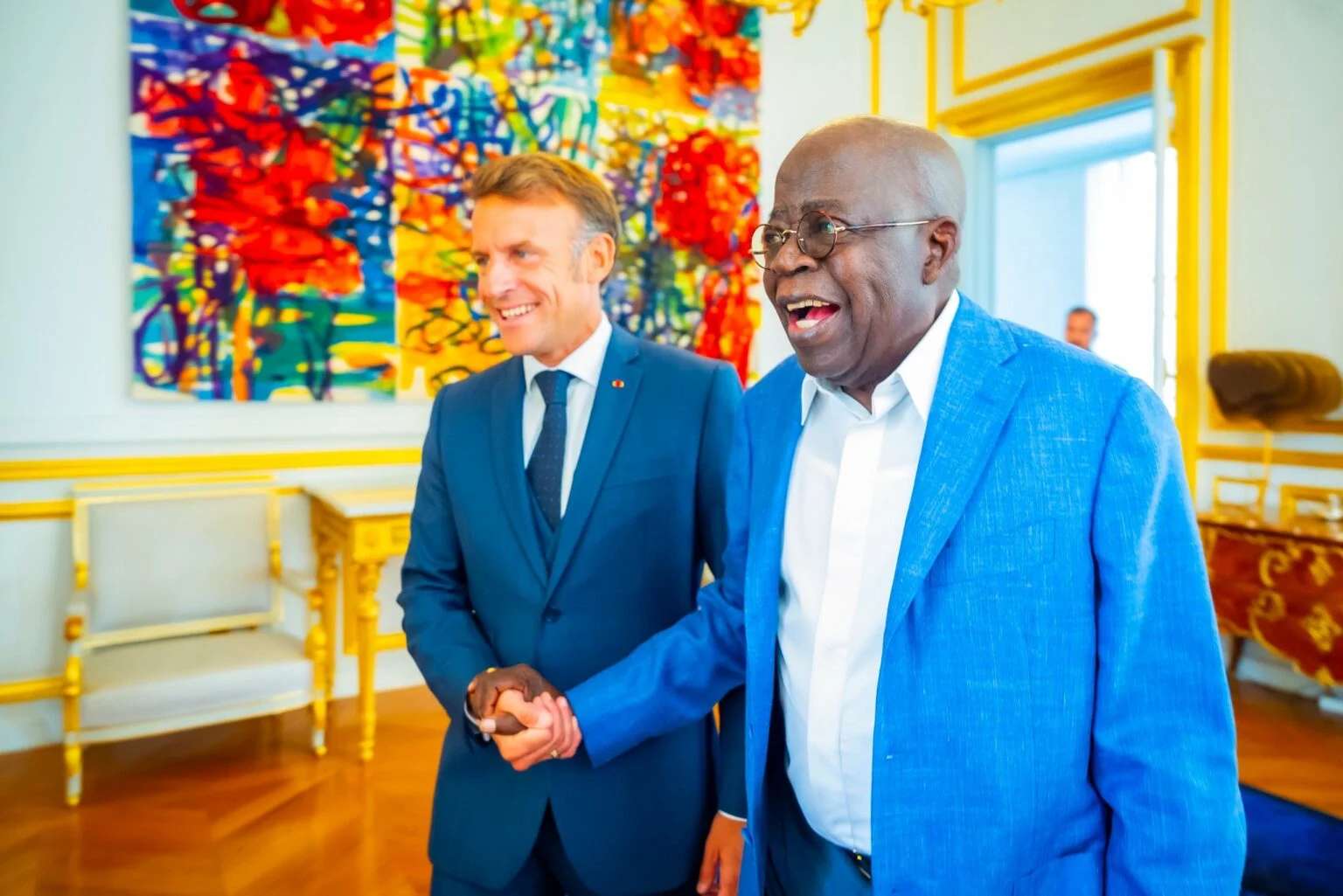
International attention on Nigeria’s security crisis deepened on Sunday after France and the United States stepped up their engagement with Abuja, following renewed global alarm over allegations of Christian genocide and the spread of extremist violence.
In a coordinated display of diplomatic and military interest, French president Emmanuel Macron called President Bola Tinubu to pledge stronger support, while a United States surveillance fighter jet was observed flying over parts of Kwara and Ekiti States. The aerial activity coincided with the arrival of senior U.S. officials in Abuja for security talks.
Macron pledges deeper cooperation
In a message posted on X, Macron said he spoke with Tinubu to reaffirm France’s commitment to helping Nigeria confront terrorism, banditry and mass violence, particularly the escalating attacks across the northern region.
“I assured President Tinubu of France’s support in the face of the various security challenges, especially the terrorist threat in the North,” Macron wrote. “We will deepen our cooperation with the authorities and continue to support affected communities. No one can remain a spectator.”
The conversation came days after Tinubu inaugurated a new defence minister, Gen. Christopher Musa (retd.), and declared a nationwide security emergency on 26 November.
Trump’s accusations increase pressure on Abuja
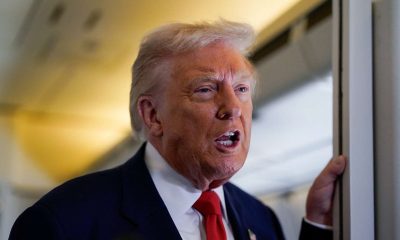
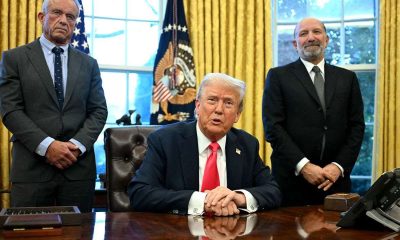
Macron’s intervention followed recent remarks by U.S. president Donald Trump, who accused Nigerian authorities of presiding over a “genocide against Christians.” Earlier in November, Trump threatened military intervention and subsequently redesignated Nigeria as a “Country of Particular Concern.”
Abuja has dismissed such claims, describing the violence as indiscriminate and driven by criminality, extremist expansion, and communal disputes rather than religious persecution. But the allegations have heightened international scrutiny and prompted Nigeria to intensify its diplomatic outreach.
U.S. delegation arrives as surveillance mission intensifies
While Macron spoke with Tinubu, a high-level American delegation – including the U.S. ambassador – met with National Security Adviser Nuhu Ribadu in Abuja. Their discussion centred on extremist attacks, religious-motivated killings, and intelligence-sharing between both countries.
At the same time, reports emerged of a U.S. surveillance fighter jet conducting intelligence flights over Kwara and Ekiti States. Security observers say the aircraft appears to be part of a broader intelligence, surveillance and reconnaissance (ISR) operation linked to a U.S. military installation in Ghana.
Unprecedented U.S. ISR operations in Nigeria’s southwest
Reports said Sahel conflict analyst Brant Phillip revealed that the flight marked “the first time the U.S. has conducted ISR in southwest Nigeria.”
According to Phillip, the aircraft maintained long observational runs over Kwara and Ekiti, collecting intelligence data that may be tied to concerns about extremist infiltration of the country’s relatively stable southwest corridor.
Additional ISR activity was reported in northern flashpoints such as Kainji in Niger State and Tangaza in Sokoto – areas associated with Islamic State-aligned cells. Some operations reportedly involved transponders going dark intermittently, indicating covert intelligence gathering.
Report: U.S. may have secured approval for drone strikes
In a development that suggests deepening military ties, a source familiar with security discussions told Phillip that Washington may have obtained provisional clearance to carry out unmanned aerial vehicle (UAV) strikes against terrorist targets inside Nigeria.
Under the purported framework, only drones – not manned combat aircraft – would be authorised for offensive missions. Kainji Air Base in Niger State has been mentioned as a potential operational hub, though neither Abuja nor Washington has issued an official statement.
A turning point for Nigeria’s security alliances
If confirmed, the arrangement would represent the most significant U.S. military role in Nigeria since the early Boko Haram years, signalling a shift from advisory engagement to active counterterrorism support.
Despite tensions over religious freedom concerns, both governments now appear to converge on the view that Nigeria’s deteriorating security situation poses a strategic risk – not just to the region, but to Western interests in West Africa.
The dual involvement of France and the United States suggests that Nigeria’s security crisis has entered a new phase, one that may shape the country’s external alliances and military cooperation for years to come.