Politics
Atiku, Obi, others rally against Electoral Act 2026, demand urgent amendment ahead of 2027

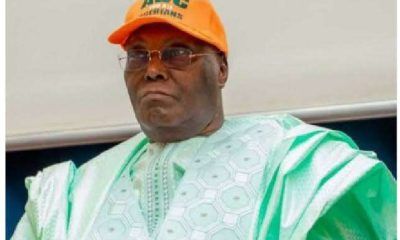
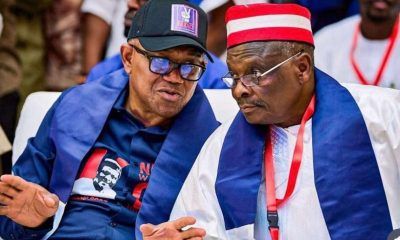
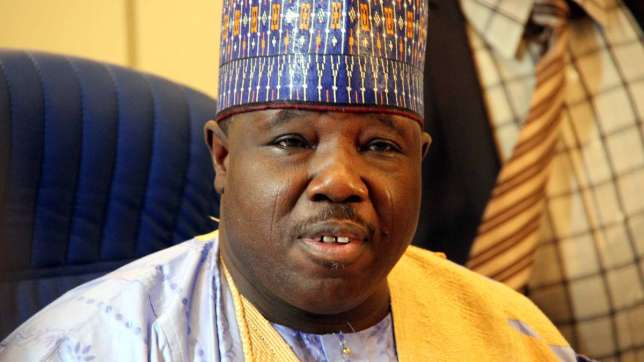
Former Vice-President Atiku Abubakar, Labour Party’s 2023 presidential candidate Peter Obi, former Rivers State Governor Rotimi Amaechi, among other opposition leaders on Thursday in Abuja demanded an immediate amendment of the Electoral Act 2026, warning that some of its provisions could undermine the credibility of the 2027 general elections.
The leaders, drawn mainly from the African Democratic Congress (ADC) and the New Nigeria Peoples Party (NNPP), addressed a press conference at the Lagos/Osun Hall of the Transcorp Hilton Abuja. They called on the National Assembly to urgently begin a fresh amendment process to remove what they described as “obnoxious and anti-democratic provisions” in the new law.

Speaking on behalf of the coalition, NNPP National Chairman Ajuji Ahmed criticised the speed with which the Act was passed and signed into law by President Bola Tinubu on February 18. He alleged that certain amendments were designed to weaken electoral safeguards and create loopholes that could be exploited during the next general elections.
Central to the opposition’s concerns is the amendment to Section 60(3) of the Act, which they argue grants excessive discretionary powers to presiding officers regarding the transmission of election results. Ahmed contended that the proviso, which allows for delays in electronic transmission in cases of network failure, effectively weakens the principle of mandatory real-time upload of results from polling units.
He dismissed the argument that network challenges justify the provision, citing previous public statements by former electoral officials that technological infrastructure across the country is sufficient to support electronic transmission. According to him, weakening this safeguard risks eroding public trust in the electoral process.
The opposition leaders also faulted changes to party primaries. Under the previous Electoral Act 2022, political parties were permitted to nominate candidates through direct primaries, indirect primaries conducted by delegates, or consensus arrangements. However, the Electoral Act 2026 eliminates the indirect primary option, restricting parties to direct primaries and consensus only.
Ahmed described the removal of indirect primaries as an intrusion into the internal affairs of political parties. He argued that indirect primaries, which rely on an electoral college of delegates, remain a legitimate and democratic method of candidate selection.
“There is nothing undemocratic about indirect primaries,” he said. “The Constitution guarantees political parties the right to organise their internal processes without undue interference.”
The opposition coalition maintained that the National Assembly cannot rely on constitutional provisions to impose only two nomination methods on parties, insisting that the mode of selecting candidates should remain a matter for each political party to determine.
Other prominent figures present at the briefing included ADC National Chairman David Mark; ADC National Secretary Rauf Aregbesola; former Cross River State Governor Liyel Imoke; NNPP chieftain Buba Galadima; ADC National Publicity Secretary Bolaji Abdullahi; Senator Dino Melaye and former ADC National Chairman Ralph Nwosu.
The coalition demanded that lawmakers immediately commence a comprehensive review of the Electoral Act 2026 to ensure it reflects what they termed the will and aspirations of Nigerians for a free, fair and transparent electoral process.
They warned that failure to address the contentious provisions could heighten political tensions ahead of 2027 and undermine confidence in Nigeria’s democratic institutions.