Politics
President Tinubu’s policies hobbled by controversies
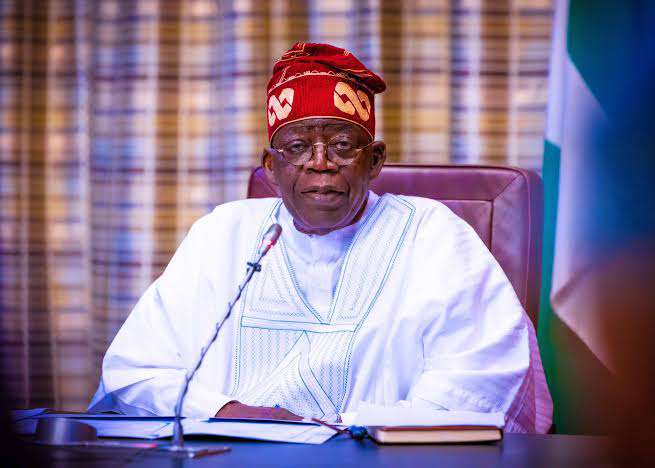
...No, they are working – APC chieftain
Despite the fact that the tenure of President Bola Ahmed Tinubu is going to three years, all his policies since he assumed office in 2023, have been marred by controversies. While some believed that they are working, others say they have made Nigerians poorer, a situation, which has not been this bad in the history of the country.
He started with the unexpected removal of oil subsidy on the very first day in office, which generated a lot of noise, ill feelings and, which has been the main issue, many Nigerians, economic experts, and political analysts, believed, plunged Nigerians into the agonies they are all going through now.
To many Nigerians, the removal of the fuel subsidy which they believed was too much in a rush without being properly worked out and adequate provision to cushion its effect both in the short and long terms, has become counter productive, which in essence, has triggered off many unintended hardship.
Since the abrupt removal of the fuel subsidy that been regarded as the bane of the the nation’s predicaments, Nigerians have cast aspersions on Tinubu, and consistently doubt his ability to deliver on his campaign promises, which was hinged on a 8-point agenda, he promised would be in key areas for the development of Nigeria.
Lagging Campaign Promises
The 8- point agenda are Food Security, Ending Poverty, Economic Growth & Job Creation, Access to Capital, Improving Security, Improving the Business Environment, Rule of Law, and Fighting Corruption, which would produce inclusive growth, investment, and a better quality of life for Nigerians based on concrete targets and policy reforms.
Food Security
Food security is to ensure that food is available, affordable, and accessible, for the people, and to focus on agribusiness and agricultural investment. But to both economic and political observers, it has not been that fruitful in the eyes of the common man in Nigeria.
Spiralling inflation that followed the removal of subsidy took the price of basic food items way beyond the reach of average people, coupled with massive export of food products as a result of naira devaluation making them more profitable outside Nigeria. This eventually led to the licencing of companies to import food, such as beans rice, oil, and other grains like maize. At some time in 2024, a bag of 50kg rice that sold for about N60000 -N70000, went for N120000, higher than the minimum wage.
Ending Poverty:
This policy is a major one, which Nigerians, during Tinubu’s campaign, believed that, if seriously Implemented with all honesty and sincerity, would lift them out of poverty, especially backed by economic growth and increased revenue.
But, unfortunately, the reverse has been the case. Despite the aspirations of Nigerians, poverty is now ravaging the land, Nigerians are becoming poorer without any hope and succour from government. A recent World Bank report indicates that 145 million Nigerians will fall into multidimensional poverty in 2026.
Nigerians are daily groaning in abject poverty and can’t even afford a meal daily as more average citizens slip into poverty.
This policy has not had any single effect on the citizenry, in spite of well-meaning policies, such as Students’ Loan scheme, and N5000 cash transfers, as many Nigerians have become streets or corporate beggars.
Poverty has also made many Nigerians dabbled into all sorts of crime, which has now become the order of the day.
Although, this has been a cumulative effects of the attitudes and policies of previous governments before Tinubu, especially during the eight years of late president Muhammadu Buhari, what bothers Nigerians is the fact that their hope that all these would be alleviated by the present government of Tinubu has been dashed, as they never expected they would be in this quagmire.
Economic Growth
On the policy of the Economic Growth and Job Creation, which he said would driven by an enabling environment for private sector growth and innovation, targeting significant job creation, it is sad that this has not been achieved in any form, especially, in the areas of digital and creative sectors. Rather than growth, more tax has been imposed, job creation has lagged as a result of poor electricity supply and high power cost.
Nigeria was only able to achieve a 3.4 percent growth in the third of 2025, which is too paltry to lift the economy beyond its present doldrums.
Securing Nigerians
Enhancing internal and national security in order to create a safer environment for citizens and businesses and improving the business environment ranked top on government policy agenda but this too has not been achieved, which prompted the U.S President, Donald Trump to bomb terrorists hideout in Sokoto on December 25, to stop the persistence of insecurity and what was alleged as Christian genocide.
In the last two years, Nigeria has been facing a lot of security challenges with the increase in kidnapping, arson, and wanton destruction of properties, especially the increasing activities of bandits displacing farmers and innocent people from their homes and farms.
This has made it difficult for agricultural production to thrive and the level of banditry has been driving investors away from Nigeria.
As far as Nigerians are concerned, insecurity has done a lot of harm and has not helped the government to realize all its set goals in economic and infrastructural developments.
Rule of Law
On the rule of law, the legal framework has not been strengthened and the country has witnessed more executive immunity such as the declaration of emergency rule in Rivers State, and the subversion of the judiciary. The citizens no longer have confidence in the Nigerian legal system and justice has become discretionary.
Our judiciary has become the issue of the highest bidder that gets justice.
The policy of fighting corruption has also broken down. Corruption has become the other of the day as the ruling party has become an umbrella for corruption politicians.
With the tentative and even failed policies of government,
President Tinubu’s “Renewed Hope” agenda has become a mere slogan for the ruling party with little meaning and impact on the people.
Economic Reforms
The “Subsidy is gone” declaration by President Tinubu on his inauguration, which marked the removal of fuel subsidies, followed by the termination of Multiple Foreign Exchange System, “had constituted a noose around the economic jugular of our nation and impeded our economic development and progress and that aggregate
government revenue increased by over N9.1 trillion in the first half of 2024, compared to the first half of 2023, but with more attendant economic hardship on the population as a result of high inflation rate.
But improvements, according to the government include some major infrastructure projects, such as roads, bridges, railways, power, oil and gas developments, notably the Lagos-Calabar Coastal Highway and Sokoto-Badagry Highway projects, with increased Oil production from 1.3m to 1.7million barrels per day, and two Foreign Direct Investments of over $500m that have been signed.
Also the Compressed Natural Gas Initiative was launched to power the transportation sector and reduce costs. “This will save over N2 trillion a month, being used to import PMS and AGO,l” Tinubu once said.
The Student Loan policy recorded approvals rate of over N45.6bn granted to 600000 students.
Major Reform Gains
The Key claimed gains of his administration include Fiscal and Monetary Gains
• External Reserves rose by $6 billion to $40.19 billion, boosting confidence and stability.
• Trade Surplus hit $13.17 billion, showing strong export performance.
• Portfolio Investments surged to $13.35 billion — a clear vote of confidence in Nigeria’s economy.
• Gas Exports jumped 48.3% to $8.66 billion
• Non-oil exports reached $7.46 billion, a sign of increasing diversification.
• Balance of Payments Surplus of $6.83 billion in 2024 – first in three years.
• Naira stabilization through deregulation of the FX market and forex subsidy removal by President Tinubu.
• FX Reserves rose by $364 million in two weeks before the MPC meeting in April 2025.
• External Buffers now cover 7.6 months of imports.
• Sovereign Sukuk Repayment: Nigeria fully repaid its first N100 billion Sukuk issued in 2017.
• Debt Servicing: Dropped from 95% to 65% of revenue, freeing up resources for capital and social spending.
• Improved Fiscal Space: Revenue to debt servicing ratio now at 45%, easing pressure on public finances.
Inflation and Economic Growth
• Inflation dropped to 23.71% in April, from 34.23% in March – the sharpest decline in over a year.
• GDP Growth: Nigeria recorded the fastest economic growth in a decade in 2024.
• World Bank projects 3.6% growth for Nigeria in 2025. III. Social Investment and Human Capital
Revenue Profile
President Tinubu has opened up Nigeria’s fiscal space with increased internally generated revenue from FIRS (N21.3 trillion) and Customs. FAAC monthly allocation to State Governments has increased by over 62%, freeing up resources for states to develop.
• National Cash Transfer Programme: 5.7 million vulnerable households have benefitted; N25 billion budgeted in 2025.
Regional Equity and Inclusive Development
Every geopolitical zone now has a dedicated commission:
• South West Development Commission (SWDC)
• North West Development Commission (NWDC)
• North Central Development Commission (NCDC)
• North East Development Corporation. NEDC
• South East Development Commission (SEDC)
• NDDC – Niger Delta Development Commission
• Local Government Autonomy in Motion.
Anti-Corruption and Rule of Law
EFCC convictions and Asset Recovery:
• In 2024, the Economic and Financial Crimes Commission (EFCC) secured a record-breaking 4,111 convictions, marking its most successful year since inception.
• The EFCC recovered over N364 billion, along with significant amounts in foreign currencies, including $214.5 million, £54,318.64, and €31,265
Professor Adeniyi Olowofela, a chieftain of the APC and former Federal Character commissioner representing Oyo State, in his reaction during an exclusive interview with the Business Hallmark, believed that all the policies of the present government of Tinubu are good and yielding results. He said that the education Loan is another policy that is people oriented, which allows indigent students, who could not afford to go to higher institutions to pursue their education.
He said that on the economic aspects, things are far better than two years ago as prices of food items which used to be very high have drop drastically.
On the tax law, he said this would enable the government to get more money into the coffers of government. “With more money into the coffers of government, the people will be able to ask what their taxes are used for and be able to question the government on road , water, electricity, health facilities and infrastructure in the hospitals, education and other infrastructure which ought be provided for them.”
Former Labour Party presidential candidate, Peter Obi, on the policies of the present APC federal government, said the economic policy of the government has pushed 50 million Nigerians into poverty. He criticized Nigeria’s current taxation approach, and warned that the country cannot achieve prosperity by placing heavier tax burdens on an already impoverished population.
In a personally signed statement recently immediately the tax law, he argued that sustainable economic and social progress depends on honest leadership, transparency and a tax system that prioritises citizens’ welfare rather than revenue extraction.
According to him, successful nations are led by individuals who unite their people around a shared vision, stressing that integrity is central to governance.
“Transformative leaders—those, who successfully unite their people around a shared vision—share a defining quality: honesty. Government must be transparent and truthful because citizens deserve nothing less from those who lead them,” he stated.
Obi warned that leadership loses legitimacy when it exploits citizens for the benefit of a few, adding, “True leaders do not exploit their people to enrich themselves and a few cronies; they build trust, unity, and shared purpose – the foundation of sustainable progress.”
“If taxation is to function as a genuine social contract, it must be rooted in sincerity, fairness, and concern for the welfare of the people,” he said, adding that citizens deserve clear explanations of tax policies and their benefits.
“The purpose of sound fiscal policy is not merely to raise revenue; it is to make the people wealthier so that the nation itself becomes stronger,” he said, lamenting that Nigerians are currently asked to pay more “without clarity, explanation, or visible benefit.”