Politics
2027 presidential election likely January 16 as Senate faces e-transmission backlash
Concernsover Nigeria’s electoral framework deepened on Monday as the Nigeria Civil Society Situation Room called for the immediate adoption of unconditional electronic transmission of results in the Electoral Act Amendment Bill, warning that any dilution of the reform could erode public trust ahead of the 2027 general election.
At a protest outside the National Assembly in Abuja, the coalition accused the Senate of weakening critical safeguards by introducing “conditional transmission” of results. Addressing demonstrators, co-Convener Andrew Mamedu, who is also the Country Director of ActionAid Nigeria, said Nigerians are demanding a clear, mandatory provision for real-time electronic transmission from polling units to the INEC Result Viewing Portal.

“Our future is in our hands because we voted for these representatives. Electronic transmission of results must be mandatory and without conditions,” Mamedu declared. The coalition also urged the retention of the 360-day election notice timeline, citing its importance for planning, voter education, and logistics.
The protesters dismissed concerns about network coverage, citing previous off-cycle elections in Imo, Kogi, and Bayelsa states where high transmission rates were recorded. They insisted that results can be securely stored and transmitted once connectivity is restored in areas without network access. Women’s advocacy groups joined the protest, calling for the expedited passage of the special seats bill for women, stressing that electoral integrity must go hand in hand with inclusive representation.
Responding on behalf of the House of Representatives, spokesperson Akin Rotimi assured protesters that their concerns would be conveyed to leadership. He highlighted that the Speaker supports the amendment and pledged that constitutional amendments, including provisions for reserved seats for women, would undergo electronic voting.
Meanwhile, strong indications emerged that the Independent National Electoral Commission and the National Assembly have agreed to move the 2027 presidential election to January 16, 2027, from the previously scheduled February 20 date. Governorship elections are now projected for January 30, 2027, sources within INEC and the legislature confirmed.
The shift follows criticism that the original February dates coincided with Ramadan, projected from February 7 to March 8, which could impede voter participation among Muslim citizens. A senior INEC official said consultations produced the new January dates to ensure broader inclusivity, while a ranking senator noted the proposal is still subject to debate on the floor.
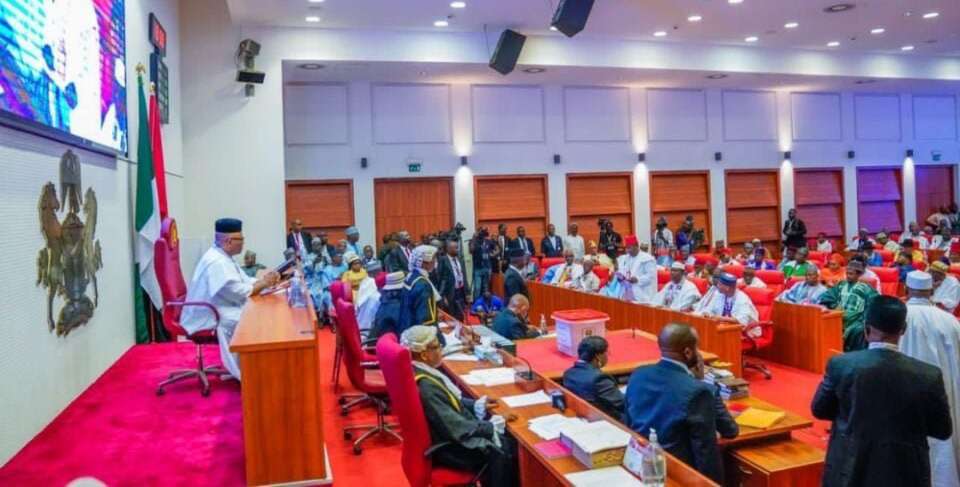
The National Assembly on Sunday announced it would reconvene an emergency plenary at 11:00 a.m. on Tuesday, February 17, cutting short its recess. A notice from Clerk Kamoru Ogunlana stated that “very crucial decisions shall be taken” during the session, with insiders confirming that the 2027 election timetable is the primary agenda.
The emergency session also forced the suspension of the harmonisation of the Electoral Act Amendment Bill, which had been scheduled for Monday, February 16. Members of the House and Senate conference committees confirmed that the meeting would resume only after plenary, indicating that lawmakers intend to settle the politically sensitive election dates before finalising other provisions, including electronic transmission requirements and dispute resolution timelines.
The debate over technology has been intensifying. Last week, the Senate approved electronic transmission to INEC’s portal but stopped short of making real-time uploads compulsory, retaining manual collation as a backup. Senate Leader Opeyemi Bamidele cited infrastructural and power supply challenges as reasons for a discretionary approach, noting that electricity generation hovers between 12,000–13,500 MW while distribution delivers only 4,500 MW nationwide.
Observers say the rescheduling to January could enhance voter participation among Muslims and reduce low turnout risks in northern states. However, the compressed timeline may challenge INEC’s administrative capacity and require parties to mobilise nationwide structures earlier than anticipated.
Beyond dates and technology, lawmakers are also considering broader reforms, including shortening timelines for tribunal and appellate decisions and conducting elections at least 185 days before incumbents’ tenures expire, to ensure results are concluded before the May 29, 2027 inauguration.
A Senate source described the extraordinary session as “crucial,” emphasizing that decisions taken will define the credibility of the 2027 elections and ensure every Nigerian, regardless of faith, can participate in the electoral process.