
Business
2026 Budgets: More money, worsening challenges
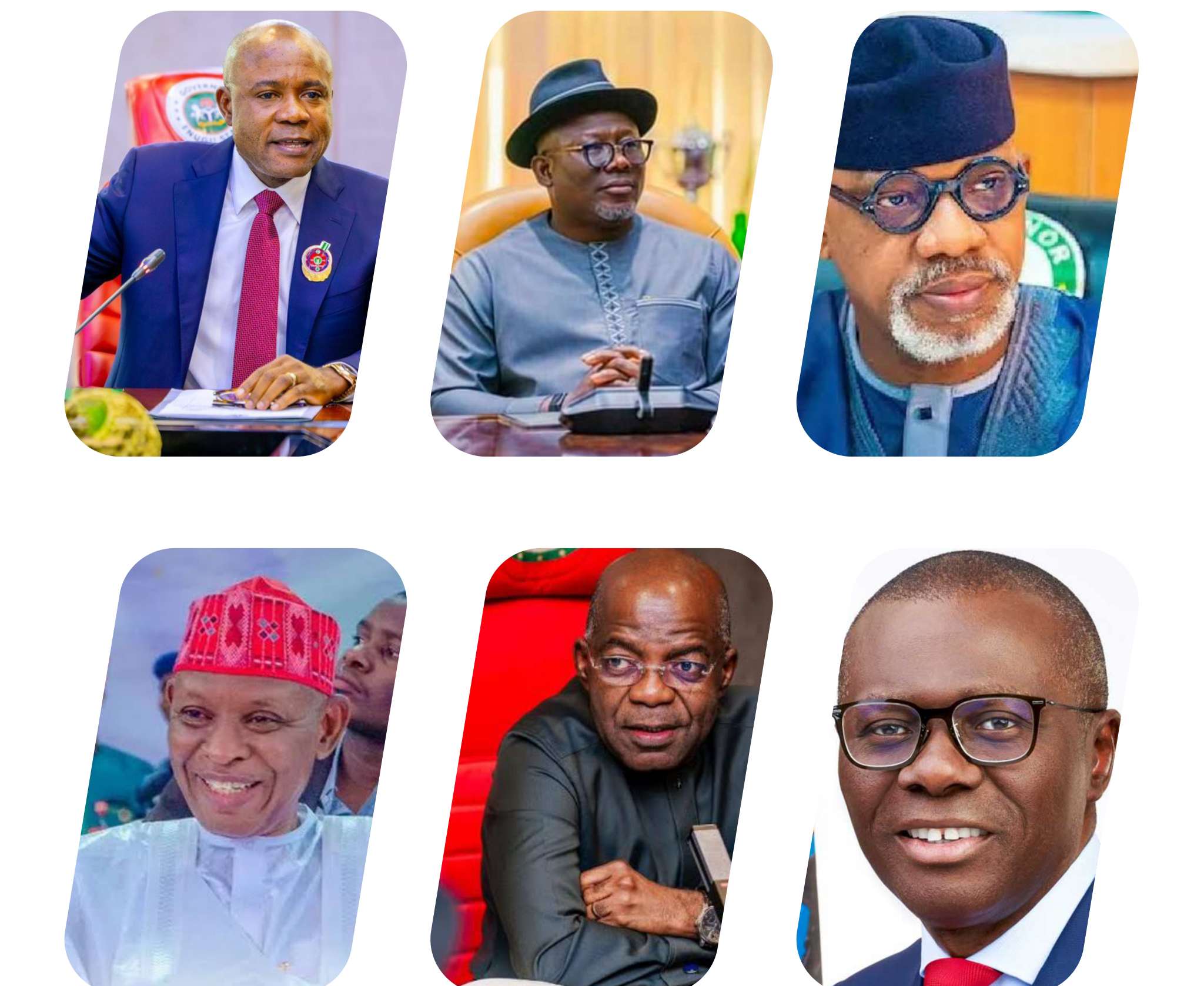
…as 5 states join Lagos in the Ntrillion club
Nigeria’s sub-national finances are entering unfamiliar territory. For the first time in the country’s history, multiple states are proposing annual budgets in excess of N1 trillion, signalling a dramatic expansion in public spending power at a time of acute economic distress for ordinary citizens.
Lagos, Ogun, Delta, Enugu, Kano and Abia have all submitted trillion-naira budgets for the 2026 fiscal year, buoyed by rising federal allocations, improved internally generated revenue, and the fiscal windfall created by the removal of fuel subsidies and the floating of the naira.
On paper, the numbers suggest a federation awash with resources and the governments have made this as one of the achievements of President Tinubu. Between January 2023 and October 2025 alone, the three tiers of government shared over N44 trillion from the Federation Account, more than double what was distributed just four years earlier.
States, in particular, have become significantly more financially buoyant, enjoying unprecedented inflows from FAAC, VAT and exchange-rate gains. Many governors now boast of capital-heavy budgets, zero-borrowing policies, ambitious infrastructure rollouts and record investments in education, health and transport.
Yet, beyond the spreadsheets lies a harsher reality. Poverty has deepened, inflation has eaten away at incomes, and insecurity continues to undermine livelihoods across much of the country. More than 139 million Nigerians are now estimated to be living below the poverty line, even as government revenues hit historic highs.
More Than Money
Rising food prices, transport costs and housing pressures have ensured that for many citizens, the dividends of increased public spending remain distant and abstract.
This growing disconnect between expanding government budgets and worsening living conditions has sharpened public scrutiny of state spending priorities.
President Bola Tinubu’s recent admonition to governors to “wet the ground” and deliver tangible benefits at the grassroots captures a national mood increasingly sceptical of fiscal growth without social impact.
Against this backdrop, the trillion-naira budgets of six states offer a revealing lens into how Nigeria’s sub-national governments plan to deploy unprecedented resources, and whether bigger budgets will finally translate into better lives.
Lagos’ N4.237 Trillion Ambition
With a proposed N4.237 trillion appropriation for 2026, Lagos State has once again set the pace as Nigeria’s biggest sub-national spender, reflecting both its economic dominance and the mounting pressures of governing Africa’s largest megacity. Governor Babajide Sanwo-Olu’s “Budget of Shared Prosperity” represents a dramatic leap from N3.005 trillion in 2025 and a near fourfold expansion from N1.1 trillion in 2021, underscoring how Lagos has recalibrated governance to operate at near-national fiscal scale.
The revenue profile of the state tells a familiar but still remarkable story. Of the N3.993 trillion projected revenue, internally generated revenue (IGR) accounts for N3.119 trillion, nearly 78 per cent, reinforcing Lagos’ status as Nigeria’s most fiscally autonomous state.
Federal transfers of N874 billion play a secondary role, while a deficit of N243.3 billion will be financed through borrowing. This structure highlights both strength and risk: Lagos can largely fund itself, but its ambitions increasingly depend on debt and sustained economic momentum.
On the expenditure side, the balance between capital and recurrent spending is relatively even. Capital expenditure stands at N2.185 trillion, while recurrent spending is pegged at N2.055 trillion. Personnel costs of N440.4 billion and debt servicing obligations exceeding N527 billion signal the weight of governance overheads in a complex urban economy.
The allocations show Lagos’ determination to invest aggressively in infrastructure and economic affairs – N1.372 trillion – while also devoting substantial sums to health (N338.4 billion), education (N249.1 billion) and environmental management (N235.9 billion).
“Our mission remains clear: to eradicate poverty and build a Lagos that works for all,” Sanwo-Olu said during the budget presentation a fortnight ago. These allocations, he said, reflect the administration’s priorities in infrastructure, human capital development, and social welfare.
Beyond Budget Promises
Yet, beneath the scale and sophistication of the numbers lies a social contradiction. Lagos is Nigeria’s economic engine, but it is also a city of swelling informal settlements, rising homelessness, youth unemployment and deepening cost-of-living pressures. Food inflation, transport costs and housing shortages have continued to erode real incomes, even as public spending expands.
Practically, Lagos’ huge budgets year after year have not translated into improvement in the quality of the city, decrepit infrastructure and prohibitive housing cost.
Observers say the state’s heavy investment in roads, housing and transport infrastructure reflects an attempt to manage urban stress, but critics argue that social protection – N70 billion in a N4.2 trillion budget, remains modest relative to the scale of urban poverty.
Lagos’ budget thus exemplifies the national dilemma of unprecedented fiscal expansion coexisting with popular discontent and widening inequality. The promise of “shared prosperity” now rests not on how much is spent, but on whether the spending can meaningfully cushion millions struggling to survive Africa’s most expensive city.
Ogun: industrial optimism, rising debt and low social returns
Ogun State’s N1.668 trillion 2026 budget signals its steady graduation into the league of trillion-naira sub-nationals, driven largely by industrial expansion, proximity to Lagos and aggressive revenue mobilization. Governor Dapo Abiodun’s “Budget of Sustainable Legacy” represents a 63 per cent jump over the N1.054 trillion approved for 2025, reinforcing the administration’s narrative of Ogun as Nigeria’s emerging manufacturing and logistics hub.
The revenue structure reveals a more mixed picture than Lagos. Ogun projects N509.9 billion from IGR, a notable improvement compared to past years but still less than one-third of total revenue. Federal allocations of N554.8 billion remain critical, while capital receipts, including loans and grants, are estimated at N518.9 billion, highlighting the state’s increasing reliance on borrowing to finance expansionary spending.
Capital expenditure dominates the budget at N1.044 trillion, or 63 per cent, with infrastructure taking the largest share at N526.1 billion. Education (N275.4 billion) and health (N210.6 billion) also feature prominently, reflecting an effort to align industrial growth with human capital development. Personnel costs are relatively restrained at N167.9 billion, but public debt charges of nearly N100 billion point to growing fiscal obligations that could narrow future spending flexibility.
Gov. Abiodun has framed the budget as a growth catalyst, anchored on projects, such as the Gateway International Airport, inland dry ports at Kajola and Ijebu-Ode, and an extensive road construction program spanning over 1,500 kilometres in six years.
These investments are designed to position Ogun as a logistics and industrial backbone for Southwestern Nigeria, attracting manufacturing, agro-processing and export-oriented businesses.
He described the proposal as one designed to stimulate inclusive growth, reduce inequality, and expand economic opportunities. He noted that Ogun’s GDP has now grown to an estimated N17 trillion, while IGR rose from N52 billion in 2020 to nearly N192 billion in 2024, with a N250 billion projection for 2025.
Unfulfilled Promises
However, the lived reality across many communities tells a more complicated story. With its proximity to Lagos, the state has not benefited from the example of Lagos. Many vital roads to open up the state as alternative to Lagos are either abandoned or bad.
While industrial clusters flourish along key corridors, large rural populations continue to grapple with unemployment, rising food prices and limited access to quality healthcare. Social protection receives N72.8 billion, modest relative to the scale of poverty in semi-urban and agrarian areas. As inflation erodes purchasing power, the question remains whether infrastructure-led growth can translate quickly enough into household welfare improvements.
Ogun’s trillion-naira ambition reflects confidence in long-term growth, but it also exposes the tension between debt-fuelled expansion and immediate social needs in a period of national economic strain.
Delta: Oil-backed confidence and the politics of capital-heavy spending
Delta State’s N1.664 trillion 2026 budget, christened the “Budget of Accelerating the MORE Agenda,” stands out for its sheer capital intensity and the confidence drawn from oil-linked revenues. With 70 per cent of the budget – N1.165 trillion – dedicated to capital expenditure, Gov. Sheriff Oborevwori has chosen an aggressively developmental posture, underpinned by improved federal allocations following subsidy removal and foreign exchange reforms.
The revenue profile reflects Delta’s advantaged position within Nigeria’s fiscal federalism. Statutory allocation and derivation are projected at N720 billion, accounting for over 53 per cent of total revenue.
Internally generated revenue is expected to rise sharply to N250 billion, an 86.5 per cent increase attributed to tax reforms and improved collection efficiency. Additional inflows from VAT (N120 billion) and oil-related savings and recoveries (N489 billion) reinforce the state’s fiscal strength, while capital receipts have been deliberately reduced to maintain a zero-borrowing stance.
Expenditure priorities are infrastructure-driven. Roads and transport networks alone command N450 billion, reflecting long-standing demands for connectivity across Delta’s riverine, rural and urban areas.
Education (N105 billion), health (N50 billion), energy (N16 billion) and agriculture (N10 billion) follow, while N20 billion is earmarked for social intervention programs aimed at poverty reduction. An additional N100 billion has been set aside for direct interventions across all 25 local governments, an attempt to decentralise development benefits.
Politically, the budget projects stability and investor confidence. Oborevwori’s zero-borrowing posture and emphasis on security, particularly the protection of oil and gas infrastructure, reinforce Delta’s image as a relatively calm investment destination in the Niger Delta. The commissioning of new hospitality and urban infrastructure projects further signals economic optimism.
For Oborevwori, the 2026 budget represents a bold statement of intent and a roadmap to a stronger, more prosperous Delta State. According to him, it is a plan for a future where “no one is left behind,” a future anchored on peace, massive infrastructure, economic expansion, and shared prosperity.
Yet, Delta’s paradox mirrors the national picture. Despite oil-fuelled revenues and massive capital spending, infrastructure remains a huge challenge, poverty remains entrenched in many communities, particularly in riverine areas, where livelihoods have been devastated by environmental degradation.
Youth unemployment, inflation and food insecurity persist, raising questions about whether infrastructure-heavy budgets can adequately address social vulnerability in the short to medium term.
Delta’s trillion-naira budget is, therefore, both a statement of capacity and a test of governance: whether unprecedented resources can finally translate into broad-based prosperity rather than isolated islands of development.
Enugu: Expansionary spending, reform, and challenge of high expectations
Enugu State’s proposed N1.62 trillion “Budget of Renewed Momentum” for 2026 marks one of the most aggressive fiscal expansions in its history and signals Governor Peter Mbah’s determination to move decisively from reform to full-scale transformation. The budget represents a 66.5 per cent increase over the 2025 appropriation and is embedded within a broader 2026–2028 multi-year framework aimed at reshaping the state’s economic foundations.
The revenue profile of the budget is ambitious and reform-driven. Internally generated revenue is projected at N870 billion, an extraordinary figure by Enugu’s historical standards, and more than double what the state generated just two years ago. This optimism is anchored on digitalized revenue systems, land administration reforms, revived state-owned enterprises and improved tax compliance. Federal allocations through FAAC are projected at N387 billion, while capital receipts of N329 billion will support the expansionary agenda.
Spending priorities underscore the administration’s belief that growth must be infrastructure-led and human-capital intensive. Capital expenditure dominates the budget at N1.296 trillion, or 80 per cent, leaving N321 billion for recurrent spending.
The economic sector alone receives N868 billion, funding large-scale investments in agriculture, transport, roads, tourism and industrial development. Education stands out as the single largest priority, taking more than 30 per cent of the entire budget, reflecting Mbah’s push to reposition Enugu as a knowledge-driven economy.
Signature projects – including over 1,200 new urban roads, mega transport terminals across the state, expansion of the Enugu Air fleet, mass housing development and the full infrastructure upgrade of 260 farm estates – are designed to create jobs, attract private capital and boost productivity. On the social side, provisions for healthcare expansion, gratuity payments and improved welfare for traditional institutions aim to reinforce social stability.
Gov. Mbah emphasised that internal reforms would continue, anchored on the state’s Citizens’ Charter, digital procurement systems, automated revenue collection, and performance-based budgeting. He said the digitization of land records, the blocking of revenue leakages, and tighter procurement procedures had significantly enhanced government efficiency.
Mbah told lawmakers that the 2026 budget aims to deepen the economic foundation required to build a self-sustaining state. “We are shifting from groundwork to full-scale expansion. This budget is not just about 2026, it is about securing the next generation,” he said.
Yet, the sheer scale of the budget raises fundamental questions. Enugu’s ability to meet its IGR targets will be closely watched, particularly in a fragile macroeconomic environment, where inflation has eroded household incomes and business margins.
While reforms have improved fiscal efficiency, the social reality remains that many residents continue to struggle with unemployment, food inflation and rising transport costs. The budget, therefore, represents a high-stake gamble: success could redefine Enugu’s economic trajectory, but shortfalls could expose fiscal vulnerabilities.
Kano: Capital-heavy ambition amidst deep social pressures
Kano State’s N1.368 trillion 2026 budget reflects a bold attempt by Gov. Abba Yusuf to recalibrate governance in Nigeria’s most populous Northern state. With 68 per cent of the budget – N934.6 billion – devoted to capital expenditure, the proposal marks one of the most aggressive capital-to-recurrent ratios in the region’s recent history.
Although Kano’s revenue profile is less detailed publicly than those of some Southern states, the budget is underpinned largely by federal allocations and improved fiscal inflows following subsidy removal and exchange rate reforms. The emphasis on capital spending signals a strategic pivot toward long-term development in a state grappling with rapid population growth, urban congestion, and entrenched poverty.
Education leads the sectoral allocations at N405.3 billion, followed by infrastructure at N346.2 billion and health at N212.2 billion. These priorities reflect Kano’s acute demographic realities: a youthful population, strained public services and a pressing need to expand access to schooling, healthcare and basic infrastructure. Agriculture, security, commerce, water resources, environment and social development sectors also receive significant provisions, highlighting the administration’s attempt to address both economic productivity and social stability.
Gov. Abba Yusuf has described the budget as a “realistic roadmap” aligned with citizens’ aspirations, but the social context is unforgiving. Kano remains one of Nigeria’s poverty epicenters, with high unemployment, widespread informal labor and chronic pressure on social services. Rising food prices and insecurity in parts of the northwest have further deepened hardship, making the effectiveness of capital spending a matter of urgency rather than long-term planning.
The budget’s success will depend heavily on implementation capacity, transparency and the ability to ensure that capital projects translate into tangible improvements in daily life. In a state where millions struggle to meet basic needs, the challenge is not merely to build infrastructure, but to ensure it delivers jobs, income and social protection at scale.
Abia: Disciplined expansion and the promise of infrastructure-led renewal
Abia State’s N1.016 trillion 2026 budget, tagged the “Budget of Acceleration and New Possibilities,” represents a symbolic and practical milestone for a state long associated with fiscal fragility. Governor Alex Otti’s proposal reflects a disciplined expansion strategy, combining ambitious capital investment with conservative revenue assumptions.
The revenue profile reveals both progress and constraint. Total projected revenue stands at N607.2 billion, driven by N223.4 billion in internally generated revenue, N83.2 billion from FAAC, N67.1 billion from VAT, N26.5 billion in grants and N168 billion from other federal inflows. The resulting deficit of N409 billion will be financed through borrowing, a move Otti has framed as strictly project-tied and self-liquidating.
Capital expenditure dominates the budget at 80 per cent, or N811.8 billion, while recurrent spending accounts for N204.4 billion. Education (20 per cent), health (15 per cent) and road infrastructure (16.7 per cent) form the core of the spending priorities, reflecting an effort to rebuild Abia’s long-neglected social and physical infrastructure. Roads alone receive N169.3 billion, underscoring the administration’s focus on connectivity as a foundation for economic revival.
“The entire CAPEX is 80%, in that 80%, roads alone is 16%, noted Kalu Ajah, a financial expert and analyst. The budget also speaks to CAPEX in schools, hospitals etc,” he added, emphasizing that it’s a step in the right direction.
Otti’s emphasis on funding recurrent expenditure entirely from IGR represents a significant shift toward fiscal sustainability. It also places pressure on the administration to sustain revenue growth in a challenging economic climate. For a state where poverty and underemployment remain widespread, the success of the budget will hinge on whether infrastructure investments can catalyse private-sector activity, revive commerce and reduce living costs.
Trillion-naira budgets, trillion-naira questions
Taken together, the six states of Lagos, Ogun, Delta, Enugu, Kano and Abia illustrate the new fiscal reality of Nigeria’s sub-national governments. Trillion-naira budgets, once unthinkable outside Lagos, are becoming increasingly common, driven by higher FAAC inflows, subsidy removal, exchange rate adjustments and expanded borrowing capacity.
Yet, this fiscal expansion stands in stark contrast to the social landscape. Poverty has deepened, inflation has eroded incomes and insecurity continues to disrupt livelihoods. Between January 2023 and October 2025, the three tiers of government shared over N44 trillion, yet the number of Nigerians living below the poverty line has reportedly surged to 139 million. The paradox of “more funds, more pain” now defines the national conversation.
“The fact that revenue has grown in nominal terms doesn’t mean they can buy much. The nominal growth can be misleading. It creates an illusion that the states are getting richer, so we must factor this into our expectations,” noted Muda Yusuf, CEO of the Centre for Promotion of Private Enterprises (CPPE).
Another reason for the hike in budget size of states could be the coming election, which early next. With the increasing monetization of elections,the governors, most of whom will seek reelection, funding is critical and the budgets are the source.
Yusuf noted that poor management of resources by the states has resulted in little or no impact on the lives of the people, and cautioned against overestimating the growth of the revenues by the states.