Politics
Rivers crisis: President Tinubu trapped between power, principle

...APC backs Gov. Fubara, but Wike holds the levers
The political crisis in Rivers State has matured into a defining test of power, loyalty, and constitutional order under President Bola Tinubu. What began as a fallout between a godfather and his protege has metastasized into a multi-layered confrontation involving impeachment threats, court injunctions, party supremacy battles and regional mediation.
At its core lies a dilemma President Tinubu has so far been unwilling – or unable – to resolve, whether to stand firmly with a sitting governor now aligned with the ruling All Progressives Congress (APC), or to preserve the political alliance with a former governor, who has proved his capacity to deliver votes, bend structures, and fight back ruthlessly.
That dilemma is personified by Minister of the Federal Capital Territory (FCT), Nyesom Wike, and Rivers State governor, Siminalayi Fubara. Between them stands Tinubu, calculating, cautious, and acutely aware that any decisive move risks upsetting the delicate political arithmetic ahead of 2027.
A succession gone wrong
When Fubara emerged as governor in 2023, he did so entirely on the back of Wike’s formidable political machinery. At the time, Wike was not just the outgoing governor; he was the undisputed political strongman of Rivers State, controlling the party, the legislature, the local government structures and a vast network of loyalists cultivated over eight years in power.
Fubara was widely seen as a safe choice, being technocratic, mild-mannered and unlikely to challenge his benefactor. But within months of taking office, the relationship deteriorated. Fubara began asserting independence, reshuffling power blocs, questioning inherited arrangements and, crucially, reportedly loosening Wike’s grip on the state’s finances and appointments.
For Wike, this was unforgivable. In the ruthless logic of Nigerian godfather politics, succession is not abdication. Power is expected to flow upward even after office has been relinquished. Fubara’s defiance, therefore, marked the beginning of a political war.
Assembly as a weapon
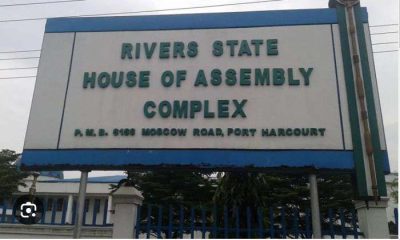
That war has found its most potent expression in the Rivers State House of Assembly. Dominated by lawmakers loyal to Wike, the Assembly has repeatedly clashed with the executive, culminating in the current impeachment proceedings against Fubara and his deputy, Prof. Ngozi Odu. But it was not the first time; only’ the emergency rule declared on March 18, 2025, deferred it.
On January 16, 2026, the lawmakers formally escalated the process, with 25 members voting to ask the Chief Judge of the state, Justice Simeon Amadi, to constitute a seven-man panel to investigate allegations of “gross misconduct” against the governor and his deputy. The accusations range from budgetary mismanagement and unauthorised spending, to failure to present the 2026 Appropriation Bill and withholding statutory allocations from the legislature.
Speaker, Martin Amaewhule, directed the Assembly Clerk to transmit the resolution to the Chief Judge – a move that immediately collided with the judiciary.
Earlier that same day, a Rivers State High Court sitting in Obigbo had issued an interim injunction restraining the Speaker, the Clerk and the Chief Judge from taking any steps to advance the impeachment process. Justice F. A. Fiberesima was explicit, barring the receipt, consideration or action on “any request, resolution, articles of impeachment or any other document” for seven days.
Yet, reports that the Assembly resolved to proceed regardless sent shockwaves through the state and beyond.
APC cries foul
The defiance of the court order drew an unusually sharp reaction from the Rivers State chapter of the APC, the very party now staking its future in the state on Governor Fubara.
In a statement signed by the party’s publicity secretary, Darlington Nwauju, the APC warned that the impeachment move amounted to a “legislative coup d’etat” that could damage the party irreparably.
“We have painstakingly analysed the issues leading up to the latest step taken by members of the Rivers State House of Assembly,” Nwauju said. “Regrettably, we note that honourable members, who trumpeted loyalty to our party and Mr President have now given themselves to a choreographed legislative coup d’état against the collective interest, growth and development of our party in the state.”
The party cautioned that while Section 188 of the Constitution empowers lawmakers to impeach a governor, the definition of “gross misconduct” remains subjective.
“No matter how beautifully crafted the allegations against the governor and his deputy may be, they remain largely subjective in the court of public opinion,” the statement added.
Most pointedly, the APC called on the Chief Judge to respect the court order halting the process, warning that continued defiance could push the party into “an embarrassing situation.”
Behind the statement loomed the influence of former Transport Minister Rotimi Amaechi, another long-time rival of Wike, who is said to have aligned firmly with Fubara, though he is a member of the African Democratic Congress (ADC).
Tinubu’s quiet calculation
Ordinarily, such a confrontation would trigger decisive presidential intervention. But Tinubu has remained largely silent, opting instead for back-channel consultations and measured distance.
That silence has been widely interpreted as deliberate. Wike is not just another minister in Tinubu’s cabinet. He is the man who, against the wishes of his party, delivered Rivers State to Tinubu in the 2023 presidential election, at a time when much of the South-South rejected the APC candidate outright. That political feat earned Wike enormous goodwill and leverage.
More importantly, Tinubu apparently believes Wike remains better positioned than Fubara to deliver Rivers again in 2027, regardless of public sentiment, or party labels. In Nigeria’s political reality, control of structures often matters more than popularity, and Wike has repeatedly demonstrated mastery of those structures.
This belief, observers say, explains Tinubu’s hesitation. Siding openly with Fubara would almost certainly antagonise Wike, a risk the President appears unwilling to take, especially with the knowledge of how Wike robbed the voters to deliver the state to him.
Wike, for his part, has made it clear that he does not take the President’s support for granted, and that he expects loyalty to flow both ways. When the APC national secretary, Senator Ajibola Basiru, warned him to stop interfering in Rivers politics, or resign his ministerial appointment, Wike responded with thinly veiled threats.
“Tell your national secretary to leave Rivers State alone,” Wike said during a thank-you visit to Oyigbo. “Go and ask those, who have tried it before. Don’t take our support for Mr President for granted.”
“This state is a no-go area,” he added. “If your hand burns, don’t say it was me.”
The message says, ‘Wike sees Rivers as his political territory and considers external interference, even from the ruling party, as an affront.’
A governor exposed
For Gov. Fubara, the crisis has exposed the limits of institutional backing in the face of raw political power. Despite being affirmed by the APC national leadership as the party’s leader in Rivers State, he remains vulnerable at home, hemmed in by a hostile legislature and an adversary with deep roots across the state.
Former Ekiti State governor, Ayo Fayose, captured this reality bluntly when he warned that Tinubu would not “sacrifice Wike for Fubara.”
“The Asiwaju I know will not get rid of Wike for Fubara,” Fayose said on national television. “Wike came from Rivers to support President Tinubu, and that loyalty matters.”
Fayose’s words resonated because they echoed what many political insiders already believe: that in the cold calculus of power, Fubara is expendable in a way Wike is not.
A state on edge
As impeachment threats loom and institutions collide, Rivers State has become a theatre of uncertainty. Governance has slowed, tensions have risen, and confidence in democratic processes has been shaken.
Regional bodies have taken notice. The Pan Niger Delta Forum (PANDEF) has stepped in, constituting a reconciliation committee led by former Attorney General of the Federation, Kanu Agabi, SAN. According to PANDEF chairman, Dr Godknows Igali, both Wike and Fubara have agreed to engage.
“That they could accept to meet with them means that they too want a solution,” Igali said, expressing optimism that the crisis could be managed.
But optimism alone may not be enough. The cautious optimism expressed by regional mediators masks a harsher reality that the Rivers crisis is no longer driven by misunderstanding, or lack of dialogue, but by hard political interests that are fundamentally at odds. While reconciliation committees shuttle between camps and court orders attempt to impose restraint, the real decisions are being shaped elsewhere — in Abuja, in party headquarters, and in the quiet calculations for the 2027 general election.
Wike’s second power base: Abuja
Wike’s influence today is significantly broader than it was when he governed Rivers. As Minister of the Federal Capital Territory, he has acquired a national platform and a second power base that reinforces his relevance to the presidency.
In Abuja, Wike has pursued an aggressive style of governance that mirrors his Rivers years – demolitions, road projects, public confrontations and a strong emphasis on control. Supporters hail his approach as decisive; critics describe it as authoritarian. For Tinubu, however, performance and political utility matter more than style.
The FCT is symbolically and electorally strategic. Winning Abuja convincingly in 2027 would be a powerful statement for Tinubu at a time of economic hardship and growing public discontent. Wike is widely seen within the ruling circle as someone capable of “delivering” the capital, not necessarily through persuasion, but through command of structures, alliances and enforcement.
The fear of defection
Equally central to Tinubu’s hesitation is the fear of what Wike could do outside government. Political insiders openly speculate that if pushed out, Wike could migrate to an opposition platform, whether the ADC, or a broader coalition being quietly assembled ahead of 2027.
Such a move would not be symbolic. Wike would take with him extensive networks, funding capacity, and intimate knowledge of APC strategy. In a fragmented political landscape, that kind of defection could materially weaken Tinubu’s re-election bid.
APC’s shrinking authority
The Rivers crisis has also laid bare the limitations of party authority in Nigeria’s power politics. The APC national leadership has affirmed Fubara as the party’s leader in the state, rebuked Wike’s interference and urged respect for constitutional processes. Yet, these declarations have struggled to alter realities on the ground.
The Rivers APC’s own alarm
underscores the depth of the problem. The party is caught between asserting discipline and preserving alliances that may be critical in 2027.
For APC governors watching from other states, the implications are unsettling. If a sitting governor aligned with the ruling party can be so thoroughly undermined by a non-member ally of the President, then the security of party-backed mandates everywhere comes into question.
Tinubu’s defining choice
Ultimately, the Rivers crisis confronts President Tinubu with a defining choice, even if he continues to postpone it. By privileging political utility over institutional clarity, the President has preserved short-term flexibility but allowed a dangerous ambiguity to persist.
Supporters of his approach argue that Tinubu is managing competing interests with characteristic pragmatism, avoiding unnecessary confrontation while keeping key allies onside. Critics counter that the absence of clear presidential leadership has emboldened actors willing to defy courts and destabilise governance.
What is clear is that Tinubu’s belief in Wike’s electoral value has shaped every aspect of the crisis. As long as the President is convinced that Wike can deliver Rivers – and Abuja – in 2027, meaningful intervention in favour of Fubara will remain unlikely.