Business
Greenland Row: Trump Slaps 25% Tariff Threat on NATO Allies, Signals Trade War Pressure

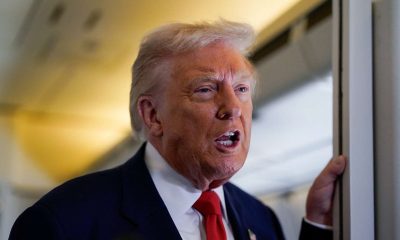
President Donald Trump has escalated tensions with key European allies after announcing plans to impose rising tariffs on goods from eight NATO member countries, linking the measures to his administration’s push for the United States to acquire Greenland.
In a statement posted on Truth Social on Saturday, Trump said imports from Denmark, Norway, Sweden, France, Germany, the United Kingdom, the Netherlands and Finland would face a 10 per cent tariff starting February 1, with the rate increasing to 25 per cent from June 1.
The president said the tariffs would remain in force “until such time as a Deal is reached for the Complete and Total purchase of Greenland,” framing the move as a response to what he claimed were recent military deployments by the affected countries to the Arctic island.
“These countries have journeyed to Greenland, for purposes unknown,” Trump wrote, describing the situation as “dangerous” for global security.
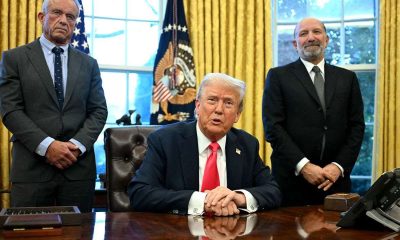
The announcement follows remarks Trump made at the White House on Friday, where he suggested he could use tariffs to pressure foreign governments into supporting the Greenland proposal, arguing that the territory is vital to US national security.
“I may put a tariff on countries if they don’t go along with Greenland, because we need Greenland for national security,” he said.
The move is likely to deepen strains within NATO, the 32-nation military alliance whose core principle is collective defence. European leaders have repeatedly warned that any attempt by Washington to seize Greenland by force would seriously undermine the alliance.
While the tariff threat may indicate a shift away from direct military action, it intensifies economic pressure on Denmark and its European partners, all of whom have consistently insisted that Greenland is not for sale.
Trump has increasingly embraced tariffs as a foreign policy weapon, expanding their use through emergency economic powers. Those powers are now under legal scrutiny, with the US Supreme Court expected to rule as early as next week on the validity of tariffs imposed under that authority.