Politics
“Christian Genocide”: US demands repeal of Sharia, blasphemy laws; seeks sweeping security pact
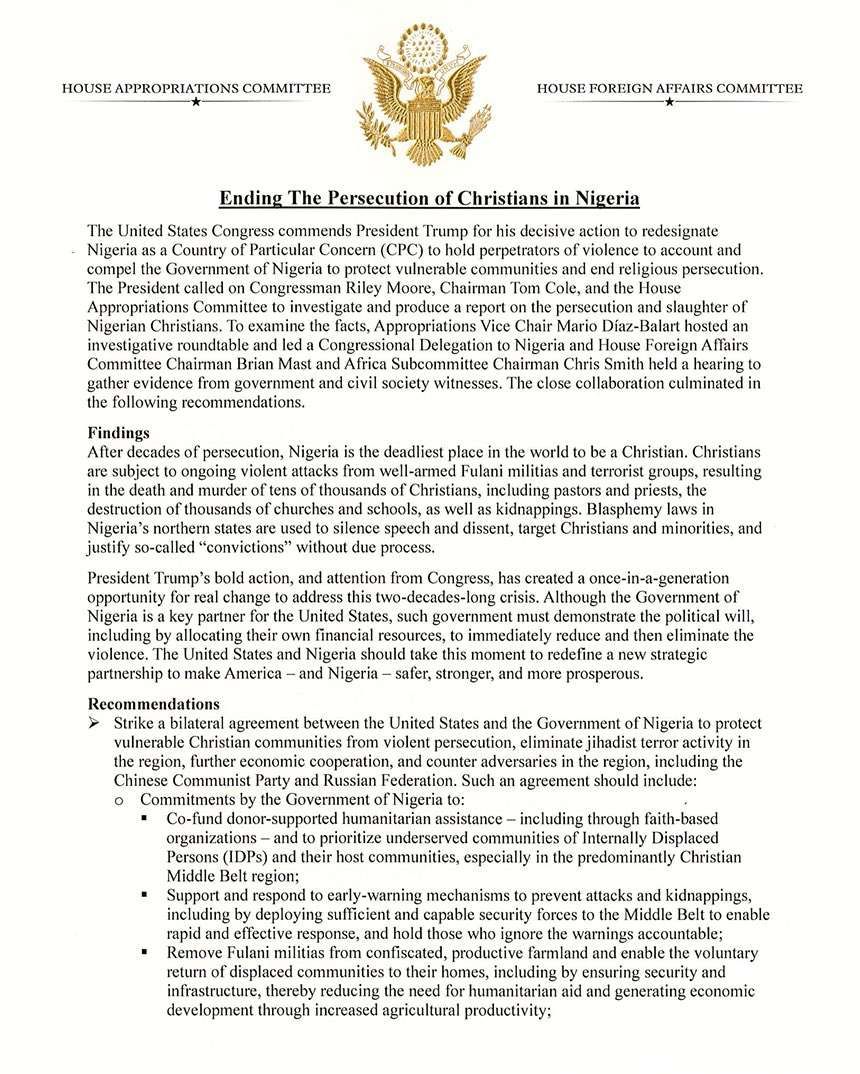
The United States Congress has intensified pressure on Nigeria over allegations of religious persecution, urging the repeal of Sharia-based criminal codes and anti-blasphemy laws while proposing a far-reaching bilateral security and economic agreement between both countries.
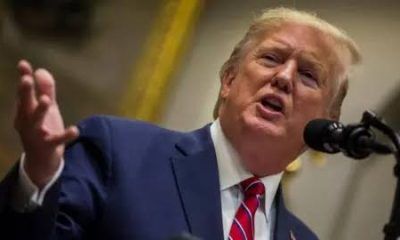
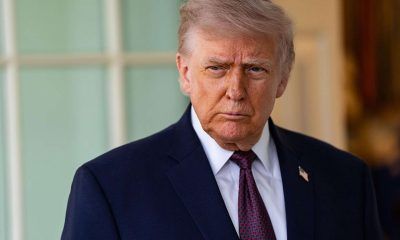
The move follows Nigeria’s redesignation as a Country of Particular Concern (CPC) by President Donald Trump in October 2025, a decision US lawmakers say signals a renewed commitment to addressing religious violence in Africa’s most populous nation. Nigeria was first placed on the CPC list in 2020 under Trump but was later removed by former President Joe Biden shortly after he assumed office.

In a joint decision by the House Committees on Appropriations and Foreign Affairs, members of Congress commended Trump’s action and called for what they described as a “once-in-a-generation opportunity” to reset US–Nigeria relations around security, accountability and religious freedom.
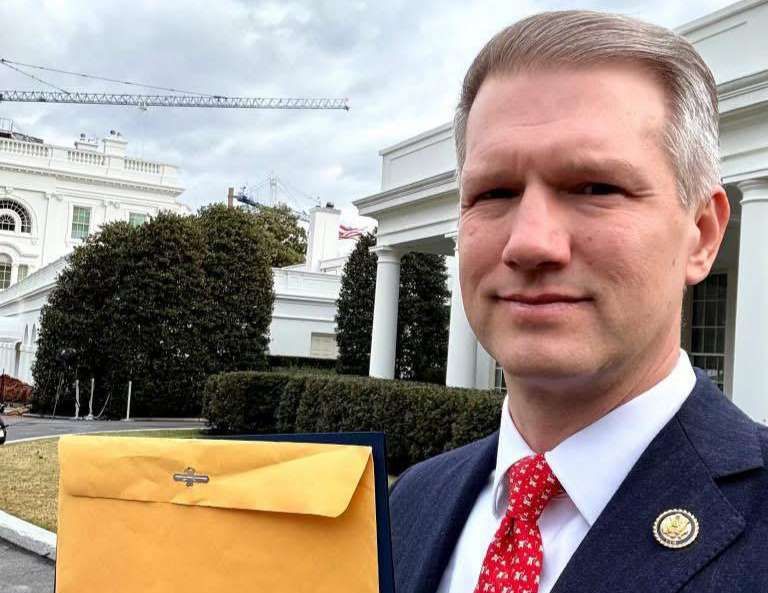
The recommendations were publicly highlighted by Congressman Riley M. Moore, who said the report was the product of months of investigations, bipartisan fact-finding visits to Nigeria, congressional hearings, and consultations with religious leaders, internally displaced persons and senior Nigerian government officials.
According to the committees’ findings, Nigeria is “the deadliest place in the world to be a Christian,” citing years of attacks allegedly carried out by armed Fulani militias and terrorist organisations. Lawmakers referenced killings of clergy and worshippers, destruction of churches and schools, kidnappings, and the displacement of thousands, particularly in the Middle Belt region.
Beyond condemning violence, Congress sharply criticised the continued application of Sharia criminal codes and anti-blasphemy laws in several northern Nigerian states. US lawmakers argued that such laws are used to silence dissent, target religious minorities and secure convictions without due process. They formally called on the Nigerian government to repeal those statutes as part of broader reforms tied to deeper cooperation with Washington.
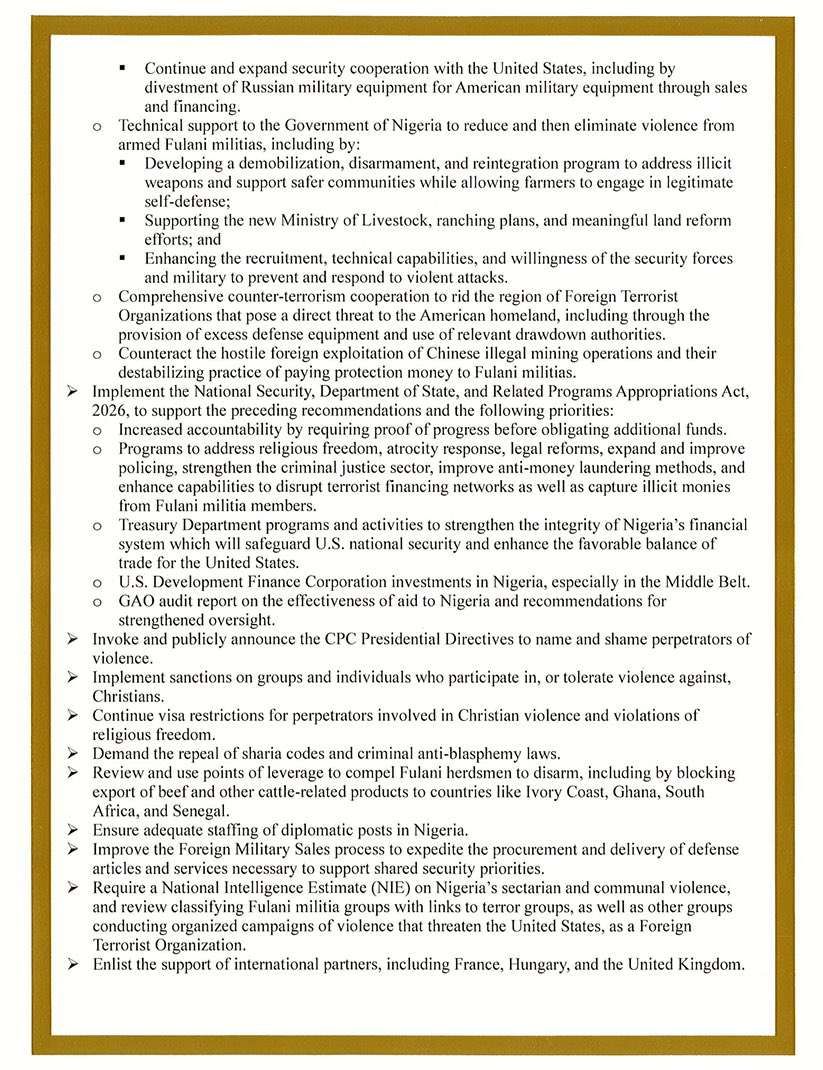
The report also recommended targeted sanctions, including visa bans and asset freezes, against individuals and groups accused of participating in or tolerating violence against Christians. Among those previously mentioned by US lawmakers in related recommendations are former Kano State Governor Rabiu Kwankwaso, the Miyetti Allah Cattle Breeders Association of Nigeria and the Miyetti Allah Kautal Hore.
Central to the congressional proposal is a comprehensive bilateral security pact between Washington and Abuja. Under the suggested framework, Nigeria would commit to co-funding humanitarian assistance programmes, particularly for internally displaced persons in predominantly Christian communities, deploy sufficient security forces to prevent attacks and kidnappings, and remove armed groups from farmlands to enable displaced residents to return home safely.
Lawmakers further urged Nigeria to establish a demobilisation, disarmament and reintegration programme to curb the proliferation of illicit weapons, strengthen land reforms and ranching initiatives, and expand the recruitment and technical capacity of its security agencies.
On the US side, Congress proposed enhanced counter-terrorism cooperation, provision of excess American defence equipment where necessary, and encouragement for Nigeria to reduce reliance on Russian military hardware in favour of US systems. The report also pledged to confront what lawmakers described as hostile foreign exploitation, including alleged Chinese illegal mining operations and their destabilising effects.
Additional measures include stricter oversight of US aid to Nigeria, a Government Accountability Office audit of assistance programmes, and a National Intelligence Estimate to assess sectarian and communal violence, including whether certain militia groups should be designated as Foreign Terrorist Organisations.
Congress also called for coordinated engagement with international partners such as France, Hungary and the United Kingdom, as well as improvements in the US Foreign Military Sales process to accelerate defence cooperation.
Presenting the report at the White House, Rep. Moore said the recommendations outline “concrete steps to impose accountability measures, counter radical Islamic terrorism, and work in coordination with the Nigerian government to bring security to all the people of Nigeria.”
While acknowledging Nigeria as a key US partner in Africa, lawmakers insisted that Abuja must demonstrate stronger political will by allocating adequate resources and taking decisive action to reduce and ultimately eliminate violence.
Observers say the proposals, if implemented, could significantly reshape diplomatic, security and economic ties between the two countries – but they also raise sensitive questions about sovereignty, religious law, and Nigeria’s complex internal security challenges.
See full report as shared by Moore below: