
Opinion
AFCON ’25 final match: When sentiments Trump law
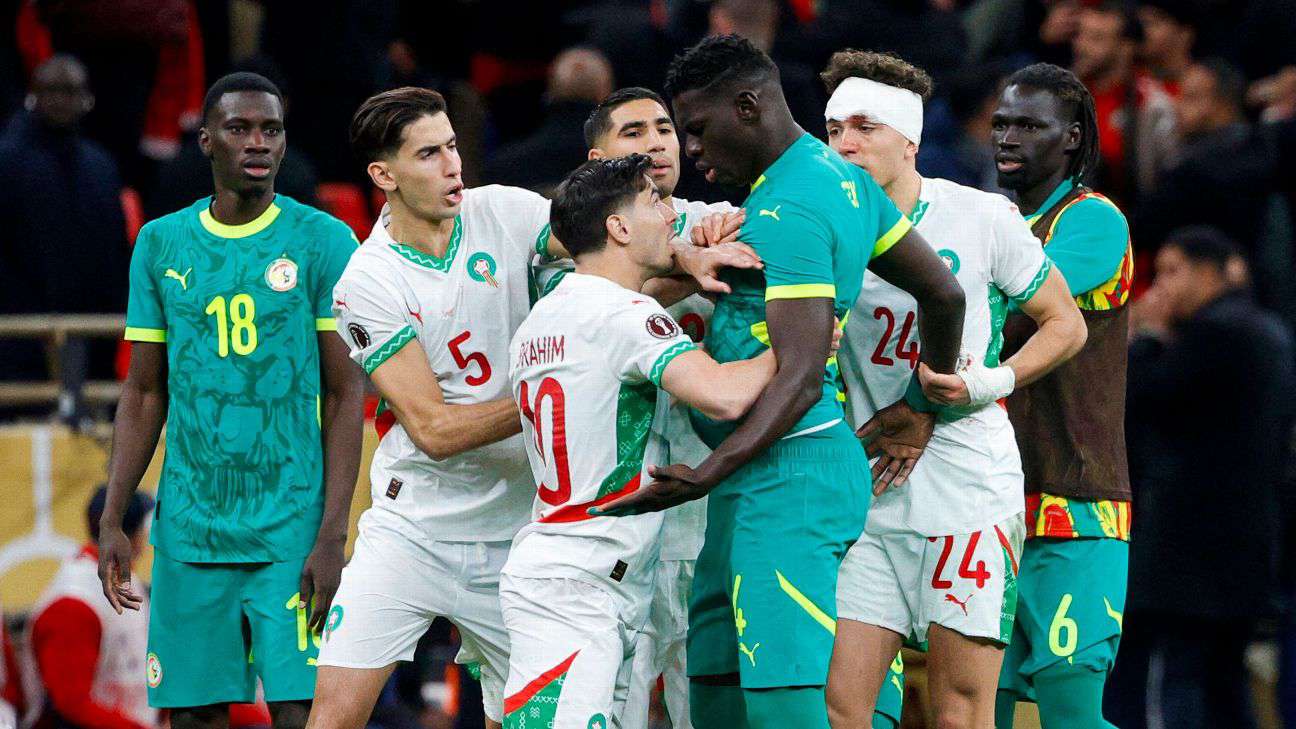
Was Senegal’s disallowed first goal in the AFCON final match against Morocco a lawful goal? This is the issue that almost marred a glorious end to a fantastic competition that did Africa much credit in both organization, infrastructure, and standard of play displayed by the countries. There was no push-over, minion or misfit amongst the teams. Most people agreed that the four semi finalists, Egypt, Nigeria, Senegal and Morocco, paraded the best teams.
But before the final match, speculations emerged of under-handed practices by Morocco, particularly with officiating. Undoubtedly, this allegation came from Nigerians after we lost to Morocco. As an objective observer, who had interest only in the beauty of the game without overly being biased about the winner, I was sceptical of the alleged favoritism by referees, as I saw none, beside normal human error of judgment.
However, this allegation set the atmosphere for the shame that characterized the final match, after the DR Congo referee, who had disallowed Senegal’s goal, proceeded five minutes later to award a penalty to Morocco. The question is, did the referee show bias in his decisions over the goals? Opinions among commentators – radio and television, which I monitored – Social media and on the streets, were overwhelmingly positive of his guilt.
Triumph of Sentiments
But, is it so? I believe majority opinion is not always right and here is a clear proof of it. Not every goal is a goal. FIFA has made sure every goal must be clean and legitimate after the Maradona’s “hand of God” goal against England in the 1986 World Cup. Hence, the introduction of Video Assisted Referee, VAR, which provides referees a second opportunity to review their decisions to ensure foul play is reduced to barest minimum. Yet, controversy has not left the game, essentially due to human sentiments.
Most English Premiership commentators have agonized over the challenges presented by this innovation, however, forgetting that man can never achieve perfection in anything, even with the best technology; as long as human factor is involved, error is inevitable. But the goal is not to completely eliminate error but avoid very obvious and unpardonable flaws.
Even with VAR, sentiment is still too pervasive in the game as in all human affairs, especially in Africa, because football is a game of passion and arouses very strong emotions. The challenge is how do we separate sentiment and law or rules guiding it, to ensure that there is observable consensus on major decisions. The unnecessary ruckus over the disallowed goal and the subsequent penalty showed how ignorant, driven by sentiment, most people are about the rules of the game.
Precedent Rules in Law
It was not a goal, but because most people were already incensed with Morocco for any reasons, they wanted them to lose. In law, you can’t put something on nothing. As the controversy progressed, my mind went back to the semi final match in 2024 between Nigeria and South Africa in Cote d’ Ivoire. When Osimhen scored Nigeria’s second goal, I was excited, until my son, who was watching with me, reminded me it had been cancelled because VAR was replaying a foul in our 18-yard box preceding our goal.
So, I sat down to watched, and true to his prediction, our goal was overruled and a penalty awarded to South Africa. It was momentous decision that took the game to extra time, and then, penalty shoot out, which we eventually won. What’s the relevance of this event? Precedent; in law everything stands or falls on precedent, which is the reason lawyers cite cases to support their positions; such cases are called precedent. Has it happened before, and are the facts and circumstances similar, and in agreement with the law?
Once these questions are answered in the affirmative, the argument prevails. In this present case, a foul was committed before the goal was scored, and the rule says, when such is the case, the resultant outcome (goal) is null and void. So, the referee was right to overrule the goal if indeed, a foul was involved. In most of the comments, this issue of whether it was a foul or not was ignored, attention was on the goal because sentiments were in favor of Senegal for whatever reasons.
Upholding The Always
Now, about the penalty. Here is where the rule of precedent comes in: if a foul was involved in the cancelled Senegal’s goal, then a similar foul would attract a penalty, which was exactly what happened. The referee was absolutely correct to have applied the rule of precedent. It was sad that Senegal suffered certain adverse consequence because of the law, but that’s life. Senegal was a notch better than Morocco and deserved to win, but often time, we have seen a better team lose for inexplicable reasons.
A fallout of this event is the shameful conduct of the Senegalese coach. CAF should sanction him for bringing the beautiful game into disreputable fame and opprobrium. He didn’t show good example as a leader by calling the players out of the pitch. It showed further that, we as Africans, have not been conditioned adequately to uphold the law whatsoever the provocation or situation, which is the mark of a civilized society.
The eyesore we displayed could never have happened in Europe or in the World Cup because people understand that there are legal processes for ensuring redress in any circumstances. But not here; instead we took the law into our hands and almost destroyed the greatest football event in our continent over nothing. Which is a shame.