Business
UBA After Elumelu: Africa’s Global Bank Tests Its Institutional Depth
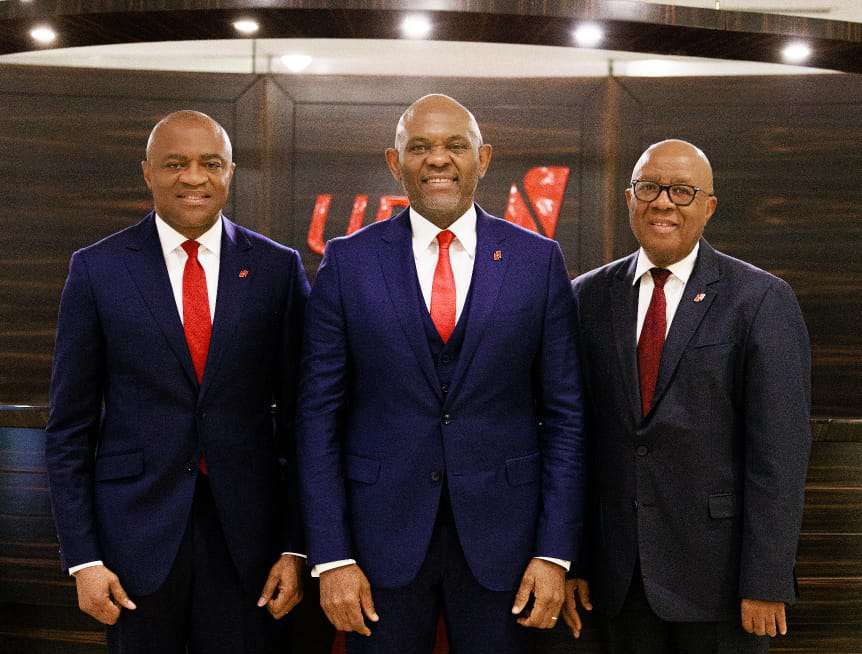
As Tony Elumelu bows out on August 21 after 12 years as Group Chairman, UBA’s N33 trillion balance sheet and Emmanuel Nnorom’s succession will decide whether the bank’s pan-African model outlives its architect
By Okey Onyenweaku

For most of the last two decades, no conversation about United Bank for Africa (UBA) has been complete without Tony Onyemaechi Elumelu. On August 21, 2026, that changes. Elumelu retires as Group Chairman after 12 years in the role, having reached the tenure ceiling the Central Bank of Nigeria (CBN) imposes on non-executive directors under its 2023 Code of Corporate Governance.
The board, meeting on July 6, accepted his retirement and elected Emmanuel Nnorom, a long-serving non-executive director and chartered accountant with more than four decades in banking, finance and auditing, to succeed him from the same date.
The transition closes a chapter, but not the institution Elumelu leaves behind. The question for shareholders, regulators and portfolio managers watching Nigeria’s most internationally diversified bank is whether UBA’s structure and numbers can carry the franchise forward without its most recognisable brand ambassador.
From Turnaround to Institution
Elumelu’s association with UBA runs back further than his chairmanship. In 1997 he led a group of investors into the distressed Crystal Bank, rebuilt as Standard Trust Bank (STB), which grew rapidly through the early 2000s. In 2005, STB merged with the older, larger United Bank for Africa, in one of the defining transactions of the CBN-driven consolidation that shrank Nigeria’s banking population from 89 lenders to 25. Elumelu ran the enlarged bank as Group Managing Director and Chief Executive until 2010, when he stepped down from that role under an earlier CBN tenure rule, before returning to the institution as Group Chairman in 2014.
Mike Ezeh, Managing Director of Crane Securities Limited, situates that 2010 exit within a wider wave of central-bank-driven turnover across the industry. “Emir Sanusi, then Governor of the Central Bank of Nigeria, had put into the financial statutes that after ten years as MD/CEO, persons in that position should retire,” Ezeh said, noting that founders and long-serving chief executives at banks including FCMB, the former Intercontinental Bank, Oceanic Bank and IBTC underwent similar transitions around the same period. “Tony set up an excellent banking outfit that will outlive him and continue to maintain the integrity and excellence which the legendary bank is noted for, even for a long time after he has gone,” he added.
That distinction matters for accuracy: Elumelu’s chairmanship spans 12 years, not longer, even though his personal association with the franchise he built stretches back roughly three decades. It is this 12-year clock, not sentiment, that dictates the August exit.
A Pan-African Balance Sheet
UBA’s numbers explain why the succession is being watched well beyond Lagos. The bank now operates in 20 African countries alongside units in the United Kingdom, the United States, France and the United Arab Emirates, serving more than 50 million customers through a network of roughly 1,000 offices and touchpoints, with a workforce of about 25,000.
The FY2025 audited results, released in April, show a bank in transition rather than retreat. Gross earnings came in at N3.09 trillion, marginally down from N3.19 trillion in 2024.
Profit before tax fell to N423.4 billion from N803.7 billion, and profit after tax closed at N404.7 billion, against N766.6 billion the prior year, a decline of close to 47 per cent, driven largely by the fading of the extraordinary foreign-exchange revaluation gains that had flattered 2024 earnings across the Nigerian banking sector. Earnings per share fell in step, to N9.66 from N21.73, and the board cut total dividend for the year to 25 kobo per share from N5.00 in 2024, a payout ratio of just 6.2 per cent and a yield of 0.6 per cent.
Beneath the profit contraction, the balance sheet kept expanding. Total assets grew 9.4 per cent to N33.17 trillion, customer deposits rose 11.8 per cent to N27.2 trillion, and shareholders’ funds strengthened to N4.25 trillion. The capital adequacy ratio stood at 23.2 per cent following UBA’s exit from CBN forbearance in 2025, and the bank’s rights issue, Phase I alone raising N234.3 billion,pushed it ahead of the CBN’s N500 billion minimum capital requirement well before the March 2026 deadline that has forced recapitalisation across the industry.
Post-tax return on equity settled at 13.7 per cent and return on assets at 1.8 per cent, both consistent with management’s own description of 2025 as a transition year of disciplined provisioning rather than headline profit growth.
The early signs for 2026 support that framing. First-quarter results show profit before tax of N160.7 billion, total assets holding near N33.1 trillion, deposits of N24.1 trillion, and a loan book of N7.17 trillion, up 2.1 per cent, with cost of funds stable at 3.7 per cent and net interest margin at 6.5 per cent. On the Nigerian Exchange, UBA shares closed 2025 at N41.65, up 22.5 per cent on the year, a solid if unspectacular showing against an All-Share Index that gained 51.19 per cent amid a broader equities rally.
Read together, the picture is a bank absorbing a profit reset, the 2024 windfall from currency revaluation was never going to repeat, while continuing to grow its funding base, fortify capital, and hold return metrics at levels that remain respectable by regional standards. That is the balance sheet Nnorom inherits.
Governance Over Personality
Arguably Elumelu’s most consequential legacy is procedural rather than financial: an orderly, rules-based handover. UBA’s board framed the transition explicitly around the CBN’s tenure limits rather than any external pressure, and named Nnorom from within the existing board rather than reaching outside for a fresh face.
In his own remarks on departure, Elumelu said serving UBA had been one of the great privileges of his career, and expressed confidence that the bank would continue to thrive under a chairman he described as a leader of integrity, experience and sound judgement.
Nnorom, for his part, said he was conscious of the legacy he inherits and intended to sustain the bank’s momentum across its markets.
The 12-year clock, not sentiment, dictates the August exit, and it is the balance sheet, not the biography, that Nnorom now inherits.
That continuity-first approach is itself a governance marker. Many founder-associated African financial institutions struggle with succession; UBA’s board chose predictability, elevating a long-tenured insider rather than testing the market’s patience with an external search.
For an institution that markets itself as Africa’s Global Bank, reassuring international counterparties and correspondent banks on governance continuity matters almost as much as the headline profit number.
The Harder Part
The path ahead carries real tests. Nigeria’s ongoing recapitalisation cycle, tighter CBN capital rules, and intensifying competition from fintech operators are compressing margins across the industry even as UBA’s own numbers show funding costs and asset quality holding up reasonably well for now.
Currency volatility across UBA’s 20 African markets, and the base effects of 2024’s exceptional FX gains, will keep near-term profit comparisons unflattering versus that peak year, even where underlying banking income is healthy.
Digital transformation, UBA’s Leo chatbot alone counts close to 7 million users and its mobile app more than 40 million downloads, has cut cost-to-serve, but cybersecurity and AI-driven disruption raise the technology bill just as profitability normalises.
There is also the less quantifiable question of investor perception. Elumelu’s personal network, philanthropic profile through the Tony Elumelu Foundation, and public visibility as an advocate of Africapitalism, private capital financing African development, gave UBA an international recognition factor that a chartered accountant’s technical competence, however deep, cannot immediately replicate.
Nnorom’s task is to prove that recognition was always more than one man’s biography.
Dr. Boniface Chizea, Chief Executive Officer of BIC Consultancy Services, argues that Elumelu’s imprint will outlast his title regardless. “His legacy will not disappear overnight. Many of the people currently in leadership positions owe their careers, at least in part, to his mentorship and leadership,” Chizea said. “In the areas that truly matter, Tony Elumelu will still be very much part of the picture.”
The Road Ahead
History suggests durable institutions eventually outgrow the leaders who built them. UBA’s board has bet, through an orderly and rules-compliant succession, that its governance and its numbers can do that job. If asset quality holds, capital ratios stay comfortable, and the bank’s pan-African deposit and transaction franchise keeps compounding through 2026 and beyond, August 21 will read as a successful handover rather than a rupture.
If margins slip further, if the fintech and recapitalisation pressures bite harder than management currently signals, questions will resurface about how much of UBA’s continental ascent depended on the man stepping down.
Either way, the arithmetic, a N33 trillion balance sheet, 50 million customers, and a board that chose continuity over disruption, gives Emmanuel Nnorom a stronger starting position than most successors to a defining chairman ever get.
Tony Elumelu leaves UBA not as an indispensable man, but, by his own board’s design, as proof that the institution no longer needs one.