
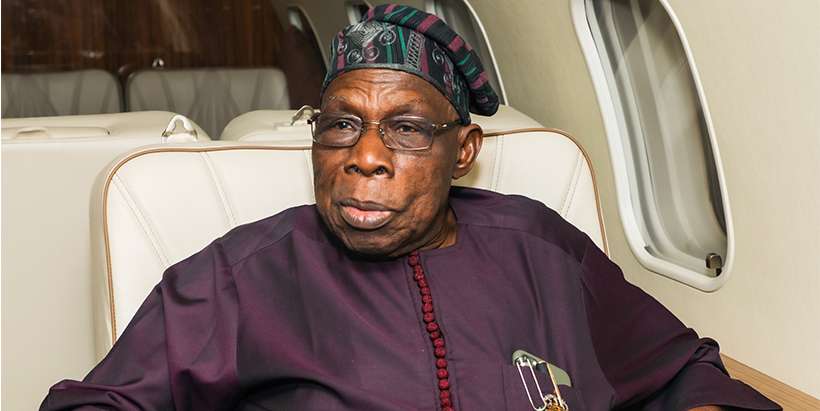
Former President Olusegun Obasanjo has revealed that Nigeria’s organised labour was once deeply entangled in Cold War power politics, with rival labour centres allegedly funded by the Soviet Union’s KGB and the United States’ Central Intelligence Agency (CIA).
Obasanjo made the disclosure on Wednesday in Abuja while speaking at the 85th birthday celebration and book presentation of a former president of the Nigeria Labour Congress (NLC), Hassan Summonu.
According to the former president, the foreign grip on Nigeria’s labour movement convinced him that urgent reforms were needed to protect the country’s sovereignty and rescue organised labour from external control.
“At that time, there were two major labour organisations in Nigeria. They were Nigerian by name, but not by funding,” Obasanjo said.
“One was being financed by the KGB and the other by the CIA. That was the reality, and it was unacceptable for a sovereign country.”
Obasanjo said Summonu belonged to one of the rival labour centres at the time and recalled the resistance that initially greeted his decision to restructure the labour movement.
He explained that his goal was not to weaken labour, but to build a single, independent union that would be organised, funded and controlled by Nigerians.
“I wanted a Nigerian labour organisation organised by Nigeria, controlled by Nigeria and financed by Nigeria,” he said.
To achieve this, Obasanjo said he appointed Justice Adebiyi to oversee the reform process, which eventually led to the unification of labour unions under the Nigeria Labour Congress.
He stressed that the reforms were designed to ensure that government did not impose leaders on workers, allowing union members to democratically elect their representatives.
“Even though I was accused of not knowing anything about labour, I knew what Nigeria needed,” Obasanjo said.
“Justice Adebiyi completed his assignment, labour was reformed without government interference, and Hassan emerged as the first elected president. That gave me comfort.”
The former president noted that the reforms laid the foundation for a more structured and constructive relationship between organised labour and the government, while safeguarding the autonomy of unions.
He commended Summonu for his role in stabilising labour leadership in Nigeria and elevating the country’s labour movement within Africa and the international arena.
Obasanjo also disclosed that he wrote the foreword to Summonu’s newly unveiled book, describing it as a candid account of the veteran unionist’s contributions to democracy and national development.
The event also provided a platform for robust debate on present-day labour challenges, including Nigeria’s new tax laws.
Speaking at the gathering, former NLC president and senator, Adams Oshiomhole, criticised what he described as excessive lamentation by labour leaders over policies they consider unjust.
Reacting to concerns raised by the current NLC president, Joe Ajaero, on the taxation of minimum wage earners, Oshiomhole urged labour to return to its activist roots.
“If it is wrong, fight it,” he said. “Those who benefit from injustice will not give it up just because you are complaining.”