
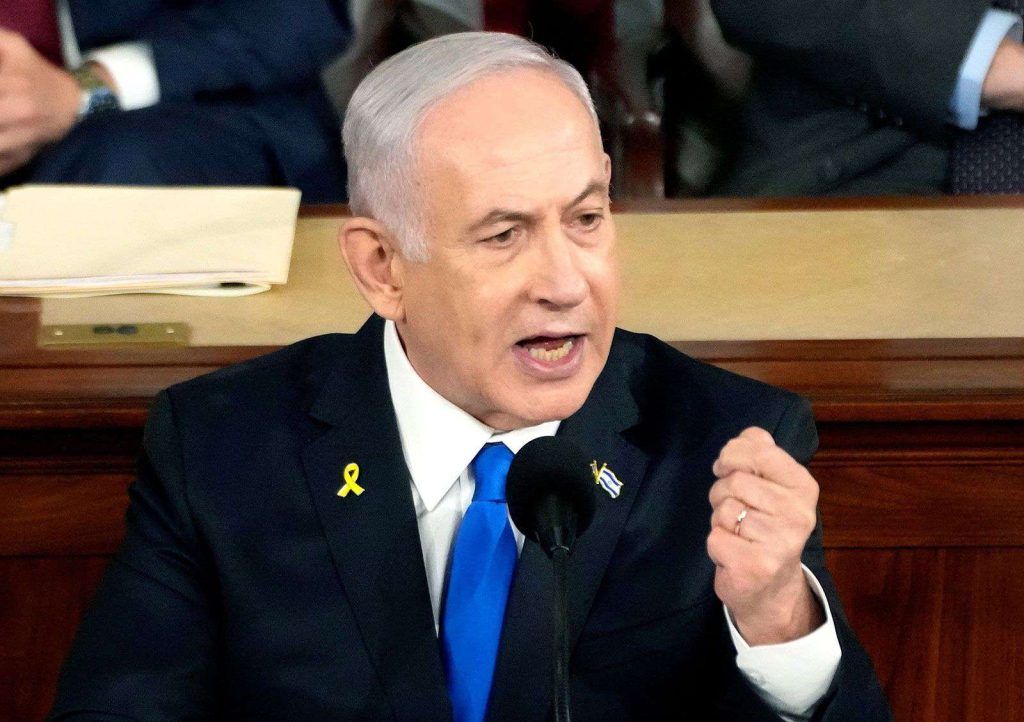
Israeli Prime Minister Benjamin Netanyahu has called for the immediate end to attacks on Christians in Nigeria and other parts of the world, warning that religious persecution must not be tolerated under any guise.
Netanyahu made the remarks in a video message shared on his official X handle as part of his Christmas address to Christians globally.
“The persecution of Christians or members of any religion cannot and must not be tolerated. Muslim militant displacement and attacks against Christians in Nigeria — that too must end, and it must end now,” the Israeli leader said.
Condemning what he described as the global persecution of Christians, Netanyahu cited countries in the Middle East, including Iraq, Syria, Lebanon and Turkey, where he alleged that Christian communities face systemic repression.
He contrasted the situation with Israel, which he described as a safe haven for Christians in the region.
“Israel is the only country in the Middle East where Christians can practice their faith with full rights and in total freedom, where Christian pilgrims are embraced with open arms and deeply appreciated,” Netanyahu said.
“Christians in Israel can proudly celebrate their traditions openly and without fear. In Jerusalem, the city municipality officially distributes Christmas trees every year, a practice that has continued for two decades.”
Netanyahu further drew a sharp comparison with events in the occupied Palestinian territories, claiming that Palestinians recently burned a Christmas tree at the Holy Redeemer Church in the town of Jenin.
“That’s the difference,” he added.
Netanyahu’s comments align with similar claims by the United States, which has repeatedly raised concerns over what it describes as the persecution of Christians in Nigeria. In recent weeks, US President Donald Trump re-designated Nigeria as a “country of particular concern,” citing allegations of a Christian genocide.
Trump also threatened possible military intervention, accusing the Nigerian government of complicity and failure to protect Christian communities.
However, Nigerian authorities have strongly rejected the claims, insisting that the country upholds freedom of religion and that victims of violence cut across religious and ethnic lines. The government maintains that insecurity in Nigeria is driven by a complex mix of banditry, terrorism, communal clashes and criminality, rather than targeted religious persecution.
International bodies such as the European Union (EU) and the Economic Community of West African States (ECOWAS) have similarly framed Nigeria’s crisis as a broader security challenge, avoiding characterisation of the violence as a campaign against Christians.
Despite these denials, Netanyahu’s intervention has once again thrust Nigeria into the centre of a growing international debate over religious freedom, security failures and the true nature of violence ravaging parts of the country.