
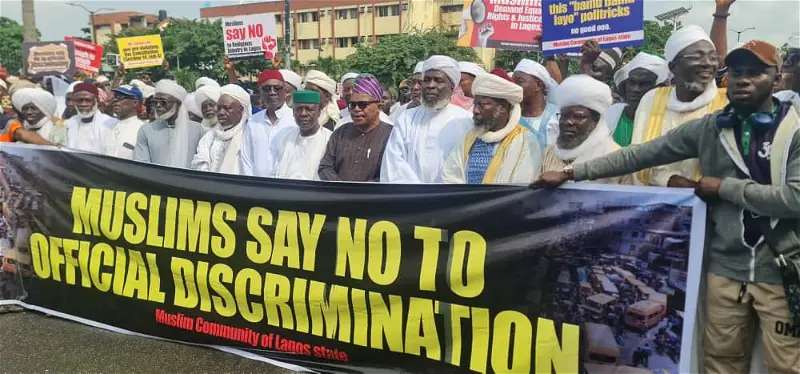
The Muslim Congress (TMC) and the Ulamah Wing of the Conference of Islamic Organisations (CIO) have criticised a recent United States congressional delegation’s visit to Nigeria, calling it selective and unbalanced for focusing only on Christian communities while ignoring Muslim voices in conflict-affected areas.
In separate statements released on Friday, the groups said the delegation’s consultations were incomplete and risked distorting the reality of Nigeria’s security challenges.
Alhaji AbdulWasi’i Taiwo Bangbala, Amir of TMC, described the exclusion of the Nigerian Supreme Council for Islamic Affairs (NSCIA) and other Muslim stakeholders as “a serious breach of diplomatic protocol.” He added that while international engagement on security and human rights is welcome, it must be impartial and respectful of Nigeria’s religious and social diversity.
“The delegation’s focus solely on Christian leaders and a traditional ruler in Benue gives the impression that it arrived with a predetermined narrative rather than seeking a full understanding of the complex realities on the ground,” the statement said.
TMC warned that ignoring Muslim voices undermines peace-building efforts, fuels inter-communal mistrust, and weakens the credibility of any fact-finding mission. The organisation urged that future missions adopt a balanced, inclusive approach to engage all stakeholders affected by violence.
Echoing this, Sheikh Abdur Rahman Ahmad, Chairman of the Ulamah Wing, and Engr. Luqman Balogun, CIO Secretary-General, said Nigeria’s crises cannot be understood through a single religious lens. They noted that Muslims, like Christians, are often victims of attacks, abductions, and communal clashes, yet the delegation reportedly omitted them from consultations.
The CIO called the exclusion a “missed opportunity for peace” and urged an immediate re-engagement process that incorporates Islamic scholars, Muslim community leaders, and victims from affected areas. The organisation stressed that a comprehensive understanding of the country’s